For almost twenty years, I have been exploring the same idea: how can a single event continue to create value long after it has ended?
Long before artificial intelligence became part of everyday creative practice, and well before the industry began talking about content repurposing or content engines, I was designing what I called The Media Cell. My intuition was simple. Every event already contains dozens of stories. Every conversation contains multiple perspectives. Every encounter can generate new connections. Rather than thinking in terms of individual deliverables, I became interested in designing editorial ecosystems capable of extending the life of an event across time, media and communities.
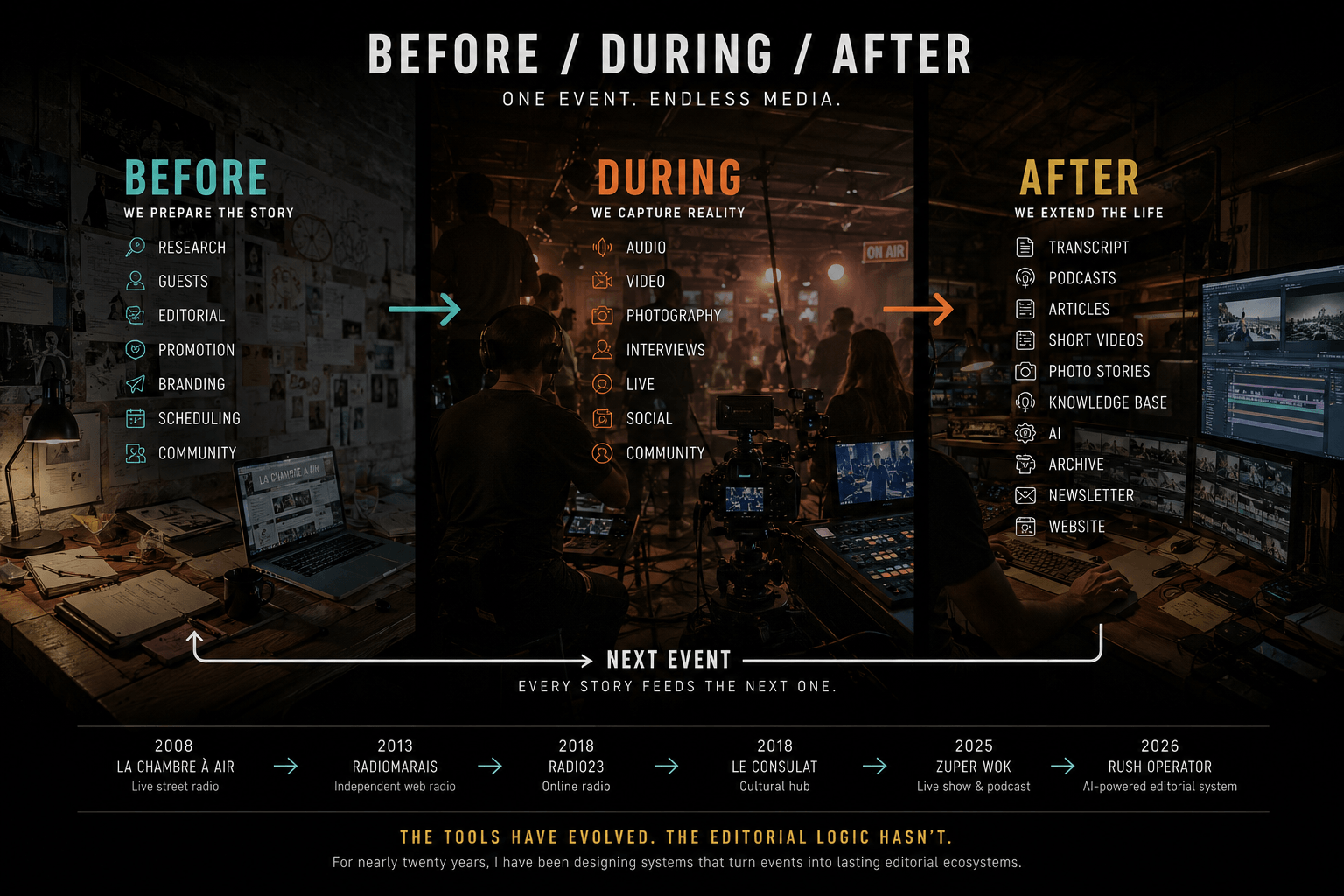
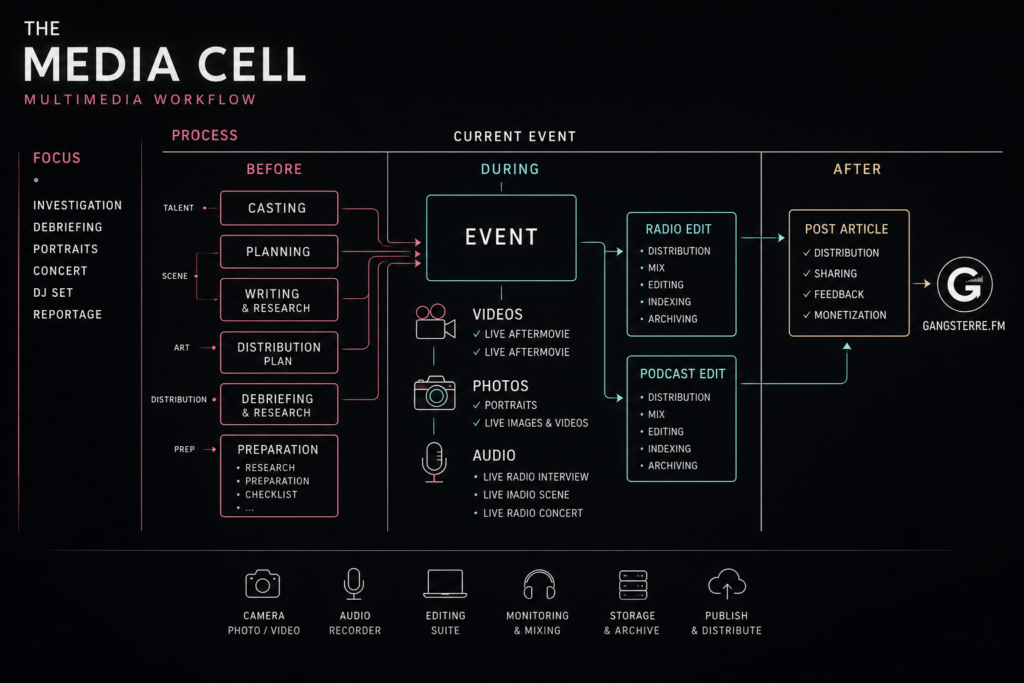
This vision naturally organised itself around three complementary moments that have remained remarkably consistent throughout my career: Before, During and After.
Before
Designing the Conditions for Great Stories
Every project begins before the cameras are switched on. Research, editorial planning, guest curation, partnerships, programming, visual identity, community building and promotion all contribute to creating the conditions for meaningful conversations and memorable experiences. Every decision made during this phase shapes everything that follows because preparation already belongs to the editorial process. Stories begin long before they are recorded.
During
Collecting Reality
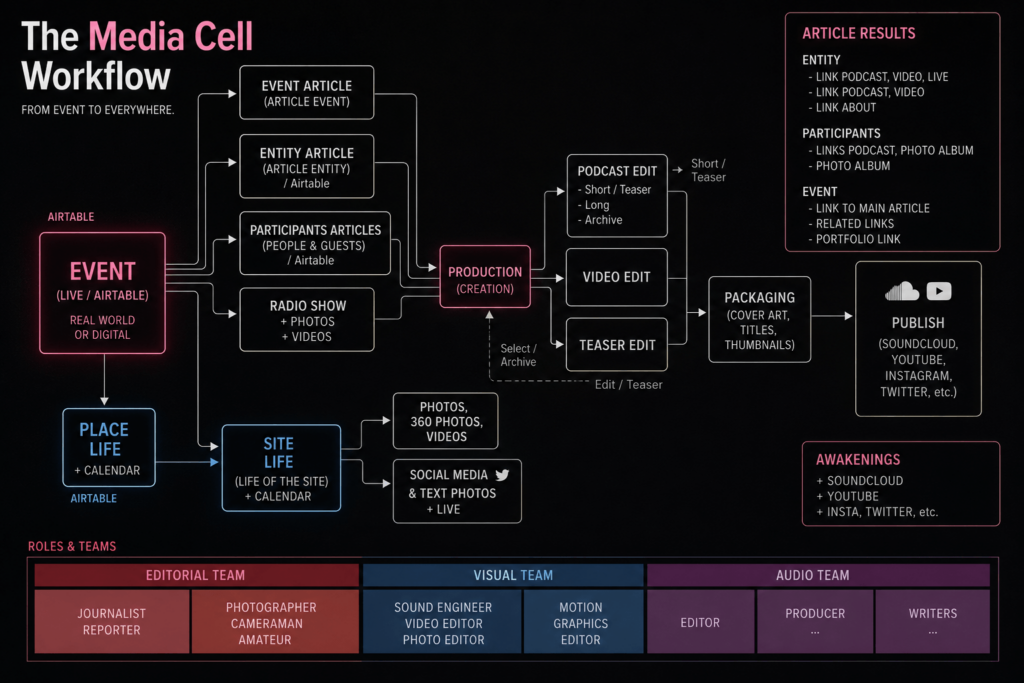
This is where my journalistic practice takes over. I record conversations, film, photograph, interview and observe. Audio, video, photography and writing become a common raw material from which multiple narratives can emerge. Every voice, every image, every gesture and every unexpected moment enriches an editorial archive designed to evolve over time. Rather than producing individual pieces of content, I collect reality itself and preserve enough richness for that material to continue generating new editorial experiences long after the event has ended.
After
Extending the Life of an Event
This is where the editorial ecosystem truly comes alive. Interviews evolve into articles, conversations become podcasts, photographs become visual stories, recordings develop into documentaries, short-form videos or educational resources, while archives become searchable knowledge. Artificial intelligence has expanded these possibilities by transforming transcripts into semantic databases, editorial assistants and entirely new creative experiences. Every technological evolution has increased the number of possible outputs while preserving the same editorial philosophy: allowing one experience to continuously generate many others.
One Methodology, Many Evolutions
This editorial cycle has accompanied almost every project I have developed over the past two decades.
2008 — La Chambre à Air
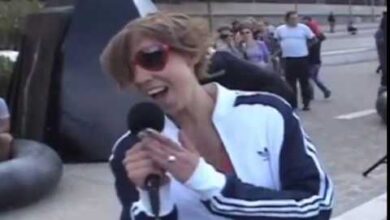
Public space became a live multimedia studio where journalism, broadcasting and urban life met in real time.
2013 — Radiomarais
An independent editorial ecosystem bringing together more than twenty radio hosts, around thirty original programmes, hundreds of interviews and thousands of hours of conversations dedicated to Paris’ creative communities.
2018 — Le Consulat
A living cultural laboratory producing hundreds of hours of live radio, more than two hundred podcasts, over six thousand photographs, hundreds of videos and one hundred and fifty editorial articles from a single venue.
2025 — Zuper Wok
Broadcast monthly on Cashmere Radio in Berlin, this project extends the same methodology through artificial intelligence by transforming live conversations into articles, searchable knowledge, editorial systems and even original music.
2026 — Rush Operator
The latest evolution of this journey, designed as an AI-powered editorial operating system capable of transforming conversations into reusable media assets while preserving the richness, complexity and authenticity of the original material.
The Same Idea Since 1992
Technology Evolves, Editorial Thinking Endures
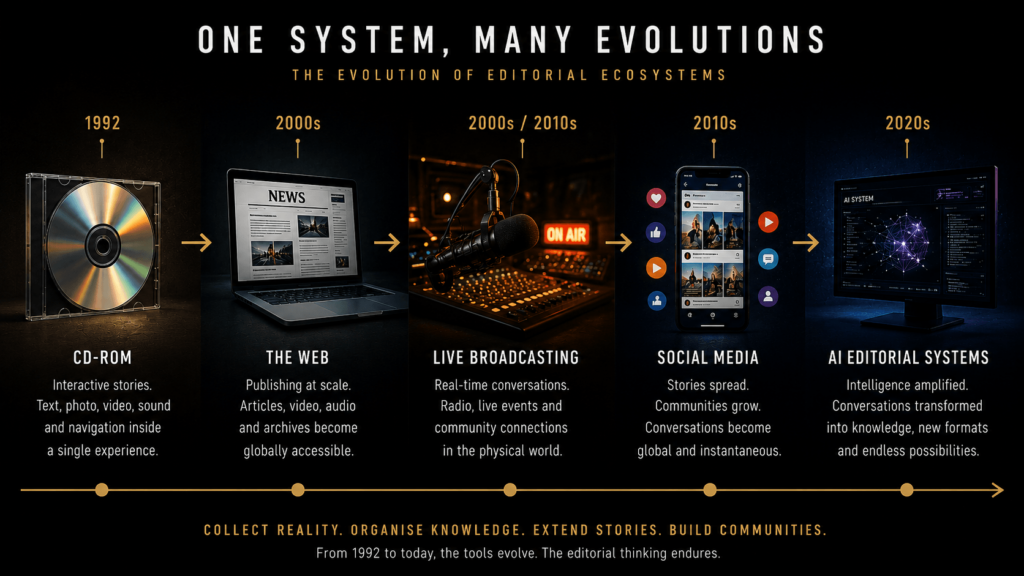
Looking back, I realise that I have been exploring the same idea since 1992, when I created my first interactive CD-ROM projects at school. Text, photography, video, sound and navigation already coexisted inside a single experience where users could freely explore stories from different perspectives.
CD-ROM → Web → Live Broadcasting → Social Media → Editorial AI Systems
Each technological shift has opened new possibilities while reinforcing the same underlying ambition: collecting reality, organising knowledge, extending stories and building communities. The tools continue to evolve, while the editorial system remains remarkably consistent.
Orchestrating Editorial Ecosystems
People often ask whether I am a journalist, filmmaker, producer, creative director or AI designer. My work naturally moves across all these disciplines because they all contribute to the same objective. I continue to think like a journalist while increasingly working like an exhibition curator or an orchestra conductor, orchestrating people, ideas, media and technologies into coherent editorial experiences where every story finds multiple forms of expression, every event continues to create value and every conversation becomes the starting point for the next one.
After more than three decades, I have come to realise that my work has never really been about producing content. It has always been about designing editorial ecosystems where reality becomes knowledge, knowledge becomes culture and culture continues to evolve through the people who engage with it.