TRANSCRIPTION HERE or below / French Translation also.
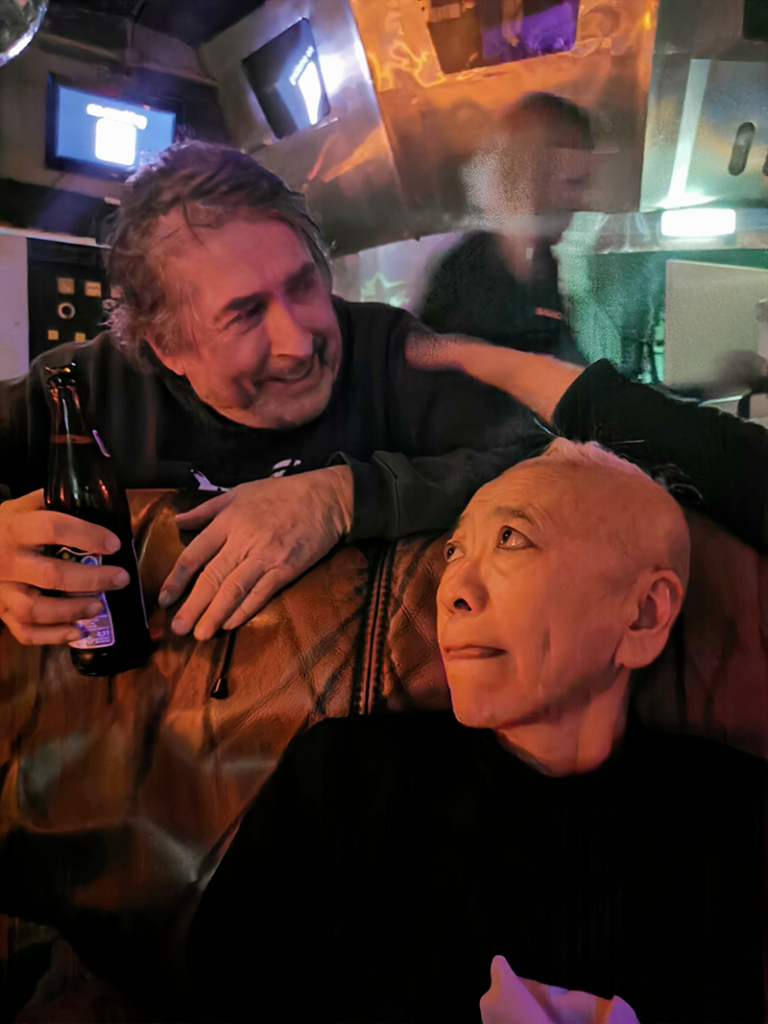
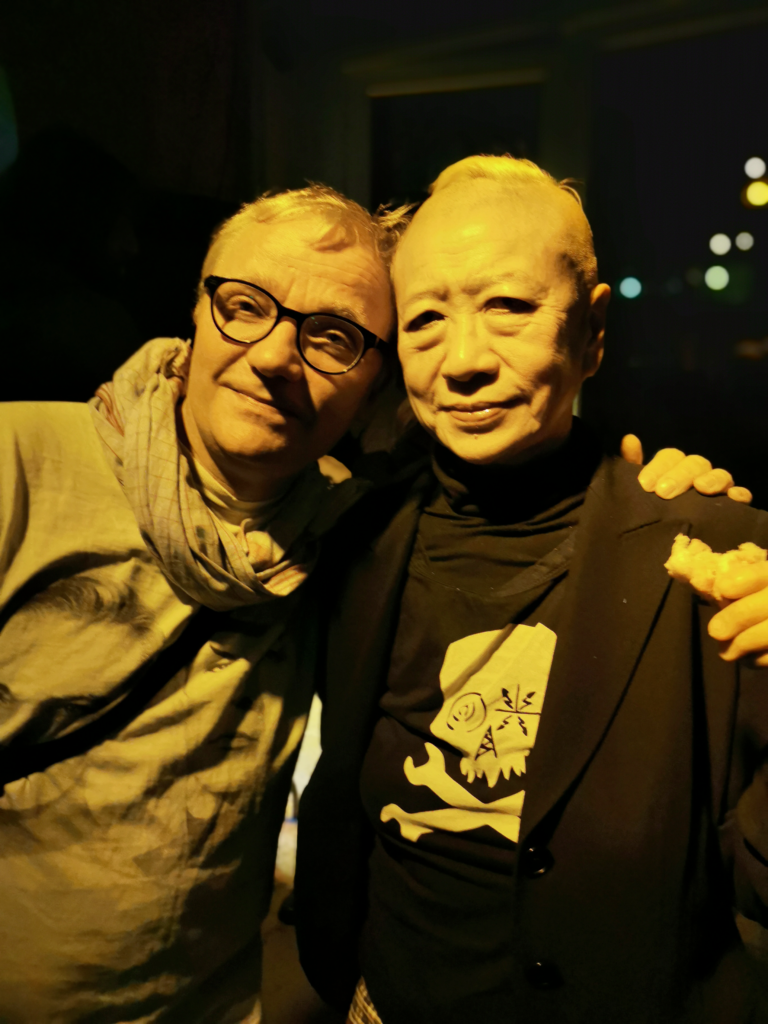
6pm door open.
7-9pm – talks and talks
*Simon Worthington – Hero of the cybersphere
*Body of Work – Vladimir Grafov talks about his collaboration with alexei at raylab and about hivenetworks project.
*Once the AIR – recounting Alexei Blinov’s collaboration with consume.net, free2air, richair, hivenetworks, freifunk, doomsday of blockchain………
with Vladimir Grafov, Adam Burns, James Stevens, Shu Lea Cheang (Porta 2030), Cvan, Elektra, juergen Neumann.
*Riding waves with Alexei Blinov
Kaffe Matthews introduces sonic bike project, update by Danja Vasiliev, Sarah Grant, and Franz Xaver (STWST, Linz) on radio projects.
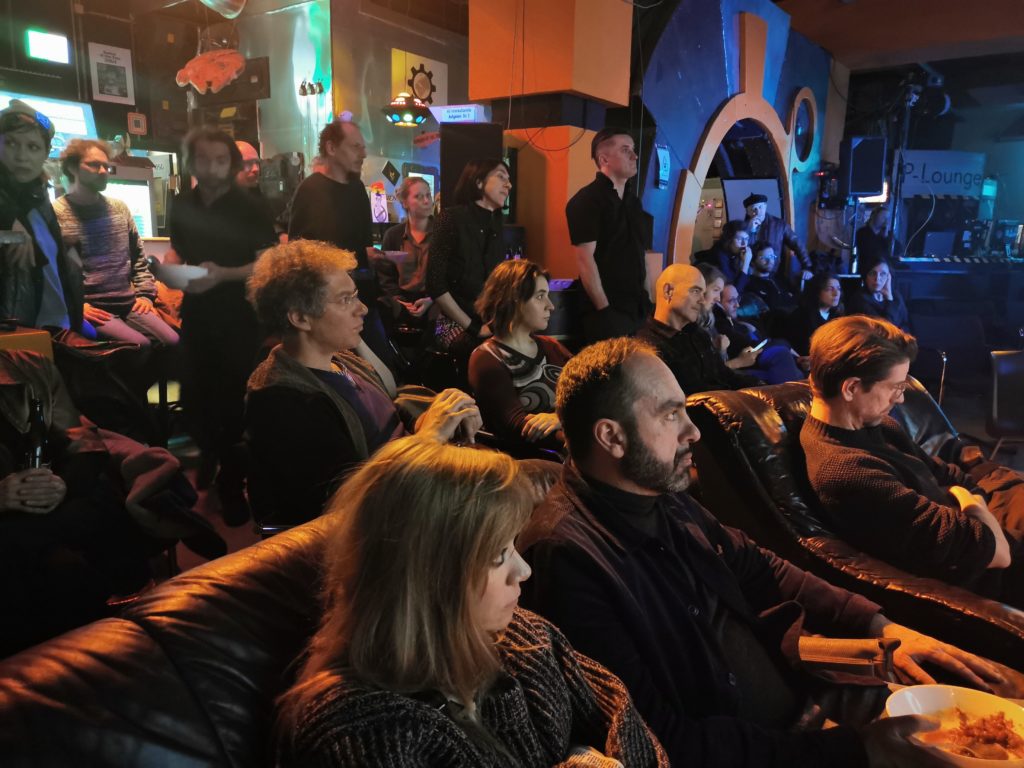
Alexei Blinov: Hero of the Cybersphere
by Simon Worthington @mrchristian99 – co-founder Mute
I use Cybersphere rather than Cyberspace as Alexei occupied the digital space just above the earth’s crust with WiFi and lasers and not only the imagined Cyberspace of the virtual — World on a Wire (Welt am Draht), or the Internet.
I knew Alexei in the late 1990s/2000s in London and Berlin, whether running Open Wireless aerial building workshops together at the University of Openness in London’s East End — a self instituted university — or at the BerLon ‘PicoPeering Agreement’ meeting in Bootlab or at ‘Wizards of OS’ FOSS conference — both in Berlin, where Alexei would be demoing the ‘Hive’ mesh-networking WiFi system.
Alexei was always the one driving things forward, quiet crazily — with wires popping out all over the place, a continual work-in-progress, but importantly with the courage that makes a true artist — that of not needing to inhabit the persona of the artists or make works that need to look like art.
Libre, Non-Gratis, Berlon, 2002, Mute https://www.metamute.org/editorial/articles/libre-non-gratis-berlon
Moments with Alexei Blinov (1965-2019)
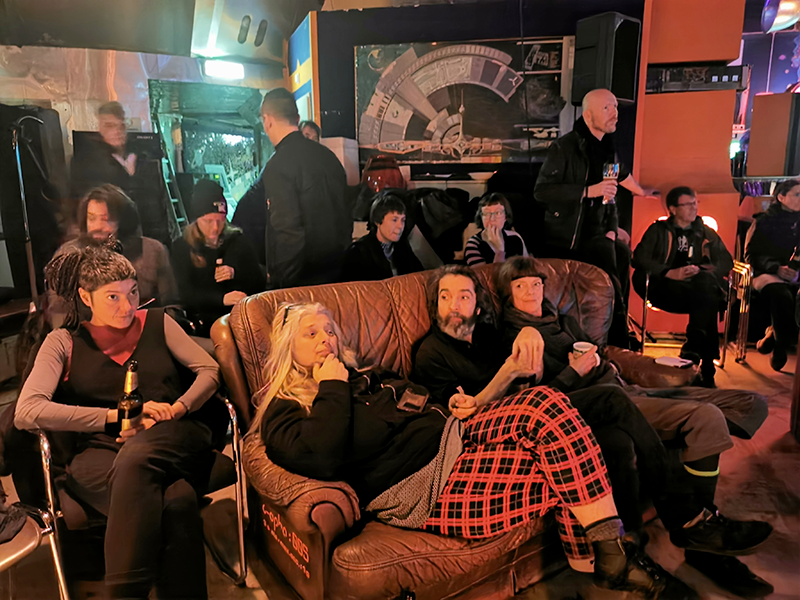
February 2, 2020 @ c-base
Rungestraße 20, 10179 Berlin
http://c-base.org
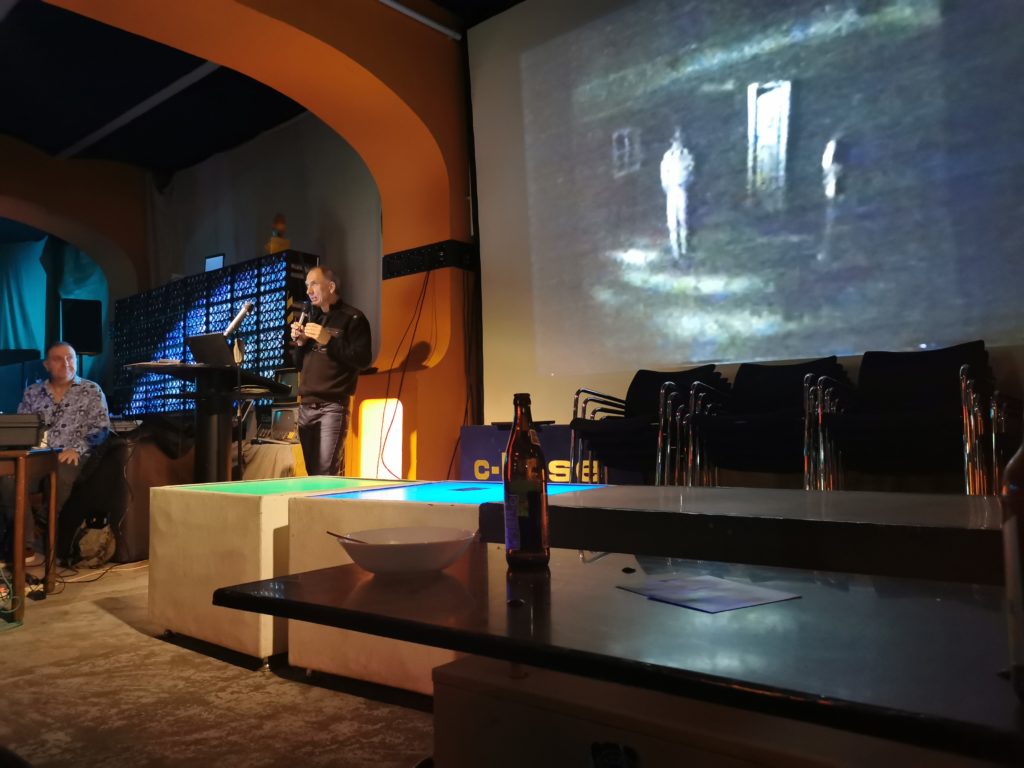
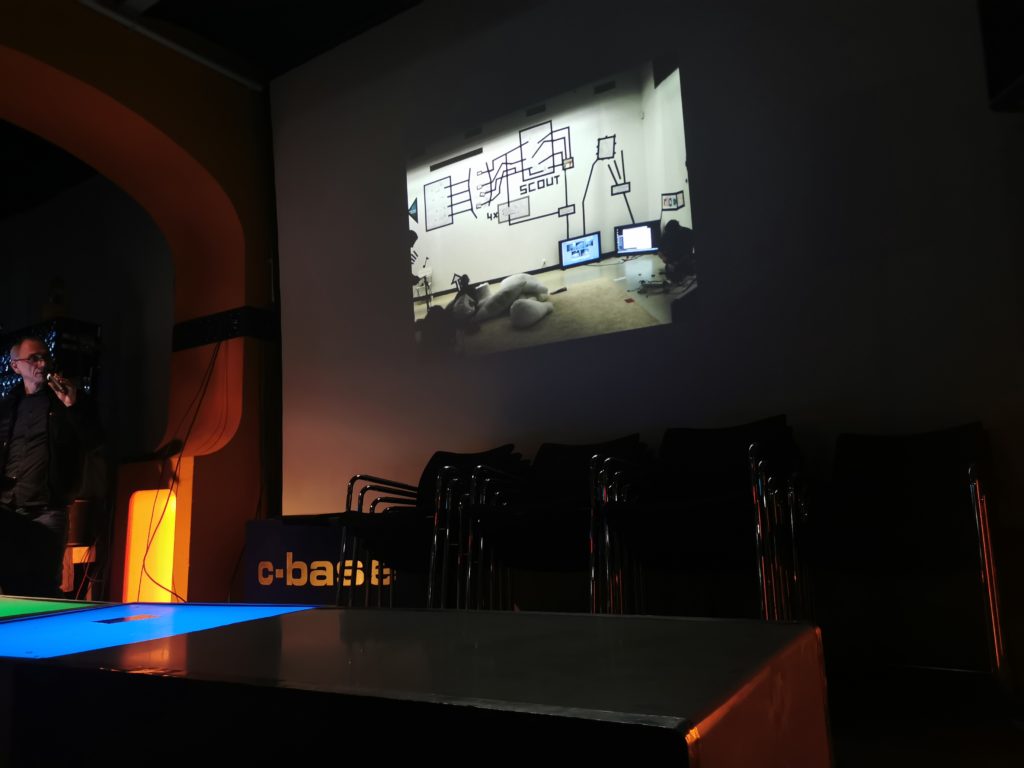
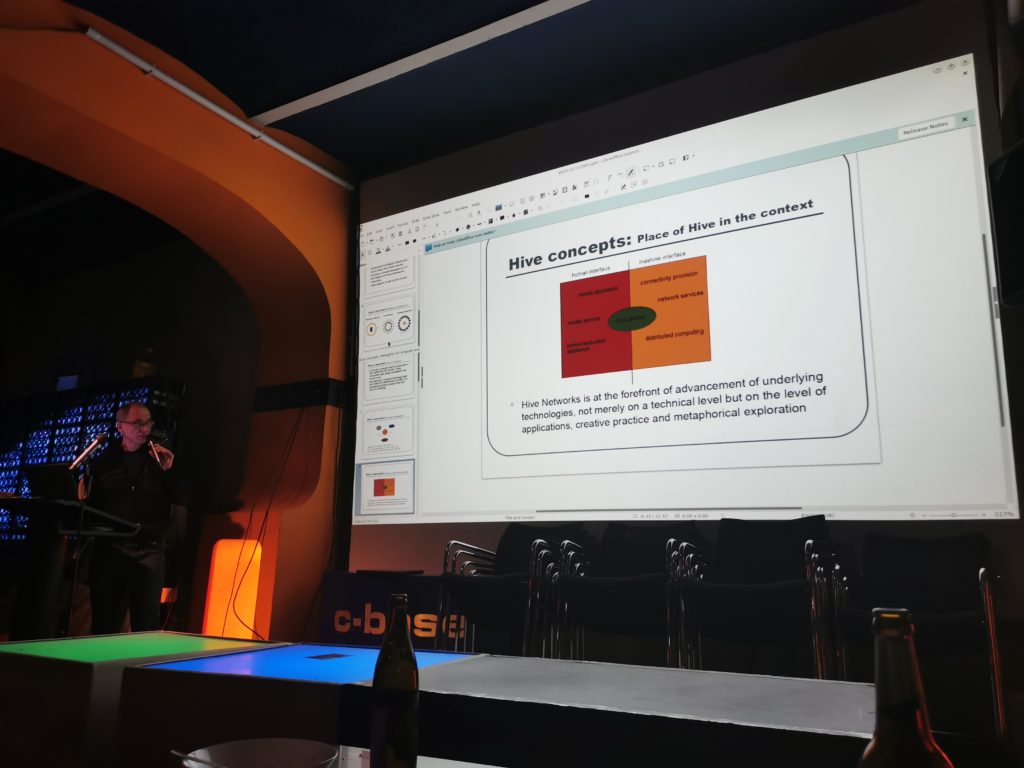
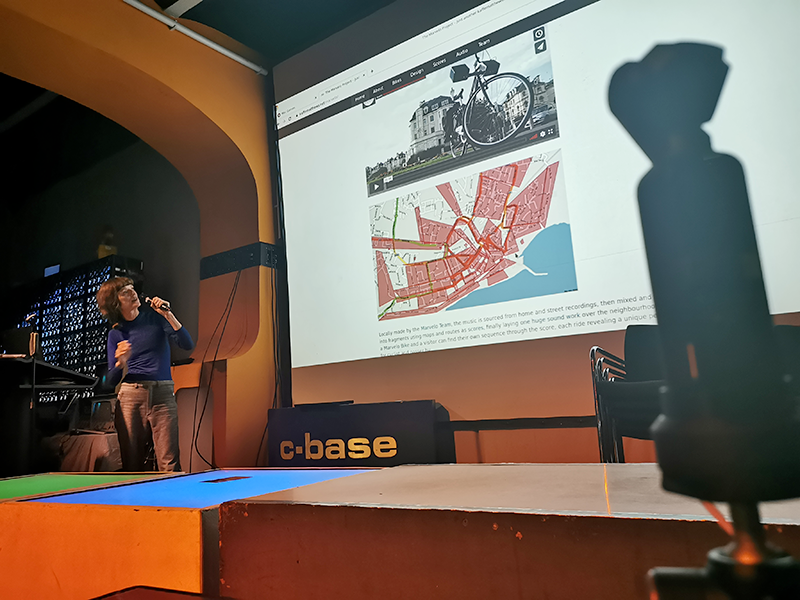
9pm – 11pm
Performance with
kaffe Matthews, Martin Howse
Delfinov
Iwanka Skrivanek
Xname

Kaffe Matthews, Martin Howse
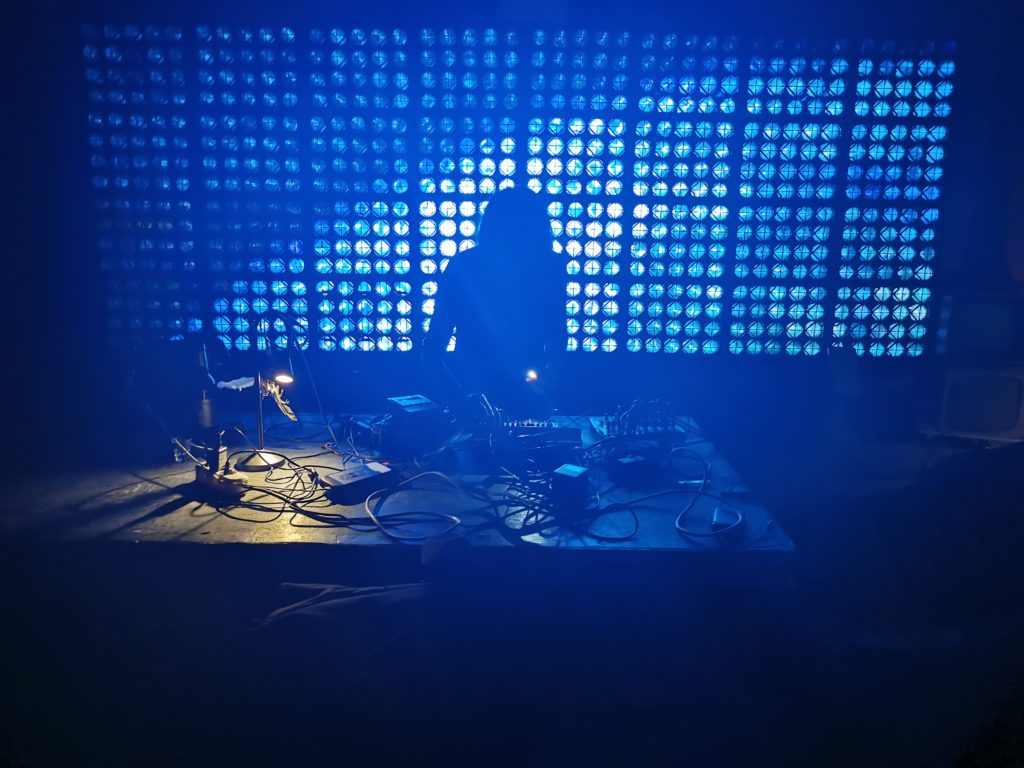
11pm onward –
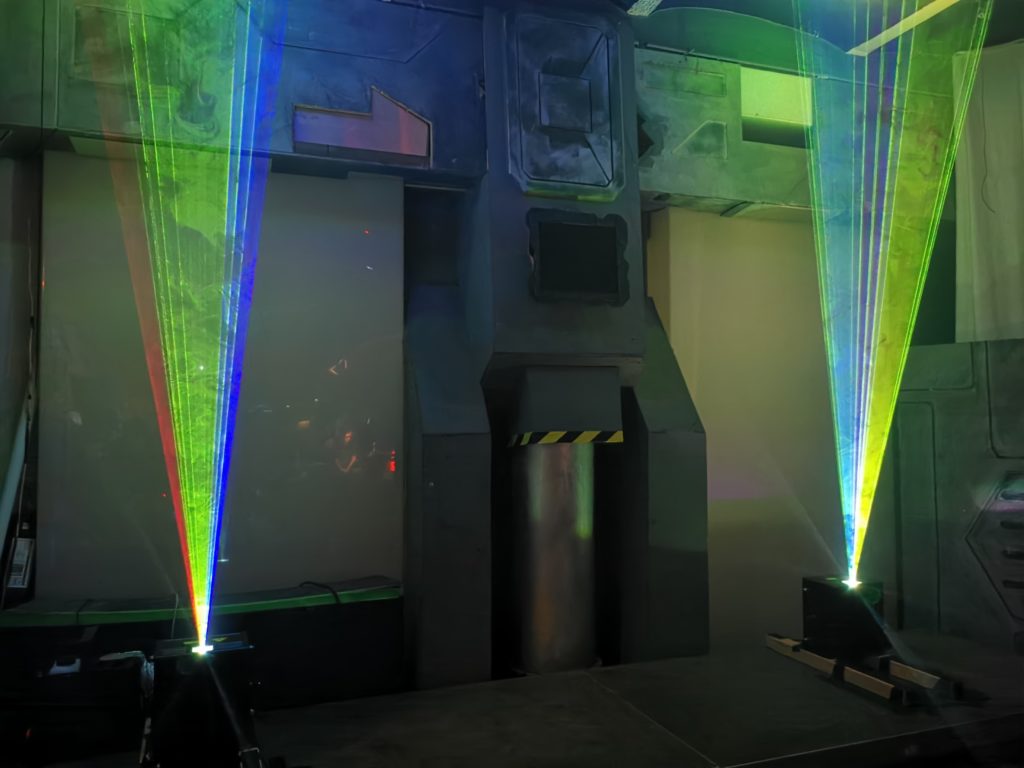
Vladimir Grafov lights up the dance floor with laser beams.
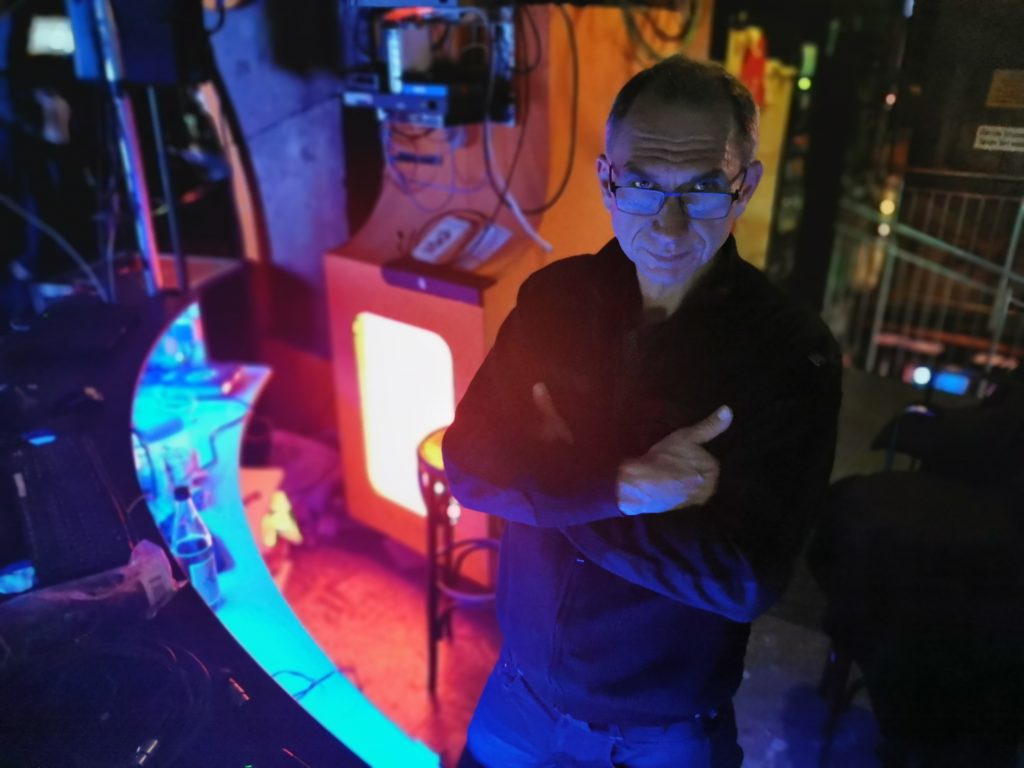
DJs: Iwanka Skrivanek+++++++
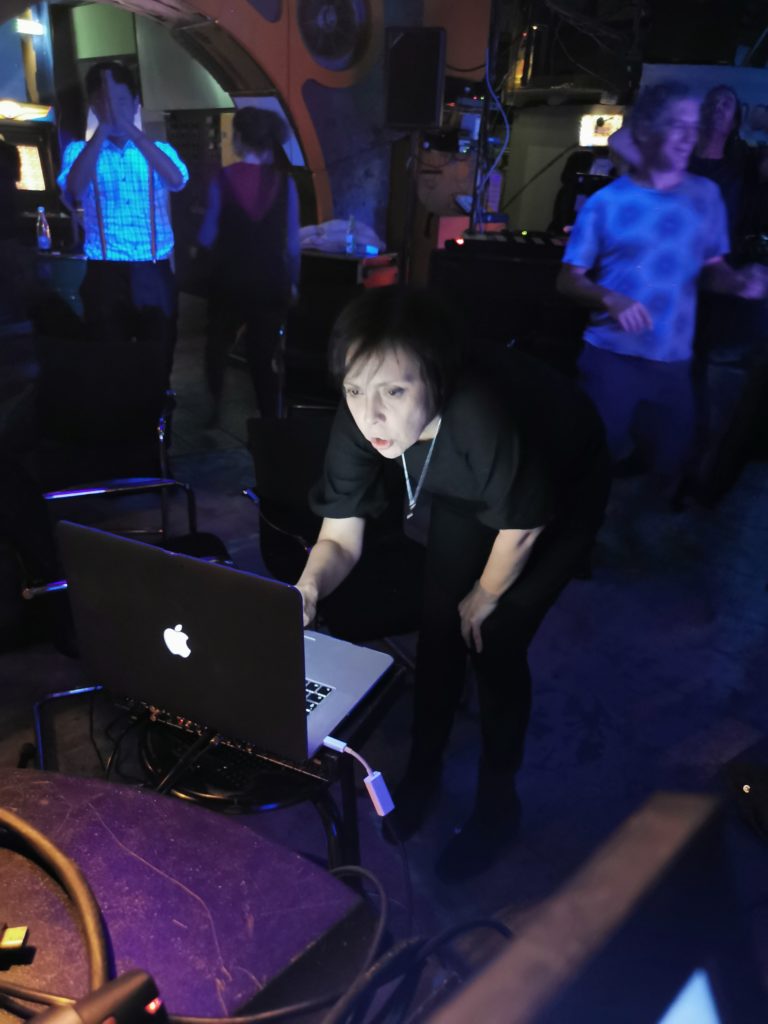
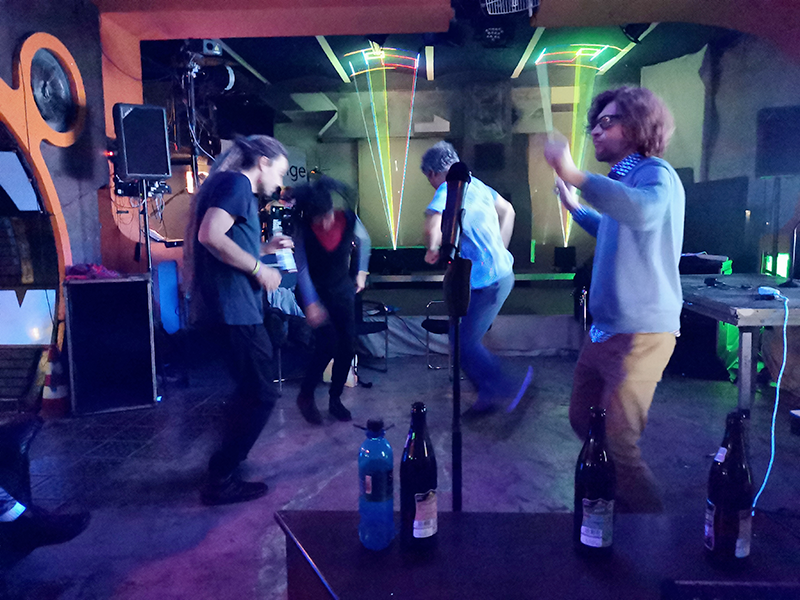
ALL NIGHT
*** MIKE OPEN
There would be a mike on stand for anyone who wants to speak out, share thoughts on Alexei Blinov.
***KITCHEN OPEN
On the menu
Adam Burns/ragu pot
Kaffe Matthews/pancakes savoury, deep chocolate
Martin Howse/grilled shiitake + surprise XXX
Shu Lea Cheang/winter pumpkin miso
Danja Vasiliev /vinaigrette
Iwanka Skrivanek/Borsch soup
*** BAR OPEN
C-base bar serves beer and softdrink for small price purchase.
As a tribute to Alexei, BYOB. you are welcome to bring hardcore vodka et vodka.
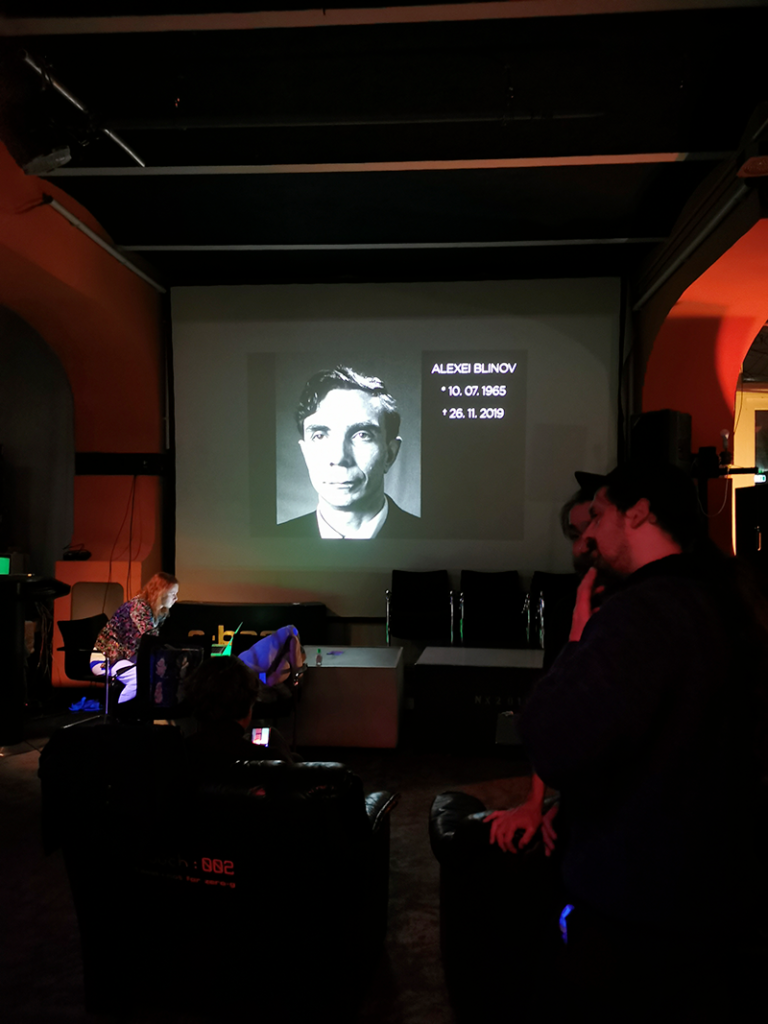
TRANSCRIPTION HERE // from Transcriptive
What I wanted to share were some moments around the time that I knew Alexa, um, in a more, uh, more closely hanging out together in the, in the wireless, um, community in the community wireless. I’m in London, so this is probably, if my memory serves me right, something like 2002, 2008 or so. I think it’s like the 60s man. Um, so I wanted to, yeah, so I kind of wanted to mention about something that is, I suppose, you know, when a person lives in a place, um, the pace becomes part of them and, and their community. And I wanted to talk about some of the communities that were around and what we were doing together, uh, and, and also what Alexa, Alexa drove in that. So, yeah. So it’s about, it’s about wireless and, and things. So I don’t want it to show you some of the community and some of the places, uh, and people that were there. So let me show you the next slide. It’ll make more sense, I think. Okay. So this is a bit of East London, um, where we were based. Um, so, um, up here was a mute, uh, down over here, we have, well what’s called here 20th century, but it would Limehouse town hall.
Uh, and so here we’re talking about a kind of, I think like a three kilometer distance, two kilometer, something, I don’t know quite a long way. Uh, and arts catalyst here was near nearby to where meat was and brick lane, T V one. I really can’t remember who they are. Um, and yes, AFCO things. So it was these people in these places, um, and, uh, a zoomed out map, which has a lot more free to air on it. And of course includes Ray lab. So Ray lab, I’m sure has a lot of, you know, but this was where Alexa was based. So we were trying to connect these different places, probably over about a three or four kilometer distances. Um, so to show you some of the places, uh, so this was an ambient TV up North. I don’t know what they were doing here, but it’s great. Something was happening. Like if only we could be, um, yeah.
Well, I was thinking more of the gossip. I want to know what was yes. So yes, this was, this was cutting PVC, uh, poles to make aerials. So Alexa, Alexa is, as you’ll hear over the evening, there are many, many, uh, parts to Alexa. Uh, but this part was cutting PVC pipes to make aerials. So without him doing this type of stuff, um, we wouldn’t have these aerials. So these were directional areas. They create a signal that goes out from that spiral. And of course we were trying to connect these different places. So this was ambient TV. Um, and of course we’re interested in what we could see from the buildings because we wanted to connect the different places. Um, ah, yes, look a good store of them. So you could see we’re trying to make here, you know, maybe a nine or so. So it was pretty ambitious, like, um,
and of course the most, most of the time of the photos use, he have Alexa or him gluing stuff and helping other people glue stuff. I hear we get onto Limehouse 20th century, more and more chairs with 20th century, same aerials, different place. Uh, this was so, so a 20th century. There were people like space hijackers. There was a university of openness, there was, it was Tokidoki and in it was a branch. There were many, many things. So this is an old town hall, kind of late 19th century abandoned kind of, uh, and a lot of things happen there, including Ariel making. And of course, Oh, and here is someone who was very dear to Alexa. Uh, geo Alexa NGO just came together everywhere they were. They were like, yeah, they were like Siamese twins or something on did. Um, and of course we had to make routers, we had to make aerials, uh, spoke stuff and of course get on roofs was another big part of it.
Now here at 20th century, they did many, many things, but one, they built a replica of a glider of British prisoner of war troops in some second war bore, um, prisoner of war camp. For some reason or other in the roof, there was this glider that they’d built. Um, roof action, more reflection, more gluing. Um, but these are different places. So we, we would have things from like social centers. So this was a hack lab in place called Rampart, which was about eight, 10 buildings that were squatted, a big part of a lot of different demonstration groups. Um, so connecting these different paces, trying to, trying to do our media work and of course, Alexa is there the whole time, uh, making stuff, getting on roofs, um, with other people. This is, this is where meat was based. We were based in an old school.
Uh, and yeah, and that extended, that was part of, uh, Berlin as well. Uh, or Bellona as it was called for some time when we tried to join the two things together or do the same things in two different places. This is then at the wizards of OS. This I think is 2007. And uh, yeah, it looks like he’s explaining something here and they don’t know if they really getting it. Um, and I think, um, other people will know better than me. I think there’s, this was the mesh network. Jamie King. There’s Jamie King. Yeah. Uh, hive, hive. Hive. Sorry. Yeah. I need other people to fill in the gaps for me. I’m like, Mmm,
hello magazine.
And have I reached the end? I don’t think I have. Maybe I have reached the end. I don’t know. It’s not clicking anymore. Okay. Maybe I’ve reached the end. I thought there were more. Um, but yeah, so it was a very hectic time. We were, I mean, you know, if, uh, if you told someone now there wasn’t, there was never any wifi, they’d be like, what? How is that possible? Um, uh, you know, you had to make your own aerials literally. Um, and, and, yeah, and I suppose, um, uh, yeah, it was, uh, Alexa is, uh, contributions his driving his know how his enthusiasm, he’s willing to get it done that, that made it happen. And um, and yeah. So yeah, for me, um, yeah, it’s about this community that he was connecting. And just as a, an anecdote, um, I wanted, I want, I can I get a web browser up?
I’m sure I can call or do you want someone else? I need someone to help me figure out the track pad thing. So like a, so something very interesting happens. So there’s lots of ways that this kind of rip pulled out in different ways. So, uh, for some reason or somehow or other, it happened at, uh, the line. Yeah. Limehouse has town hall, a person called Thomas crag did the first, um, book sprint I suppose of sorts, which was, um, wireless networks in the developing world. Now this has gone on to have like 2 million plus downloads. I’m sure it’s maybe 3 million now. It’s, it’s huge. But so yeah, if those things hadn’t been happening, it hadn’t connected. Uh, um, yeah. Yeah. It was kind of something, Oh
yeah. Or just like
yeah, I’ll work it out. And I think this will kind of wrap it up for me at least for now anyway, just to show you. Yeah. Okay. So this has been going, this is a couple of, in multiple translations, men that people are put in infrastructures all around the world, uh, for in a whole variety of countries and really just, yeah. Grown on its own and gone off. So yeah. Thank you. Alexa. Thank you.
It was easy to use.
It was even used recently in um, a European funded research project called net commons, which studied community wireless networks across Europe and the world. And it was used as a reference document for later publications that came out that included economic business models of wifi networks to mesh technologies that we used. And even earlier.
Yeah.
Okay. So I’m going to hand over to someone else. The next mystery person. Who is that person?
Oh, by the way, the proceedings are fairly, yeah. Ad hoc, ad hoc networking in a very old school way. So if anyone wants to join in or have a comment at any time, please feel free to consider that. Raise your hands or just grab the microphone off. Anyone who hasn’t,
do you need your laptop? I need some other to ones. Whatever you more comfortable with. Let’s, let’s try the USB stick. Yeah. Maybe we can put the Ray back.
Hello everyone. Um, I am coming from a different, uh, story and different backgrounds. I’ve known Alexie for I think 30 years from now. Um, am I, uh, understandable. Okay, thanks. Okay, so let us put up some, uh, content, uh, on the screen so we could, uh, I could tell you my story. That is my part of the story, which starts actually back in 1989.
Tell you what you talk.
Okay, good. So let’s, yeah, let me see. So it’s
this one? Yeah, sure. Okay. Maybe you put up on the browser right there. Do you want this or do you want, do you want Ray land?
Yeah, I want to show a couple of pictures just, and just start the story with this one. This.
Okay, good. Do you want write up first one? I know that you said would read out in the browser. Yep. Okay.
Okay. So let me tell yourself in about a or possibly have seen this name. As many people know, REL EP as a place in London as a, as a nod, as initiative. Uh, but trail is started actually, uh, in something completely different is a collaboration which was built around, uh, uh, different types of technology. And application of his into the arts in different ways. And actually the,
let’s see, sorry, just let me check. What would you mind? Oh, okay. Okay. Okay.
Okay. This is a photo from 19 nine to one and a on this photo, Alexi is playing this a Thurman device, which he made himself to get the, this actually to get it to somebody else in Moscow and on the squat on Petracca street, which was like also a hop is so kind of initiative taking place and the creative stuff going on. And that’s where actually a old corporation started. Then he came to Amsterdam, a Wilson festival. There are some, I think it was some of his time, uh, like media, art, interactive art. And so, so he came is this device and he, uh, you know, does everybody know what was Thurman devices? It’s like there’s some thing. So, but of course you probably know it is this little box with antennas on two sides. We should play and great some music. But of course for was not enough. So for him, the theremin device would be something which will consume the whole space. So he made this thing, which would be the size of this room is three huge antennas. And you could actually remove a needs of woman’s degrade, the sounds so created texture, the space in which you wanted to.
That was one thing. And then the second thing, okay, so what do you do? Busy. You have the sound too. You want to do something else? So it’s, so he asked me, uh, to build some interface for AIDS, do some lights. And so that’s what we did a couple of times. And this when our corporation started and the, and the thing, this is the actually physically
Oh, next. This one. Okay. Yeah.
Well, yeah. So physically this is the very first device Alexa made himself. There’s a picture of it. The very first one.
So, um,
so that’s the one that you came to Amsterdam in 1990 you one 92 the thing,
uh,
see if I could show some interiors. Now I don’t have it, but anyway, so this is a, it was the beginning. You know, you could, you must’ve mentioned, I mean, most everybody knows this time it was like nineties, early nineties. You had the Soviet union with all its structures, institutions and industry, which sort of collapsed in. And uh, at that moment a lot of technology, it became sort of accessible, very low, very expensive technology, high end technology. Like you can all sensory things, laser salt, the stuff you could get it very cheap if you knew the ways you knew the people after this thing. It was like quite successful. This collaborate with these couple things, what’s fun to do it and then decide, okay, let’s try talk called corporate. And he went back to Russia and uh, at some point I think 92, it was still, he calls me and tells me, you know, graph of, uh, what do you think about lasers?
Uh, I don’t know. I never to tell something is lasers might be interesting. So I did a little research just to figure, just to figure it out. It’s like incredibly expensive and you know, you need to be like this high end rock band Geneses or whatever. Deep purple, pink Floyd to use. The latest in your show said, uh, uh, could get a cheap, you know, you only get 1 million rubles and the murals was like maybe a couple thousand dollars. I mean it was something measurable said, but well it’s the kind of operation, so we need to do this operation, but okay, you need to get this money, we need to send a computer to Moscow and all this kind of strange stuff, you know?
Uh,
so operation took place. It was like distro section thing is uh, all kinds of weird situations involved at exit, driving in the old lotta to factory buying even cash, 1 million cash to whoever. And uh, eventually it will just machine build and uh, in one of these institutions in Moscow, like a research Institute for radio optics, whatever, it was quite a challenge to get it out to first to start with, to get it out of, uh, this editorial of this Institute and then to get it to Netherlands. So how do you do that call? You sold the tissue, of course you get extra technology. But the other thing is, okay, how are you pretty good here? So, and as a, as an artist though, you will know every creative source. Say, okay, you know, it’s a, I’m an artist and it’s my sculpture. It’s a kinetic sculpture memory of scribing.
You know the scrap, it was the Russian composer Khalif like in the early 20th century. So, and that’s a, that’s the way if you go to actually do stuff to dental Lance and then the basically a, that’s called a what later was called already started and it’s got different name throws it all scald for till 1995 we had the name floorboard Borica so far. Technology. And that’s the name of the beach. So just to show you a bit of politics, this is laser goggles you took from Russia together with the laser, the original ones, he still has them actually, they’re still in London. It’s someplace to heat. He kept them in the rail there. I think a lot of people have seen the
so, and um, so that period, uh,
what did we need to, I mean, of course you will get laser, have fun and everything. So, but even so I had this idea, you know, you have access to all this technology, you could do a lot of stuff. Is it? So what you do visit, I mean, nobody knew what to do, visit. There were no war conversion programs, nothing. So, so this whole laborious of our technology as a group was from Toronto DOK. Okay. We get the technology out of this institution and make it accessible to the artists, to practitioners who use it. He took it to they’ve it to theater of a Dick for installations. We take it to the galleries, whatever. So the focus of work was okay with you take technology, which was not accessible before and the bring into into the completely different contexts. We did lasers, we did night vision devices, we did all kinds of sensory installations with interferometry. So all these kinds of greatest stuff. That’s what we did in the Netherlands and Amsterdam up to 1995 when Alexi moved to London.
And um, yeah,
well short way you inserted the one, uh, the video offer. It was good. I use it
this, uh,
well, sorry, salt my laptop trenches.
That’s fine. What’s that? I need to go here and to show a video. Okay. Oh, it’s there. It’s another screen jewel screen. Right? I see. Okay. I got it. Yeah, it was there already. So I’m just going to find them
just as a restoration of what kind of stuff you did to, to let you,
no, this one would be, you’ll see, you will see is fine. Yeah. Okay.
So, uh, no, I don’t think so. I don’t think that it sounds so actually, uh, it wasn’t a, the gallery artist MEGT in Moscow, uh, sorry, in Amsterdam and uh, it was called the, an exhibition called the inventors. It also bottles it illogical artists in Netherlands in those like late eighties, early nineties. Well, many people, they’re also from Spain. And so we were approached and said, okay, could you make an installation? So is all the stuff, so a dibbles. Okay. So,
Mmm.
Okay. How do you make something, which on the one hand is illogically interesting. Like use the solar stuff and on the other hand does appeal to imagination to the things. So, I mean, it was technologable sensory sensors. They’re the extension of your vision, you’re feeling sexually, you get access to information. We should all have. So liking for a spectrum, that’s what you get. So we had this room, it balled like a thing, 15 by 15 meters
and uh, uh,
and the stealing the ball assesses little lasers like about 20 of them, uh, which would measure like should the triggers in network of
uh,
and each sensor was uh, actually playing the sound. So actually the idea was the creator librarian of salt in the space you book through eater, you have to decipher the message which you get there. So actually you walk one from sent to another and see if hear the word you walked to the next one, the infrared lasers or then you could see yourself, actually it’s the infrared cameras to use a little monitor there. And you see these doors and things that actually, uh, uh, like the pieces of black Glofish, which is Blake in a normal light. But infrared is like white, completely white is totally reflective. So you could work with this material which has different properties in different part of spectrum. And then we create this, Vivint made this like made all this stuff and monitor and they had this message which was from lousy actionable scolds. Uh, what’s your cap is nothing but it’s better if your show off something that it could be put to use or other way around. Something like that. So the idea was that people work in this salt laboring, so it was a South lumber infusing for red scammer vision and his cameras, his backgrounds, which actually show different parts of relative you should only you don’t experience before. So this is like typical project we did in those days. Like early nineties in Amsterdam.
Yup.
Okay. Plus fun. A lot of fun. Yeah. This stuff is, Sarah means like antennas with sensory. So it was always like inventing about Alexa. I mean Sarah man, it’s about uh, electromagnetic face propagation six, the waves, the whole thing, what the spectrum was. So energy, a lot of magnetism, the fields, what is it? Uh, so he’s a, he’s a patient for that. It was, it was there from the beginning. So in that sense, I think that transition later, like in London, but he did of course, he did many other things like all this multimedia stuff, sensors, lots of sensors like old your own thing. It would be this BAFTA award for it. And then this what we have just seen this whole antenna and spectrum stuff. So I think to me it was very logical that he software arrived to that from this his idea if you need TVs, okay, what is the free uh, uh, wifi? What is spectrum was right, but what does the waves, what’s the nature of the waves? So,
uh,
okay. So let’s move to the next.
Yes, yes. Okay. That’s all right. It’s over there. I’m sorry. Yup. Okay. All right. Um, no offline. Just find it a thing. That’s okay. Um,
so I think gonna make a little jump because the likes like a well, different periods of my corporation was that exposes some Saddam period and early Amsterdam period, like till 99. We did a lot of stuff. You saw some, uh, videos in the, in the, in this real barrier Verbier which was running when you, everybody was entered. And it’s about this stuff. It, it was dangerous. And then I think, um, look at this break in our relationship, like all the break relationship. And then at some point he came to me, it was 2005 to Amsterdam. He said, you know, graph, there is this whole thing. I’m really, uh, it’s very interesting. Uh, and it’s about this, uh, wireless networks, all these devices and all this stuff. Would you want to join? So that was, so what do you think? Like, so if you can make sure just to, to share some ideas and to try to get me again involved in all these things he was doing. So, and about the time he was collaborating this, uh, take 20, 30. It’s
uh, let’s see.
sure. Yeah. This one goals
over there. Yeah.
Well, I think your people here.
Yup. Yup. Yeah, let’s make it’s okay. Yeah.
So he showed me this picture and said, would you like to join?
So I said, yeah, why not? Okay. I said yes. I mean it’s just, it’s uh, and uh, uh,
I think Julie is, she’s, she’s here and that’s, thanks to hear that we are all here together. She will see she initiated this whole thing. So, uh, I don’t know cause Berlin or London, but it was a thing which she was exploring this whole way of connectivity spectrum like spread and antenna’s supposed to really are like completely his stuff.
Uh, and that’s time and um, uh, Oh yeah. Okay. So,
okay. So I’ve gone to be a Gumby. Jump into your, won’t take much of your time because I’m going back to, this is 2006 sea bass is right here. So that’s a now into the interdis hype period. What’s half network calls
and uh,
have networks. Uh, the know, there are few people here who know when you are. Like it was like 2005, six, seven, eight, probably till 2008 that you need the Chapin. This initiative was actually a very active, it was actually funded by our council Finland first as a research project and the later was a full scale funding to do a lot of stuff like go around to develop the Kita and all the things and uh,
aye
want to show you. Okay. No, no, no. It’s something else. Completely different. I’m going,
Oh yeah, I’m sorry. Okay. Yes, I’m here. Yeah. Okay. Um, Oh yeah. Okay. I think I’m sorry. Yeah, I think this, uh, this event. Okay. So I have to go, yes, yes. Okay. Sorry.
So if you go back to,
yeah,
so go back 2005, this is the lime calls in London is a conference about, uh, the uh, wireless access, open open source software and everything I’ve said and all of, there are a few, I think James must have been there. Some of you people who have makeup in there. And it’s the Limehouse Nope. Yeah. vSphere works summit three information infrastructure.
Yup. Yup.
Is that my message? So, uh, lamb calls, so, and that’s some people there and it’s, let’s see. It’s actually the first hive crew. It’s a Alexie. It’s me and Bruce,
I think. Uh,
and this is some of this, uh, the start from the period, which were like bits and pieces of all kinds of, um, you guys be a infrastructure and what I want, sorry, just the double screens I have to deal with. Is that,
Oh yeah. So I actually,
I want to show a
Oh, yeah, yeah. Okay. Uh,
okay. Just want to show all this prison presentation. We detection alarm calls just to get your idea of what you’re working on the days. Let’s see, where is this?
I don’t know. Anyways. Okay.
Just go like this. Uh, 2nd of October, 2005.
Uh, no, just notes. Let’s see. Okay. All right. Probably a full screen. That’s okay. Yeah.
Sorry. Just going back and times like what is it 15 years ago. But the thing, some ideas we had the will part of have those days are still a maybe more like short these days. And it used to be and uh,
Mmm.
Couple of words, embedded devices, ubiquitous computing, multifaceted of some native devices, uh, tools that enable users to manage space, tie inbound, that and self and everything. So there was quite a big dream and big commission to do something visited. Oh yeah, let’s see. Page down.
Nope. Nope, you’re good.
Love relapse. So it was basic idea. The vision then was Acacia. They all went towards the through PC and then to embedded where everything is connected and the differences. You have this person, the user, which is actually the human being in a center. And then, uh, it was a bald relationship. Okay. Which relationship do you have as a human, uh, between your visual environment and the feature?
Mmm.
And then what’s the role? Is it technology? Should it play in, in this goal, a relationship and the, where should the center would be? Because in those days, actually this was a lot of attention, of course, to build an infrastructure. Beckwith was not there yet in many aspects and have networks was not about that. It was
Oh Kate, what happens?
Yeah. Okay.
and in those days, like a, I mean it was very early days on stuff. So we thought, okay, if you take these three basic principles, we take like open source a software behave, we take the uh, open hardware path from each should code, could be available and we then we take this, uh, what’s there, it’s uh, all your hardware and on the open spectrum there it is the open spectrum, the VP. So these are two elephants, these three LMS like basic a cornerstone, the software. You could build a infrastructure and which is sexually and not corporate bound. You could build infrastructure, which is the basis. So for this community approach to uh, different things. And one of the things that we’ll then put, I think was the ownership. Like, okay, who owns the owns it, whose whole thing is it?
Then the,
I also a couple of slides, these, these, so this is like a sense of high power.
We do it. So and uh,
yeah. You had one action. Yeah, the true, yeah. Yeah. Action. This visa to FedEx it to a two to me in Amsterdam, he came to the UK. We need to uh, make a device. We need to do this hardware and need to dislike habit and development. They have to raise the fonts and come up is a kind of new device to do things. So then instead of us looking at Bay, what’s there around tables is WRT opposite links is stuff which everybody knew those days, which was basic building block of all the wireless networks those days, the links to stuff. And then they bumped into the soften else and it was this little Oslo’s device, which was a being able to get placed for hard drive and it had opens, it gets a LinuxONE 2.3, I think, kernels, nothing. And uh, there was a coal competed line of like a cord for it written by a guy from white, Russia.
Like all, like all, I could put all X firmer so you could actually get this for number, put it on your device. You could total control of everything, including your use, your connectivity. So you actually, you had access suddenly to this whole new world of possibilities, which we, you get to interface open. So it’s not just basic connectivity block, which we’re still there. All your older functions of routing and everything access point could be there. And above that there was a layer of connectivity and uh, capabilities of the device, which could be actually employ it in a different phase. So that was actually said, okay, then why should we go into this hardware development and do stuff? Okay. If you could start with that. So if we could find, you could maybe build like the Seco system, environmental folders, use be connected stuff. So cause it was there
and then, uh, yeah. Uh,
so those are things we did this days. A lot of futsal stuff. We tried all the scams and everything. So we got, it’s all run an actually as you had this little, yeah, the two affirmer branches, the packages, we’ve got webcam for life, video streaming. Was there empathy services, which DP? Uh, sound devices. It was all this technical advice. It could do everything all for free. So the cost and so from there, what you’ve got to this ID, okay. If you own this device, you have it. If you have this access to something very, you could actually change the function of your device. And we call this full foxes personalities. It was like before the Android store or before the Apple store, we actually download the app. You choose, you run it. So that was the whole principle actually of ecosystem where you all had to have this hardware and the second to have access to the web service where you could actually download free open source package, which turn girls’ your little device into anything webcam or the stream of thing, build basic building block for your home automation. Uh, you got all these things sexually running on hives. So that was part of this package we deliver towards cancer towards console is a, as a project, so well it’s actually a
uh,
cross compiling big bags. So a lot of stuff like FIPs service, dot net. It’s something completely different. I think it’s a B gave it up last year. It was immediately taken by a two different companies. So this is shortly about hyphen just to show a couple of more peaks to around the top. And if there are questions just go on because there is more stuff. 2005, that’s when we scripted this field to change, to use on this, uh,, you know, thing 2006, seven they go to training as a hive. Let’s see, let me go to training as a service on web is all these mesh network as part of it, they use a, Oh, all the sir. And then there was another protocol from electro. We try to do that as well at Manor thing. I think it was Beckman, right? Yeah,
yeah. And then the
and the, there is a lot to tell. I mean nickel gone forever. But I mean there were a few basic things and of course it looked off connectivity but not in heretical way but more mesh mesh way. But cheap notes actually makes part of certain network events to add more nodes to get more connectivity. And each device would have two things. You have basic connectivity function which would create a network, should have it spread it further just by plugging it in a second. Was this a actually a, the other part which gives you access to the functions which could the auction not only makes your elect basic infrastructure but makes it meaningful infrastructure. It could share your content, do the stuff and everything. So that was actually the essence, a shortlist of the hive. So
sort of server that you could, you could connect it. This super tiny machine and I had like I think a hard drive from a gen two machine that I had re fleshed with these an inside this as a hard drive. So I had the huge server that you could just connect and, and share a gigas and gigas of material with everyone. And then also having served I think services if people connect through the browser and um, I don’t know, play some applications. I don’t remember exactly what was it. And then I guess they could con talk to each other if there were more than one in a, in a place and, and created a sort of local local network.
I’ll show a couple of peaks again from some interfaces to build those days. This is like the main control interface where you could actually see from this main console which device recommended popup. You see media to this map, they build up the shore, what’s there, Zippy address, what these personalities installed, what functions they have a network and is they all connected automatically once they see the five, they just get the built automatically the infrastructure mesh infrastructure. So this was the main interface and you could go in through the web interface into the configuration of the device and just control the whole thing basically in your, in your complete match.
And um,
couple of things, just general ideas, you know, like how it should be, the infrastructure, communication provision and content gateway. It’s all used to be based. Of course those days, there was nothing else. Show me some peaks, media peg. This is the, you know, this famous belt in famous bells. Some people have owned, I’ve seen, you know,
and um,
GPS services and other projects is hidden history projects. We check, should they consider top FM broadcast facilities. You could visit your here, use your old mobile phone, is Bluetooth upload the Trek or anything speaking to takes. It will automatically do the FM broadcast locally over the area. You could define. So all this kind of across a Ben transitions and other concepts, arenas, Colonel open WRT and all the stuff which built above it.
Oh yeah. This is a severe, this is your work. It’s a district 20 carte festival. 2007. We had this life thing. These people were in this space. Go on the streets like collecting data, like being in this, you know, like active, like streamers and everything coming together into the system, being processed and combined with some uh, V2 in Rotterdam and stuff. Another one. Yeah. This is this hive pig discolored look like, you know, everything works. And inside there is this summer these little puzzles device, which actually makes them match. So you walk around and is like five, six people. You create a mesh network automatically just walk in there all day, you stream to this main location. So this kind of experiments we do those days.
Yeah, it was fun basically. So
anyways, I mean I could go on forever, but I think I was told for now just give over my microphone to whoever wants to take it over. So
yeah, ambitious for cute. He’s hugely ambitious and as I recall, you know, it, it stumbled through all of his difficulties in, um, you know, and just trying to prepare whereas to upload onto, um, onto routers that were difficult to get to get ahold of increasingly as this manufacturer, I think the, I, the ISIS stuff became scares. Um, and obviously, um, the attack and service and expectations just blossomed. And it wasn’t long before people were looking at their phones with envy and trying to get their internet connection through the commercial providers as they were. And I wish this almost sort of foretold in a way by, by a few years. Um, yeah,
yeah, true. And actually yeah, this is the classic and actually what, what, what uh, I think partly a simplicity. I mean of course we had to use do these because there was no device on the market. It was nothing which had no personal personalities. Like you had this hardware, you bought a device, it was all oldest chip, you’ve all device. It was something else in business you could buy one device and configure it to whatever you be showing you needed to have is like ports and everything. So the whole concept of like you consumer device and everything, it was by these, we tried to go around it, you know, of course later what you go do, you call this app store, you’ve got iPhone, which get old everything in it. You got the app store and you’ve got majority markets. So this technology breakthrough, I mean we were talking about okay, could they get it together in one little device? Handheld is all the functions, but we could not find funding for that. So basically that’s a
yes,
but the concepts that usable basically there it was, it was around those days,
so. Okay, thank you. That’s fantastic. Let’s look at all those images as well. I’ve never seen that one.
Thank you. Grapple.
do I want to say a few things? Julie’s very keen for us to have a discussion with some of the people who were involved in some of the, uh, community wireless network development. And I’m just as standby standing around watching you’ve led him here to talk about his involvement. Uh, Judy and priests just turned up. He and Julian where I am, he’s hanging out, hanging back there somewhere.
Fantastic electricity had, come on. See then, Hey, come on down. It’s your time in the spotlight. Get back, get, get behind the mixing, get out from behind the mixing desk and the IP lounge and come on down here and show you.
Well, I mean from, from, from my perspective, um, you know, as we started out, sit down. I’m going to sit on here. Yeah,
yeah, yeah. Good. Yeah, I think so much better.
Julian and I were, we were working in a, in a small street in South of the river near London bridge, Julianne in one building and myself and many others, another building called a Winchester Wolf. And, uh, we, uh, we’ve been fortunate earlier in the middle of the nineties to get some lice, very early web work, and we had a fiber connection into the building and we’re very keen to see shed out as widely as possible. But the legal constraints of Telekom manure meant that we couldn’t throw a cable across the street even though it was very narrow. And Julian, uh, underwrote the cost of a couple of very, very primitive, um, IP radios to make the link. And so we’ve, we documented that and did some work through it with a few kind of, uh, yeah. Expansions of idea. Trying to think of how this, this technique, this technique was technology might service to break out of the lock into modem and, and broadband control that most other people were, uh, limited by, and we made this link across the, across the street and we started working on a, on a well expanding on a text for that which began in the end became known as consumed, consumed on that.
And um,
yeah, uh, well backspace, well, yeah, well that I think that that’s this succession of previous sort of our adventures that led us to meet each other. I worked on the one side in this building, Winchester Wolf and he’ll hear on the other, uh, in a commercial. Um, the Navy was running cause something called medium red, which was like a, um, yeah, multimedia production house and, but he wanted to share the link. So that was the initially to investigate what techniques would work. And so many of those, um, tools, which obviously become so ubiquitous now that we almost don’t even recognize them. They’re so tiny in every device. And it’s difficult to imagine what the excitement, the level of excitement, the idea of being able to jump from a 54 kilobit modem to a two Meg link or even higher. It seemed very exciting. And, and the notion that you could start linking these things together and, uh, yeah, bridge out, but something that we wanted to write about and we, that we seem to sort of hit on a moment there.
Um, the, the news was well propagated and we were, it wasn’t long before it was obvious that we obviously weren’t the only people thinking about these things and doing them. And, um, we have, we, we began to get in contact with others, not least of all, uh, activists here in Berlin. And, uh, with the help and guidance of our, our, uh, grand peers and friends, not least, uh, almond Meadows who many of you might know, we came to Berlin with the intent of holding a meeting amongst those who were interested. And so many friendships were forged and, and have lasted long now at least the ones that, um, you know, LXC helped us, um, perpetuate because it was with his technical kind of exuberance and enthusiasm for everything to do with the social and the technical men that we, um, it helped us adapt to these environments and others where, you know, where there are, know those great expertise and a huge variety of social expectation.
All in all that needs to be cooked together in order to, you know, foster a wider kind of engagement. So we were well chuffed to come and um, it wasn’t here at the time. Um, but it was, this place opened in 2000 and when, when did this room open? No, it was so maybe mixed from between here in a place called boot lab, which is a long gone and we held a long held an afternoon say afternoon and evening session there hiking architectural conference. By the way, I was unaware of that probably should it be more sensitive to that? That’s, that’s my area of study previously and I’ve kind of migrated quite a long way from that. And this kind of world. So, hi Jane, was it, sorry, I didn’t, it was unaware of that. Well, it was a sort of an appropriation.
Yeah.
So, uh, was here on my left and I, I know many of you will have a marrow mess up by coming here to, to the fry fund, regular meetings on Wednesdays over the years. But her, you know, her, her, um, her impact and energy is also well, well, you know, well appreciated and felt, I mean she’s done so much to sort of extend the capability of wifi in working with, uh, we mentioned Batman and there’s been various innovations of that and, um, in different contexts. Um, other, other, other, uh, great innovations like the mashed potato, you know, and I know you have a, you know, wide field of interest to do with DIY use of radio and exploitation of other techniques and technologies. So, I mean, is there something you want to sort of add to that waffle?
Well, where shall I start? Uh, to me, like the early two thousands, uh, when I started to build the same type of, uh, uh, helical antennas that we’ve seen in the presentations before, uh, I was doing in tech support for, in the media to report from, from the struggles of people. And um, so I was interested in the technology and uh, I learned that a group five from this meeting here and place people told me, Hey, you have to go, there is something for you. And um, I had no, no imagination what would come out in the end that I would travel around the world meet some of the nicest people I’ve ever met in my life. Amongst them them is, uh, Alex say so. And a socially involved like-minded tech savvy people with a vision. And it turned out that people were sharing this vision amongst, uh, countries and continents and just so, so lovely to see this. Oh yeah. And all this old material. Yeah. It’s lovely to see it. There’s so much that I’ve seen that I love to be shared. I guess it’s already in debt. Yes, of course. Of course. I don’t know who, who introduced me to the tool, but, uh, yeah, it was great.
Just some mention because I think particularly for, uh, to have this conversation here in C base, um, particularly, uh, working with electronics event and, uh, this was, uh, 2004, I think, uh, kind of reflect back to what Simon talk about around this time, the SA. Uh, and, um, actually I just come in phone, uh, you know, I just, uh, got to see the show at, uh, how’s the culture of the bed or the, the network, uh, exhibition from transmedia. And somehow I feel maybe, uh, this particular wifi, if we network history seemed to be not person in this particular show. And so in a certain way, I feel we are now kind of recapping this particular history and I, I must say, uh, somehow, uh, when, uh, between London and Berlin kind of come together, isn’t it? And, uh, uh, one on our part, it was a, this rich air take 2030 project, but actually with this project and, uh, uh, doing, uh, the wizard, Oh no, that was 2004. Yeah, yeah. Yeah. So I think, I think maybe a lot of people didn’t quite understand that particular history. It’s actually come over here, you are in the dark. Um, there’s particular history at the time of, uh, either 18 for me coming from outside, but the quite involved, but in the beginning was more like you see the scene London and you see the scene in Berlin. And then gradually, like by 2004, we were able to merge quite a lot of these, uh, wifi network research, isn’t it? So,
Oh, uh, the picture with the lunchbox computer said Alex, he had built, Oh, I remember very well. Um, uh, so mission, it working was totally experimental. We were battling with drivers locking up to computers all the time. And uh, I remember you Aleksey and you came with the, with these computers and the operating system didn’t work. It was some PSD version. And so I swapped it for Linux. I wear, I remember all these. And uh, so we went to Riga with these machines. And, uh, I remember when Alex and I, we were setting up a wireless, uh, station on top of a building with some not quite legal MTV and antenna was like immensely long. So I thought, okay, maybe when that devices on, I don’t want to stand too, too close to that antenna not forwards. Yeah. Well that dangerous. But uh, yeah, but um, I’m boring. You have some stupid memories. Also these helical antennas, we were also building them in, in Riga as well in the workshop. So people would build their own mesh network, but I don’t know
garlic network. Anyway. Yeah. This is the garlic antenna. We will actually experiment with how garlic can transmit better. The white pie. Uh, van, you are the galley antenna expert. Come here, come here for a minute. But I would also like to introduce a Yorgen, uh, phone five phone. Uh, I think, uh, speaking of our Berlin, uh, that’s, uh, in terms of the Berlin Wi-Fi, uh, moment, you know, your organ is really quite involved. Yeah. I mean the,
at the time we all met, Oh yeah, something’s going on. So I think we have, to me a the event that has been mentioned several times tonight, uh, was the initiating, uh, event or celebrity or I don’t know what, um, where I got to know Electra us even, but also a Adam, James, Julian and Alexei. And, uh, I mean Electra had been fiddling around with wifi as other people had been in Berlin for quite some time. You were running a loca, what was it, a low tech or can you give it a microphone?
Well, we were running one of the first hacker maker space. Well, the name or the term hacker Makerspace wasn’t born yet. Yes. And, uh, we were desperately trying to get internet in the South of various sign, but we were affected by this new technology, the optical, uh, connection line for ISD. And that was not usable due to a total fucker of the German telecom for internet. So we were totally, we were trying to run an internet cafe without any internet. So the only way to give us broadband was to set up wirelessly.
Yeah. So, and I moved into this, uh, district of Berlin with this old and network and I, uh, I moved into a one of those X squatted houses and, uh, they didn’t have internet. They were sharing an ISDN line. So I heard about this thing and I thought, Hmm, it would be good to learn more about wifi. And, uh, so I went there, I tried some of my, uh, tried to get also to bring some of my housemates, but they weren’t interested. They thought it wouldn’t work. What many people thought by the time. And uh, yeah, so, so it was a opportunity to meet people who had been working with this technology, both in Berlin and London for quite some time and they had a hell lot of knowledge, but it was also the atmosphere and the, uh, the setup of the whole event that, that, that was a completely new experience to me because, uh, if you try to flesh back into this time, it was the internet it was all about, uh, the first wave of startup economy.
And then, uh, I went into a space that it’s at that time was not so familiar, even though I was a squatter, I wasn’t, uh, I didn’t expect actually that there were people around that had so much that were so highly scared in terms of technology and such an environment. And it was a very open and, uh, friendly teaching atmosphere where you could raise all kinds of questions and learn a hell a lot of things. People were really willing to, uh, forward their knowledge or pass their knowledge to other people. And also I wasn’t aware of the political dimensions of the whole topic. And so I dropped in a conversation that was, uh, about the Pico peering agreement. Yeah. And yeah, and, and, uh, and, and in my personal life, it was, uh, it was, it made a big change to be there and then to drop into this group of people from Berlin and London. Yeah. Of course. So many of your countrymen all together in that place. First time. Yes. As I recall. Yeah. And it’s, uh, I mean the fact that we are all sitting here now is also proving that it was something of importance.
And if I may, Simon and I think sea bass was critical to this as well. Sea bass was a critical node in this network. You know, there was James Alexey, myself and others interested in X, you know, really developing these social ideas using technology. And of course sea bass was a hub, a hub, allowing conversations to occur, human conversations to occur and ideas to spark which sparked fry, you know, the, the fry form movement which gave, uh, people simultaneously in, in the UK and other countries, similar ideals. So sea bass really I want to say right now is a core place that allowed the, um, the dialogue to occur between so many people interested in this at the same time to passionately talk, to network, to agree and to, and to, um, share both technical and social, um, elements of, of moving progressively forward in, in, um, more autonomous networking, more autonomous, uh, sharing of information and, and systems.
Sorry, I just wanted to add that just to highlight the peaker peering agreement, because I think that as you say, the kind of political dimension is that was I think was
kind of on all of our minds was that, you know, networks and the internet should be rent free. And we live in a rented network where we have to pay all the time. And so the Pico period and the agreement was kind of using one device, I suppose, legal device or GRI agreement device that the internet has, that when you pass traffic across a node, you allow it to pass for free. You’d, or not for free, but you don’t, you don’t prejudice one over the other. So there was trying to like use that framework and I think that’s what Julian priest, um, kind of, uh, added. Yeah, I think that was, I think that was Julian’s, if I’m, if I’m not wrong, I think that was Julian’s contribution. So this for me, there’s political dimension, which still stands really the internet by the Cuban government in the UK. If they could have had a Corbyn government was going to have free broadband, um, you know, we shouldn’t be renting network.
Yeah. Julian. Um, hello. Yeah, it’s working pretty well. Yes. So, um, yeah, Pico pairing, it was like a kind of a, it was just a, what was it exactly? It was started as a discussion that that boot Burlon um, event at boot lab and then we’re in another event called them in Copenhagen. Uh, was it the same year or the year? Yes, probably the same year. I think it was about six months later. Interpolation. Yeah. I’m in a super flexes studio in, um, Nepal in Copenhagen and there’ll be kind of like a, spent a few days bashing out, um, what it might mean to make a, uh, Pico pairing agreement. It’s a little, it’s still, I think it’s still up on Pico pier, doesn’t it? If you want to go and have a look.
Oh yeah. That server’s still working then. It’s got a slightly strange collection of localization there. Um, yeah, the Chinese version is actually Taiwanese, not Chinese, cause the guy he translated it was Taiwanese. Um, but, uh, yeah, the idea of this, um, agreement was that you could kind of, uh, make a very, uh, um, you could take a network and smash it into tiny nodes, which would share information between each other without, um, without charging. And in that way you could build a kind of large infrastructure which didn’t have any kind of financial transactions going on in it. Um, and it’s kind of worked in places. Um, so, uh, yeah, obviously a very different, the, um, the whole kind of internet environment at that time was very different from what what we have now. You know, now we’re kind of like heavily dominated by, um, cell phone networks.
Um, and there’s a whole bunch of upcoming stuff to think about that. But, um, yeah. What else can I say about that? That’s probably enough. I can add to what Adam mentioned that when we met at the Allen, that’s when was, uh, there as well as when please come here as well. And, uh, he gave this, I mean, so we were meeting the guys mostly of the, who of whom are sitting here and other people. And, uh, Steven gave it a home immediately because he said, ah, we can meet at the sea base. And then from that moment on, every Wednesday for very many years, we had a local meeting here at the sea bass.
Yeah. I have to tell the story. So many times. It was October 12 to 14, and um, was about on weekend. On Saturday I are trying to, uh, meeting and after and at the end of the meeting, I invite everybody to, uh, trans sea bass for socializing. Uh, on Sunday I can go back to the Babylon to watch socializing. But, uh, two weeks later we start with, uh, on a Wednesday with the wireless, know what occurred. They flew, they flew it. And uh, yeah, it’s, it’s something crazy wave wireless LAN has started to have, has something to do with frequencies and Luton. Um, okay. Sorry about my English. Yeah. And from this point, we did it every 14 days. Later on every week. And um, the first time 20 people send 30 people, 50 people and said, VT centralized it because too much people training every week. So fry from project. So we start, um, setting up, uh, meetings and free to sign or wedding or somewhere else. Same time we start from cyber convention 2003, 2003, one year later and said, boss Limehouse now, no from summer convention does
the summer convention after we met in Copenhagen again then no, no. Then we, then we set up the summer convention here at sea base in 2003. Right. And then, uh, after that we went to Judas land because there were these, uh, funny farmers from Jewess land who had a much more impressive wifi infrastructure than we had. Okay.
They have this, uh, in in Juris London glass book. They have this, uh, they’ve got this fantastic sculpture. It’s so kind of globe of the world and it’s only got one thing on it, which is glass book. And, um, it’s definitely at that time it was in fact the center of the wifi world because they managed to, um, build a wired wireless network across the whole of juice land in about 18 months, I think it was covering an entire province with a free wireless network. It was totally impressive. And there was a crazy summer convention. There were, there were people from about 32 different countries turned up from all over the world to fresh Alfre networks, fresh air free networks here to work out how to build
your own networks. That’s pretty good.
And then there we came up with this crazy idea of the wild of free information infrastructures.
I’m sorry,
I’m going to have to break this. Yeah, of course. I’m going to have a bit of commercial intervention. Fung RUP uh, Fernie. Uh, eh. Okay. Where is Rob? Well, yes. Uh, and um, yeah, I, I would really like to follow up this conversation with the radio waves radio sphere, radio school project, and we have a bunch of people involved in that. Uh, but before that panel starts, uh, we have a bit of commercial break if we can find Rob. If not, if he in here, he wants to show the gravity. These are the thing.
Maybe, surely just, ah, okay.
Okay. And then we switch channel after this we switched channel.
Okay. Um, but I have to get on YouTube. But, um, yeah, I, I’m going to talk about a period that, um, Alexi came with us to Moscow at the arts catalyst. So Simon, um, from mute already, um, put arts catalyst on his map. Arts catalyst is a science art organization that still exists. I don’t work there anymore. And in the early two thousands, we made, uh, some missions to Moscow with Marco Pelikan and dragon UVA, Dino. And we, um, the aim was to take nearly 50 artists into a zero gravity on, uh, the elution MDK, um, airplane, uh, which went up in the air and dived. And, uh, we had 30 seconds of zero gravity and Alexi came to us with a project, a very, very, very, very complicated project. And, um, he said, we said, look, uh, you, we’re not sure if we can do the project, but please come to star to Moscow with us because we need someone who can speak Russian. So, um, he came to star city, which is, this was this secret place just outside Moscow where you could go in trained before his flight. And at the training center, we, um, we went into zero gravity. So if you can go on YouTube for me and then I can log in.
Oh yeah. Show that. That’s nice also. It might be. Yeah. And then I have a video of him actually in zero G but show that if you like. Yeah. Well while you’re doing, while you’re finding that I’ll carry on talking. So Alexi and I were involved in um, trying to organize a concert from some sound artists from London who actually, um, part of the black audio film collective. Um, and they, they were called, um,
the name is completely gone.
Yeah. It’ll come back. Anyway, we had a group of musicians. What? No, not off the list. No, it wasn’t on the list. It was Astro, black cosmology, something like that. We’re nearly there. It wasn’t the odd Lithgo but we did fly the uplift group and we can see them if you want to look at that clip because they’re in this, yeah. Okay. YouTube. Okay. Yeah, yeah,
yeah, yeah, yeah.
So Alexia also helped to interpret during ARBs refold for zero gravity. Very serious. Very funny. So share a little bit of that though to be great at pellets and lots of gold braid and Reggie procedure. Alexi and I, we were there in the cosmonaut bus. We were actually probably in the same cosmonaut bus that took you have a good go. And then, you know, it’s so ancient.
do you know we were two hours late. So we arrived and we are going with the musicians to set up at the cosmonaut club and it’s very, very wound up. Colonel in the Russian military greeted Alexia and I, and even though we knew he could speak English, came and put his nose two inches away from my nose and started screaming at me in Russian for five minutes and I turned to Alexia and I said, Whoa, what is this guy say? And he’s saying, he’s trying to decide whether to have you or Boris short first.
Thank you.
I think it’s me next. Um, hi, my name’s calf. I come from Matthews and I’m, I’m an artist and I’m at Alexi in the early two thousands in London. And, um, it was at a time when I was very busy doing lots of gigs on stage and things like this. And it got to a point where I was like working actually with the theremin and making really detailed, um, what exquisite I thought sound pieces, which were where I was becoming more and more engaged with the idea that this, this, this air that exists in this space, this is the medium that I was working in. And even though I was working totally in sound, I was like, hang on a minute. What about all the other stuff that’s going on in air? Okay, I’m using the, I’m using it to be able to make sound, but what about could I work with radio?
And I decided thanks to a commission that came from Elsa black who also worked a lot with Alexi, who unfortunately is not here tonight. That, um, how about actually setting up a radio station and making pieces for radio and then putting radios on the bicycles and sending the bicycles off through the streets and being able to therefore send compositions out onto the street rather than everybody having to come. Can I walk to the left a bit please? So, so the um, um, yes. So that people could hear the music on the street rather than having to come to an ER. Yeah. Sea bass is an amazing place, but let’s face it, this is exclusive where people who know about this kind of stuff and how do you get weird experimental music to people on the street? Let’s take it out there. So what I was wanting to do was doing it in a way that was moving and that was kind of subtle.
And so let’s do it with radio. And, uh, Alexi introduced me to radio and how the hell to set up an FM station in your studio. We put an aerial on the roof. We had to go through the legitimate things that you have to do in the UK. If you get funding, which was by a radio license. We couldn’t do it as a pirate. And our little community radio license with a very small transmitter, which we’d only transmit as far as I think the radius is three mile, Oh, sorry, the diameter is three miles from the Ariel. But we did this and uh, it was, it was an extraordinary thing and people, we ran free workshops, um, and we broadcast what we were doing from our free work free workshops via internet actually to the studio and then broadcast and to actually work with FM and to work with this sense of putting sound in space.
And you could hear it through the technology, through the F the frequencies essentially that we’re carrying that sound. And then when you lost your connection, so you’d get this really weird, shitty sound and all that kind of radio noise that probably not many people here these days, you know? So that was all part of the experience anyway. People like this stuff. And we got invited to make pieces in other places and then it was like come to Folkston the folks to try Enil. Okay. So the very first project was called radio cycle. And actually at this moment I’ve just realized that what I should really do, Adam, there’s that, that sound piece. What I should tell you about radio cycle was that apart from the fact that we had this 24 hour radio station running from, um, my studio for seven days and lots of different people came and broadcast their favorite stories and pieces of music.
And we had political discussions, we had intellectual discussions of all types. And my neighbor absolutely was totally happy to be up all night doing the graveyard shift and kids would come and sing songs. And the woman who ran the post office came and sang, uh, Indian music. I mean, it was stunning. Um, and we ran these free workshops and connected with the local, uh, emceeing community who came in and did all this rapping stuff as well. So it was pretty extraordinary. But I’d actually like to take the opportunity to play a discussion that we had on the very first day that we broadcast or rather an interview that was between almond OSH and and Alexie where Armin is interviewing dr glimmer, dr Blinn off about, uh, radio and what actually is a radio. And so we had this, this piece that we, uh, that we broke us and I just like to play this too.
It’s about three minutes long. Yeah. So the radio station we were running maybe obviously or not, it was called radio cycle. This was in 2002 in East London. You know, in the area that where Simon showed you the map earlier, um, where in actual fact Adam was across the river and he was beaming via microwave or connection to the internet. And I was in a building called, uh, it was right by the Regent’s canal region studios. And there were about 40 big studio spaces in there. And there were lots of us in there doing all kinds of stuff. And Adam is actually the person who is giving all our studios connection to the internet. And we were running like these very long ethernet cables all the way along the building to the elevator shafts along through the windows. We were passing them along the windows and uh, to, um, ambient TV. You saw a picture of ambient TV where Alexis doing a lot of the cutting up lots of pipes to do the aerials, all this stuff. And uh, that was where we were. So it was the, that’s the piece. Yeah. So let’s see.
Thanks.
So this is Amin and LA.
Let me just
but dr I have a more basic question. Um, what kind of waves do we speak about? Um, what are these electromagnetic waves? So what is this weird thing? Waves, electromagnetic waves. Radio waves. Radio waves. Yes. That’s actually quite the curious thing cause as far as I’m aware, it’s still known, but you need to know is what that actually is. Good afternoon, East London from radio cycle on one on 1.4 F M. so we have these weird things called electromagnetic waves or radio waves and we can use them and we can make a radio program right now. Uh, which functions by using those waves for, we have a transmitter and hopefully somebody out there, hello has a receiver
radio cycle one Oh one for FM phone number 0207923969 seven.
I can actually hear us speak here but we still don’t know how it really backs down on the kind of theoretical level. So, but then they also thought that the radio waves, they propagate through the ether but then they found out that there is no such thing as the ether and the radio waves also propagate in there back home and they discovered the delight also drip is through the vacuum, which is also quite to this thing because still nobody knows where the light is. A wave
400 parts, which is quite bizarre thing. So for a few hundred years, the year of ether was really quite suspended. I find it interesting and hard to understand. I mean
if you have a point a and point B and between those points we have um, a wave, an electromagnetic wave, dusted wave actually travel.
See basically they kill weight. There is some substance which basically exists between point a and point B. He’s a pressure from which obviously propagates just like in the sea or like an ocean. You’ve got to have a water. So I don’t know if you’ve got the water, do you have a VT possibility to have a wave, which would be some kind of a trapped, which would be somehow from the restaurant?
Yes. Is that the be quite tightly, yes.
sound wave is simple. That’s a wave in the pressure of the AIS is change in the pressure of the air. Yes, that’s correct. But dr, if I have a more basic question, um, what kind of waves do we speak about? Uh, what are these electromagnetic waves or,
okay, thank you. Um, so what happened after, uh, how do I move around? Adam? I’m really sorry. I don’t understand how the trackpad how does it work? Is it this?
Okay. So, sorry, I’m having problems and he goes, the eating and unfamiliar my laptop. So after radio cycle, um, a few years later I did a couple of other radio pieces and um, with our little antenna and everything, uh, this one, that one. Okay. And so then 2008, we went to Folkston. It’s like you who will do a kind of radio cycle type piece in Folkestone work with a bunch of 11 year olds. If you get an opportunity to work with 11 year olds, go for it. They’re amazing. And um, but in Folkston it was not possible to use radio because um, the French transistors were knocking our little weak frequency from our little legit British community. Uh, uh, station a and T our transmitter, it was just two weeks. So we were knocked out of the airway. It’s all the time. Plus, uh, Folkston is hilly.
So what are we going to do? And um, and Alexi had come with me and Elsa to Folkston to Rakhi the set up and he was going, Oh, well darling, you just have to use, well, we just, we will locate the bikes. We will get, we will track the bikes. You put the music on the bikes and then you track a bicycle and then you send off cycling around and then you get the music to change depending on where the bike is. And I went, wow, great idea. Okay, well how do we do that? So he goes, Oh well you need GPS. So I didn’t know what GPS really was then, you know, but this was 2002 and hive networks was inaction. So we uh, he fixed up several um, uh, hive boxes. I think we had, did we have 10 of them? Cause we had 10 Sonic bikes and hopefully I’m going to be able to get down to the bottom of, no, down to the bottom of the page.
Oh look, connection. Connection with, Ooo, hive up here. Okay. Hive networks. So the button, the Marvell project, basically we had a shop in Folkston and we had all our, there we go. We had all our bicycles in there and uh, um, Oh, so a hive networks has gone. It’s been appropriate. Okay. There we go. Well that was in fact quite interesting that that happened. Anyway, so we, so we did this and uh, we put our technology on, here we go the Marvel project. I just very briefly wanted to show you. Um, okay. So essentially what we did was we, um, had, um, we had a hive box on the back of a bicycle with a GPS receiver and then I had used this, um, bit of mapping software that uh, Peter Edwards who also worked in Regent studios, um, had designed for me. So essentially we, we worked so that you drew a map, a zone on a map and then gave that zone a name and then you just, um, made a sound file with the same name and then when you cycled through that zone, the sound would play.
I will, I will absolutely add, if you haven’t already spotted that, that bike at the top, that is one of our Sonic bikes, it’s got speakers on it. So that was a really, really important part of the whole project was to actually be putting stereo on a bicycle and taking that music through the streets so that actually the cyclist became, or the audience member, if you like, became a performer and the accidental passes by on the street could hear this and you know, of course it’s really easy to talk about this kind of thing now because it works now. And that was 2008 and we’d done it for the first time and there were really simple little things, hardware issues all the time. Like how do you actually power your hive box on the back of a bicycle? How do you get a decent sound system on a bicycle?
Alexia had this fabulous use of ticktack boxes. Do you remember? Tic Tacs, those little sweets, those little mentees sweets, they were a really good size to put in the bunch of things that you needed, capacities and so forth to sold it together into, to make a little transformer to transform step down the 12 volts we were getting out of the motorbike battery on the back of the box that was running the speakers. And that power needed to step down to run the, uh, to run the hive box. And of course, invariably these little transformers went wrong and they blew up and smoke burnt out and you know, so it was a fairly explosive project, but ultimately actually worked really well. And what happened was the audience could come and find their own, create their own narrative. You know, you pick up a bike from the shop and then you drive through a Folkston and you’d get a, make your own composition depending on where you went. And I’m not really gonna say much more apart from the fact that what has happened is that this very early idea then moved on to, um,. Where do I say more Sobeys? Is Sonic bites. Uh, uh, or I want to actually then show you what happened to the Sonic bike because the Sonic bike, uh, no, not, you know, I don’t want to play this video, eh, although it’s quite funny. Um,
I spent all day out peaceful structures as well. Great. Did you have a chat one? Yeah. What’s going on?
Suddenly you’d get this slight barge sound.
Oh, sorry. Yeah, yeah. No, I want it to play.
It’s, hold on. Let’s see. So that was quite to be by surprise. The just sounds the sounds people talking as well. sounded like deep sea on in most community K two jazz. Very mysterious. I wouldn’t, I wouldn’t call it a piece cause to me a piece has to have a beginning, a middle, a Lander recapitulation and all the rest of it. But it’s really very interesting. I think everyone wants a new school. They’ve got good looking speakers as well.
Anyway, so, um,
can we go back to the side? Sorry, there’s so many by the sun. It bites, don’t know. Yes, I know. I know this now.
So, so just to wrap up that actually, the S the Sani bites basically has now moved on with lots of Sonic bites all over the place doing all kinds of projects and that what we ultimately started with Alexi is completely maintaining itself. And that is that their system is not connected to the internet. It’s a, it’s like you’ve got your picnic box with all your stuff in it and this is now the size of the box that’s carried on a bike and it’s actually got a load of sensors on it. So now as you pitch and roll and bend the bikes, so the, the music changes and there’s a GPS receiver and the batteries in here that runs the power for it, you know, no more 12 volt battery and speakers and so on. And the speakers are self powered. So that’s the bike funded research Institute very much um, kicked off to what it’s become. Thanks to Alexi. So there we go.
Right.
Somebody has a question, where are you? Ah, thank you. Yeah, yeah, please. Is it on? Yes, it’s on. I wonder
when the bikes meet, uh, many of them in the same mayor area, do they play the song together or they sing and do they make a symphony?
Well, I mean, well, I mean, that’s a really great question because that would have been that one of the things that we would have worked on is actually networking the bikes so that they would actually communicate with each other and that they would amplify or destroy or change or distort each other’s songs. At the moment. They largely play the same thing. Yeah. Yeah. But they never play in unison because they’re always on their own timing.
not last, but, um, I’d like to say something briefly. I met Alexey through James Stephens in about 2001, 2000. Okay. I stand corrected. Um, and we were neighbors in Eastern London, um, and collaborated in a lot of things. Uh, we, uh, did early things with wifi drivers. Um, we, we ported, uh, I imported the first Wi-Fi hardware into the UK at the time. Um, these were not incorporated into what, uh, laptops and so on at the time. These were quite novel, uh, devices. And we thought about trying to appropriate this technology into, um, into networking that was meant to be in an office or a building and to try and extended like, uh, Julian and, uh, James also thought servers. It the thought of the time where we thought this technology exists over radio. Let’s try and pervert the intention of this into another form. Uh, connecting people directly rather than through an ISP. And, uh, we, together with Alexi, um, we started working on and porting the old Lake early, uh, Russian, um, port of wifi drivers as well as the, the early Linux drivers for these things. But, um, apart from technology, I’d just like to quickly say that in 2003 I went through a significant line life change and was shuffled off to a London hospital, the London, um, the Royal London hospital in East end of London, where actually the elephant man stayed.
And I was diagnosed after headaches, which geo and Alexi, um, prompted or pushed me into a taxi to go to a hospital. Um, and I spent a week in the Royal London hospital, had a brain scan and was diagnosed with technical thing, a cyst in the S in the former of Mon Monroe. A little thing in the center of the brain that we all have. It’s like the lymphatic system. It’s a junction where this fluid flows around your brain every 24 hours. Um, I had a cyst that was blocking this flow. The first symptoms were headaches. The next SIS, uh, symptoms were blackouts. And ultimately it’s fatal.
After a 12 hour operation, I woke up and many people were around me, James, Alexi, and many others. Um, and, uh, that, that, that was very meaningful. Me, I want to tell this story because it’s not about technology. It’s about the human being. Alexi and my relationship with him. Not long after that, on one drunk and evening in my flats as a neighbor in this London of Alexie, uh, at least one bottle of bourbon was involved. And, uh, Alexi was having problems. Uh, with his rent. So I loaned him 300 quid or something. And, uh, he rode off at some obscene hour of the evening.
Unfortunately, that evening he was ambushed between two parked cars, riding his bicycle home, only a kilometer or so away and struck on the head with an iron bar. Yes, he was, yeah. Struck in the head in, in the mouth. He was struck unconscious, uh, by this and uh, uh, all his assets and things were stolen at the same time. So the money that I loaned him was gone. And, uh, I believe he was found somehow, I’m not actually sure of the story of how he was found, but I assume, um, an ambulance found him. Um, so on the way home from mine to his, he, he was in hospital with major hair down, teeth injuries. It’s a sad style, but I think it’s important to put a human perspective on this as well as the, the technical. Um, so when it came to the, uh, Berlin, I think it was, um, I gave a nickname to the both of us and it was attending this conference in Berlin.
That’s, and, uh, hanging out at sea base. I sort of christened us as the London head cases because we’d had a unfortunate incidences with, with our heads and it’s one of the most enduring like bonding that I had with Alexi as well as of course, the introduction of, uh, Renon Stimpy was a big thing for me and Alexi, you know, this, this childlike wonder combined with animation and really sort of dark in another way. So I just like to sh yeah, I just wanted to share this with you as a more human moment and part of the history of, of something that we went through together. So thank you.
Yeah. Um, uh,
I met Alexie first time and I think it was year 2003 or maybe 2004 in Glasgow during, uh, I think it was mr Easter festival where I sold those, um, crates
or like, uh, trailers rather with, with huge truck batteries. And I was like, what the hell is this? And uh, and, and, and next to the war, these are all girls with those cases that you already saw. And I was like, shit, this is, I was looking at the antenna and like Rick real realizing it was a wifi antenna. And I was like, this is a really amazing, because a couple of years prior to that I, I started playing with, um, like the wifi, you know, in the beginning of 2006, it was sort of a new thing. Uh, a thing that was, that also felt very powerful as in like being able to create your own sort of network infrastructure, regional infrastructure and actually it being rather accessible and cheap and it was such a great, um, toy to play with and all the orders driving and, you know, just sort of uh, um, enjoying it as a sport.
But when I saw, um, um, was it the rich air 2030, I was like, something flipped in my mind and I was like, shit, actually you can, you can, you can do like you can do activist things with it, you can do art with it, you can, you can perform with this, um, infrastructure that is suddenly so, so accessible and so flexible and so right under your fingertips. And, uh, it was the very beginning of my introduction to the networking and this the whole idea of like computer communication. And I was like extremely excited. But then I saw that work and I, it totally changed my vision at that technology that it wasn’t, uh, it wasn’t, uh, a pragmatic thing anymore. For me. It became, it did become, uh, a tool and artistic tool or a tool for expression. And I’m just saying that too, cause I realized that actually Alexis, uh, work, which, I mean, I saw the work first. I, I actually met him in person I think the year after. But that work has absolutely, um, tremendous, uh, influence on what I was doing at the time. And, and actually I will show you two projects. One is my very early networking project that was directly influenced by the work that, uh, is, was done by people around here, including, um, of course, uh, for iPhone. And, uh, the idea of having to, it’s cool,
uh,
the idea of having to develop, um, a notion of, um, what is called Lake TZ, right? The temporal autonomous zone, uh, meaning has to create networks to your own liking, disconnected from the internet, the bomb bile or not, uh, operating by the rules that you decide and, and so on and so forth. And uh, there is, there was one project that is that was called, um, knotless. It was actually developed, um, at the X X, X X, X make micro residency at the time with Martin, uh, Martin house. He’s here somewhere. And um, probably those of you who, how do I switch to the other screen?
Alright. There it is. Oh, right. Um,
there’ll be definitely, you’ll definitely see similarities too. Um, well maybe reach error 20, 30 or many other projects of that kind at the time. The amazing thing is that my self hosted home server just went down and um, those, um, internet resources that I was going to show you. Wait, what is this? Where’s the processor?
This computer. There’s this, okay. Does this work? No. Where’s the browser? Come on. Oh yeah, there is this, oops, this is crazy. What kind of window manager is this? Australian. Where’s the browser?
Do you see? This is the browser.
No, this is not the browser. This is the browser. No. Um,
I see the browser here. I can I, can I get the browser up there? Of course you can. Yeah. Thanks. Do it muster. Oh yes. Yes.
Cool.
Well, it, since my home server is down, I’m going to source Google sketch for some images.
Well, it’s going to be up to you all right. In the browser. What you want. Yeah,
sorry. I will have to actually, I will have to go to Google, which I don’t often do, but this time
I have to and I’m.
I am just really quickly going to show you what, uh, Alexia inspired me, um, at the time. Um, let’s see if the cached version of the pages, uh, reliable. No. Oh yeah. You see my home server’s down. This is a very frustrating experience having to use someone else’s computer. Right. So, um, the idea was actually very simple, uh, that using a modified, uh, uh, wireless router and at the time, Oh yeah. Great. No pictures. Okay. Uh, using your modified wireless router, which was a for narrow, small, narrow device, very extremely hackable. Um, I was modifying this, uh,
devices too from, from being, from being an access point to, to become a, um, and network nodes and network nodes capable of transmitting and receiving data and storing it. And, and those devices were, uh, going to be attached to a public transport. And my first attempt of actually running the system was in London, which I got nearly arrested for doing because, uh, it looked really spooky because I was trying to touch these devices to London buses and I thought like, uh, the network was so, uh, so broad and wide and uh, and like covering the entire city that that would actually make perfect sense to attach a type of like automated sneaker and that device to a bus. And then as the bus traverses the city, it will disseminate, disseminate the data that is stored on the device and the device will receive the data show that, uh, I appear on the fascinator of another device. So you would like swap in automated fashion, you would swap the data between the devices and, um, and that was, it was actually, I had a great time in London and having to um, uh, look at, uh, all the bus routes and, um, diaper kind of imagine, um, a typology of such a network that would of course depend on the flows of, uh, you know, city, city traffic, city public transport and people as well. Uh, but the idea was that, yeah, if there are enough people in the city carrying such devices and, um, once
a string, it was all about like SMS, like messages. Once a new string is being added to one of the devices, eventually, eventually all of the devices, we’ll see what, because a single device starts to broadcast it, uh, any other device, uh, any other netlist device coming into his facility will copy the data and rebroadcast that further. And so it was type of like a viral, uh, um, mechanism for spreading information around. Um, the CT later I came up with a small model that was shown that trans museology in 2010. I think. Um, let me see if I can find the Vizio because yeah, we have to look at something that isn’t on my home server.
Um, Oh wait, two seconds,
man. How do you use this?
Mmm Hm.
Yeah. Sorry for this. I’m kind of messy browsing because readily for sure he asked me if I want to go say something. I was like, Oh shit, my server is actually down. And, uh, um, this is weird.
I just wanted to show you the model, but, uh, I guess, I guess we can, um, we can skip that part because I don’t fucking know anymore where the three is. It’s like, really it’s been ages ago. Uh, another work that I wanted to show you very quickly is, uh, one of the latest work that Alexia actually, um, had come in contact with about a year ago because banked was here and I, we were in London, uh, setting up, um, setting up, uh, the work called unintended emissions for a show, uh, uh, for his show. Um, called the glass room and we really needed to, uh, work work on our RPS cause we didn’t have any, any space. And the venue, uh, was still under sort of renovation. So we were out of options. And, uh, I was, I just emailed Alexia and being like, Hey, can we come and work on our piece? And of course, uh, as he always is, he was like super welcoming and we came there and we spent a couple of days, uh, working on our, um, uh, on our piece and in my mind just having to work in Alexis, uh, space, uh, on this work somehow, like sort of embodied, uh, uh, his presence into the work for me at least. Uh, let just type this out.
Oh no, that’s fine. Alright, cool. And uh, C C T, uh, spice there. Yep.
So yeah, this, it’s also a wireless related project and uh, it is, um, a way of looking at the, at the, at the, at the, uh, way of mapping out a space, uh, based on, uh, the signal that wireless devices, uh, emit into the air. It’s, you can think of it as a, uh, a model of a, um, surveillance system for instance, because it allows you to determine, uh, two dimensional positions of, uh, individuals in space just based on, you know, the unintended radiation that they’re, uh, uh, wifi enabled devices, uh, create. And that’s a short from the gallery, I think, uh, where the work was installed before and, um, that’s how the screen looks. So there is a big projection and on that projection, um, as people get them to the space, uh, their devices appear on the screen in the position approximate to people’s positions in a, in a space. Uh, and, uh, it is
it is quite frightening, but, um, it’s sort of, um, approaches the wireless spectrum rights I suppose from the other side, you know, not, not attempting to use it, um, for like, um, um, for community purposes or for,
uh, four, four
before any type of communication that actually it, uh, it observes, it observes the spectrum and attempts to, um, earn their leaked, leaked information as, as an attempt to actually raise awareness about, um, you know, how our data, how some of, uh, some type of information, uh, uh, leaks out without even our realization. And, um, just because it’s a, it’s a radio wave, you know, and even if you cannot decrypt the traffic, you can triangulate and actually figure out the position of a person in space based based on that. And yeah, it’s like, it’s 20 years, uh, forward, uh, using, uh, a new new generation of, uh, wireless, uh, hardware, obviously with this new, well, relatively new, but really, uh, nice and powerful and open source and hackable, uh,, uh, devices. And, uh, but in the very, um, in the very essence, this is a very similar device to what, um, um, what was the running community wireless networks, uh, if it’s in 20 years ago, like the Lynx is a WRC 54 G for instance.
I mean, it’s, uh, it’s still running up on Wert, um, there and of course, uh, these devices have, uh, much more, uh, processing power and they can even like, uh, shuffle, uh, data in and out. And yeah, we are using, uh, our race of these, uh, actually prefabricated antennas because, um, I have spent many days and weeks, uh, making my own tennis. Uh, but it’s gonna it’s not really like museum kind of a thing to make, you know, or like if you do want to make an an antenna, of course you can go like really hardcore and, um, uh, create an antenna issue, will look maybe the same and function in the same way. But then, uh, there is a market that already exists that has amazing devices that you can buy these days. Um, and, and, and sort of use them in your, in your own work without having to reinvent the wheel.
But, um, banks can probably take, say a little more about it if he wants to hear about the technical details, but, uh, yeah, the work is intended as a, um, sort of, you know, bringing one’s attention to the kind of world we are living in today. You know, and yeah, in, in year 2000 with like, um, reach era 2030. It was, it was fun. It was new, it was exciting and now it is kind of daunting and it’s, it’s, it’s something we need to be thinking about critically. And, uh, I just think like between, uh, between the first work I was showing him this one, the distance is like 15 years and it’s kind of interesting to see how like this, the tone of the conversation,
uh,
provoked by the work or both works, how it changed over the course of time. And, um, and other than that, I think throughout my experience of interacting with Alexia, which, which I must say it wasn’t a lot, but every time I did see him, I would, I would, I would feel like I, uh, I talked to someone who was, um, so, uh, full of courage and full of, um, this never ending, uh, lust for experimentation. And I think that’s like one of the major qualities I carried out from, uh, having to know Alexi is not the fear, uh, to like stick your hands into the guts of the machine and like, and, and just feel kind of free doing whatever, whatever
you can imagine doing like that. Yeah. Spit into it. Spit on third. Yeah, I guess I’ll, I’ll, I’ll, uh, yeah, thank you, Dan. Yeah,
we just want to break in here a bit because it’s been a very beautiful testimony last for the last two or three hours and we want to have a bit, a bit of break and we actually have a few performance coming up next. We’ll be up. We’ll be Martin cows and cab Matthews. S name is here, Ivanka is here. Um, but we can also stretch the ditch a bit. We probably have a bit of arrangement and meanwhile we’re going to lead the Mike up here. Any anyone want to come up and say something? You’re welcome.
Yeah, this is really important to leave.
Yeah. Thank you very much. Yeah.
To leave I think. And also, um, improvise improvisationally. Um, the, uh, people at sea bays have actually, you can see here this lovely white shiny object have set up a theorem and I don’t know how many people in the audience have experimented with their admins, but their basis of course is radio and waves. So at some point in the evening or a at an improvisational stage, this has been kindly loaned to, uh, allow people to play with a theremin and to add to the Sonic, uh, uh, uh, ambiance of a room. So please, I hope we have an, uh, an opportunity to do that.
Yeah. We also have graph here. Graph graph. Yup. There he is. Yes. Uh, uh, also he has set up a whole laser lights, uh, which, uh, uh, he has also been collaborating with Alexi over the years. Doing the laser. So the set up over there, so maybe we will have a kind of hop hour reset. Meanwhile, you know, maybe play around and you want to talk and come back with the cat and uh, Martin. Yeah.
Yes. And also just one, one thing for people. Uh, there is some food on a table here. If you’re hungry, please do. Um, there was Oh
no, no, no. Actually the whole night someone, uh, uh, the should be always some food. Uh, the musician themselves are actually cooking. So uh, it’s just like, uh, they tried to juggle the time.
Oh, personal thing. While no one’s really noticing meats, what would you like to eat? Sorry mate. Student piece. Exactly. That’s where he came from. That’s where, yes. Yeah. Juice. Five stages of acceptance. Anger. Yeah. Here we go. Here we go. Watch this. Oh yeah, yeah. I used to as this time I used to, it’s a beautiful thing. You know, the whole animated John. I’m animated behind this perverted genius just as much as nobody spoke about the sex and drugs reason. Main point. got it. I like to go out
to me
and trust. Where have you been? Oh, I’m just being on a perilous journey down the treacherous carcass strewn Avenue of despair.
Right?
And it smelled like cheap cigars. Stinky fish. You see, he’s like a bowling alley. Oh, you make some strikes if you’re lucky, a couple of spares and nobody knows how to keep score, but in the end, you gotta rent ill-fitting smelly shoes at school. In other words,
say you want a southbound train out of Chicago, headed to rapid city traveling at 50 miles an hour.
Bye.
Yeah.
Can you show me the lie? We don’t have to
death because these lives. Wait here.
they have our events.
equal action.
don’t cry. yeah, no. Oh no. NSS assesses everything is, has this frame from, it’s good from the rest. Easy with caucus. Thing is, it’s my tree, I swear. You know, technology Johnson.
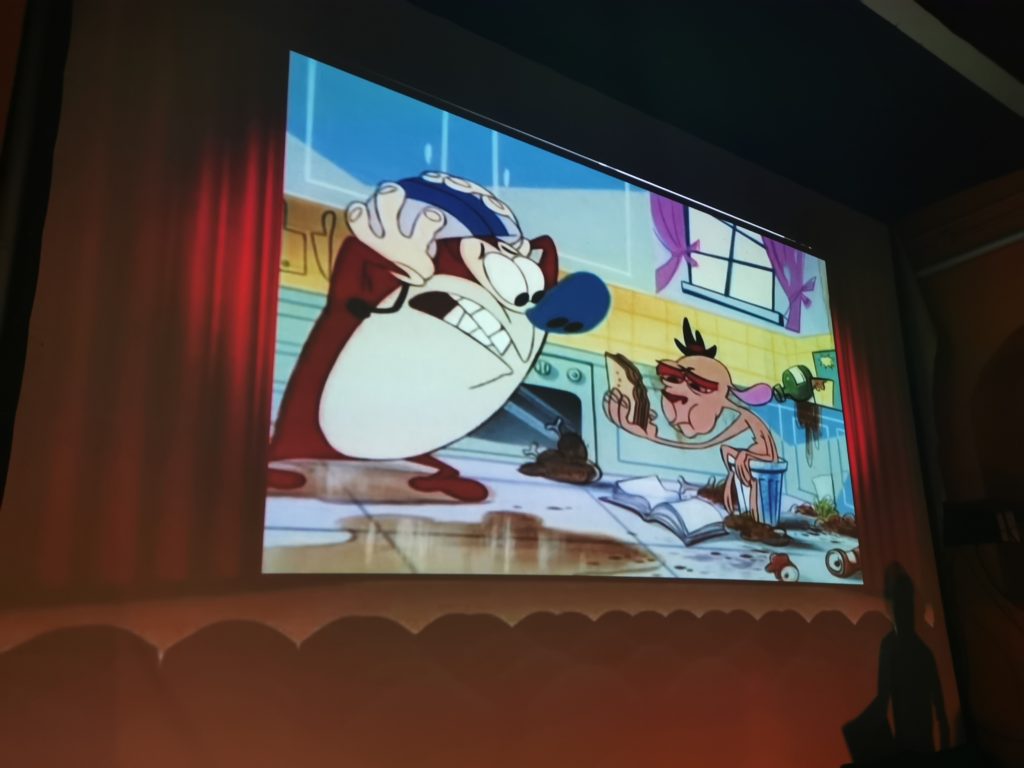
FRENCH TRANSLATION by deepl
Ce que je voulais partager, c’était quelques moments autour de l’époque où j’ai connu Alexa, euh, dans une plus, euh, plus proche, en train de traîner ensemble dans la, dans la communauté sans fil, euh, dans la communauté sans fil. Je suis à Londres, donc c’est probablement, si ma mémoire est bonne, quelque chose comme 2002, 2008 ou autre. Je pense que c’est comme l’homme des années 60. Euh, donc je voulais, ouais, donc je voulais en quelque sorte mentionner quelque chose qui est, je suppose, vous savez, quand une personne vit dans un endroit, euh, le rythme devient une partie d’elle et, et de sa communauté. Et je voulais parler de certaines des communautés qui existaient et de ce que nous faisions ensemble, euh, et aussi de ce qu’Alexa, Alexa a conduit là-dedans. Donc, oui. Donc c’est à propos, c’est à propos du sans fil et, et des choses. Alors je ne veux pas vous montrer la communauté, les endroits et les gens qui étaient là. Alors laissez-moi vous montrer la prochaine diapositive. Je pense que ça aura plus de sens. Ok. Donc c’est un peu l’Est de Londres, euh, où nous étions basés. Hum, donc, hum, ici c’était un muet, euh, en bas, nous avons, eh bien ce qu’on appelle ici le 20ème siècle, mais ça serait la mairie de Limehouse.
Euh, et donc ici nous parlons d’une sorte de, je pense à une distance de trois kilomètres, deux kilomètres, quelque chose, je ne sais pas très loin. Euh, et le catalyseur artistique ici était près de l’endroit où se trouvait la viande et la voie de brique, T V one. Je ne me souviens vraiment pas de qui ils sont. Euh, et oui, les trucs de l’AFCO. Donc c’était ces gens dans ces endroits, euh, et, euh, une carte zoomée, qui a beaucoup plus de liberté d’air dessus. Et bien sûr, ça inclut Ray Lab. Donc Ray lab, je suis sûr qu’il y a beaucoup de, vous savez, mais c’était là où Alexa était basée. Nous avons donc essayé de relier ces différents endroits, probablement sur une distance de trois ou quatre kilomètres. Hum, donc pour vous montrer certains des endroits, euh, donc c’était une télé d’ambiance dans le Nord. Je ne sais pas ce qu’ils faisaient ici, mais c’est génial. Il se passait quelque chose. Comme si seulement nous pouvions être, euh, ouais.
Eh bien, je pensais plus aux ragots. Je veux savoir ce qui était oui. Donc oui, c’était, c’était de couper des PVC, euh, des poteaux pour faire des antennes. Donc Alexa, Alexa est, comme vous l’entendrez au cours de la soirée, il y a beaucoup, beaucoup, euh, de pièces dans Alexa. Euh, mais cette partie était de couper des tuyaux en PVC pour faire des antennes. Donc sans lui pour faire ce genre de choses, euh, nous n’aurions pas ces antennes. Donc c’était des zones directionnelles. Elles créent un signal qui sort de cette spirale. Et bien sûr, nous essayions de relier ces différents endroits. C’était donc de la télévision d’ambiance. Et bien sûr, nous sommes intéressés par ce que nous pouvions voir des bâtiments parce que nous voulions relier les différents endroits. Euh, ah, oui, ça a l’air d’être un bon magasin. Vous pouvez voir que nous essayons de faire ici, vous savez, peut-être un neuf ou quelque chose comme ça. Donc c’était assez ambitieux, comme, euh,
et bien sûr, la plupart du temps, la plupart du temps, les photos sont utilisées par Alexa ou lui pour coller des trucs et aider d’autres personnes à coller des trucs. J’ai entendu dire qu’on arrive à Limehouse 20ème siècle, de plus en plus de chaises avec le 20ème siècle, les mêmes antennes, un endroit différent. Euh, c’était vraiment, vraiment un 20ème siècle. Il y avait des gens comme des pirates de l’espace. Il y avait une université d’ouverture, il y avait, c’était Tokidoki et dans cette université il y avait une branche. Il y avait beaucoup, beaucoup de choses. C’est un vieil hôtel de ville, abandonné à la fin du 19ème siècle, et beaucoup de choses s’y passent, y compris la fabrication d’Ariel. Et bien sûr, Oh, et voici quelqu’un qui était très cher à Alexa. Euh, l’ONG geo Alexa s’est réunie partout où elle était. Ils étaient comme, oui, ils étaient comme des jumeaux siamois ou quelque chose comme ça. Hum, et bien sûr nous devions faire des routeurs, nous devions faire des antennes, euh, des trucs parlés et bien sûr monter sur les toits était une autre grande partie de ça.
Ici, au XXe siècle, ils ont fait beaucoup, beaucoup de choses, mais l’une d’entre elles, ils ont construit une réplique d’un planeur des troupes britanniques de prisonniers de guerre dans un camp de prisonniers de guerre de la seconde guerre mondiale. Pour une raison ou une autre, il y avait ce planeur qu’ils avaient construit sur le toit. Hum, action sur le toit, plus de réflexion, plus de collage. Hum, mais ce sont des endroits différents. Donc nous, nous avions des choses comme des centres sociaux. C’était un laboratoire de piratage appelé Rampart, qui comprenait environ huit, dix bâtiments squattés, une grande partie de différents groupes de démonstration. Euh, donc, en connectant ces différents rythmes, en essayant, en essayant de faire notre travail médiatique et bien sûr, Alexa est là tout le temps, euh, à faire des trucs, à monter sur les toits, euh, avec d’autres personnes. C’est, c’est là que la viande était basée. Nous étions basés dans une ancienne école.
Euh, et oui, et ça s’est étendu, ça faisait partie de, euh, Berlin aussi. Euh, ou Bellona comme on l’appelait depuis quelque temps quand on essayait de joindre les deux choses ensemble ou de faire les mêmes choses dans deux endroits différents. C’est alors chez les magiciens de l’OS. Nous sommes en 2007, je crois. Et euh, ouais, on dirait qu’il explique quelque chose ici et ils ne savent pas s’ils l’ont vraiment compris. Hum, et je pense, hum, que d’autres personnes le sauront mieux que moi. Je pense qu’il y a, c’était le réseau maillé. Jamie King. Il y a Jamie King. Ouais. Euh, ruche, ruche. Ruche. Désolé. Ouais. J’ai besoin d’autres personnes pour remplir les trous pour moi. Je suis comme, Mmm,
bonjour magazine.
Et ai-je atteint la fin ? Je ne pense pas. Peut-être que j’ai atteint la fin. Je n’en sais rien. Il n’y a plus de cliquetis. Ok. Peut-être que j’ai atteint la fin. Je pensais qu’il y en avait d’autres. Hum, mais oui, donc c’était une période très mouvementée. On était, je veux dire, tu sais, si, euh, si tu disais à quelqu’un maintenant qu’il n’y en avait pas, qu’il n’y a jamais eu de wifi, ils seraient genre, quoi ? Comment est-ce possible ? Hum, euh, vous savez, vous deviez faire vos propres antennes littéralement. Euh, et, et, oui, et je suppose, euh, euh, oui, c’était, euh, Alexa est, euh, les contributions qu’il a apportées, son savoir faire, son enthousiasme, il est prêt à le faire, ça a permis de le faire. Et euh, et ouais. Donc oui, pour moi, euh, oui, c’est à propos de cette communauté qu’il était connecté. Et juste comme une anecdote, euh, je voulais, je veux, je peux avoir un navigateur web ?
Je suis sûr que je peux appeler ou vous voulez quelqu’un d’autre ? J’ai besoin de quelqu’un pour m’aider à comprendre le truc du pavé tactile. Donc, comme un, donc quelque chose de très intéressant se passe. Donc il y a beaucoup de façons dont ce genre de déchirure se produit de différentes manières. Donc, euh, pour une raison ou une autre, c’est arrivé à, euh, la ligne. Ouais. Limehouse a la mairie, une personne appelée Thomas Crag a fait le premier, euh, sprint de livres je suppose, qui était, euh, les réseaux sans fil dans le monde en développement. Maintenant, il y a plus de 2 millions de téléchargements. Je suis sûr que c’est peut-être 3 millions maintenant. C’est, c’est énorme. Mais oui, si ces choses n’avaient pas eu lieu, il n’y aurait pas eu de connexion. Euh, euh, ouais. Ouais. C’était un peu quelque chose, Oh
Oui. Ou tout simplement
Oui, je vais m’en occuper. Et je pense que cela va me permettre de conclure au moins pour le moment, juste pour vous montrer. Ouais. Ok. Donc ça a été fait, c’est un couple, en plusieurs traductions, d’hommes que l’on met dans des infrastructures partout dans le monde, euh, pour toute une variété de pays et vraiment juste, ouais. Ça a grandi tout seul et c’est parti. Donc, oui. Merci. Alexa. Merci, Alexa.
C’était facile à utiliser.
Il a même été utilisé récemment dans euh, un projet de recherche financé par l’Europe appelé net commons, qui a étudié les réseaux communautaires sans fil à travers l’Europe et le monde. Et il a été utilisé comme document de référence pour les publications ultérieures qui sont sorties et qui comprenaient des modèles économiques de réseaux wifi pour mailler les technologies que nous utilisions. Et même avant.
Oui.
Ok. Je vais donc passer la parole à quelqu’un d’autre. La prochaine personne mystérieuse. Qui est cette personne ?
Oh, au fait, la procédure est équitable, oui. Un réseautage ad hoc, ad hoc, à l’ancienne. Donc, si quelqu’un veut participer ou faire un commentaire à tout moment, n’hésitez pas à y réfléchir. Levez la main ou retirez le micro. Ceux qui ne l’ont pas fait,
avez-vous besoin de votre ordinateur portable ? J’en ai besoin d’un autre. Ce qui vous convient le mieux. Essayons la clé USB. Ouais. Peut-être qu’on peut remettre le Ray à sa place.
Bonjour tout le monde. Hum, je viens d’une histoire différente, euh, et de différents horizons. Je connais Alexie depuis, je pense, 30 ans à partir de maintenant. Hum, suis-je, euh, compréhensible. Ok, merci. Ok, alors laissez-nous mettre un peu de, euh, de contenu, euh, sur l’écran pour que nous puissions, euh, je puisse vous raconter mon histoire. C’est ma partie de l’histoire, qui commence en fait en 1989.
Je vous dis ce que vous dites.
Ok, bien. Donc, oui, laissez-moi voir. Donc c’est…
celui-ci ? Oui, bien sûr. Ok. Peut-être que tu as mis le navigateur juste là. Tu veux ça ou tu veux, tu veux Ray Land ?
Ouais, je veux juste montrer quelques photos, et commencer l’histoire avec celle-là. Celle-là.
Ok, bien. Tu veux écrire la première ? Je sais que tu as dit que tu lirais dans le navigateur. Oui. Ok.
Ok. Alors laisse-moi te parler d’un ou peut-être avoir vu ce nom. Comme beaucoup de gens le savent, REL EP est un lieu à Londres, un clin d’oeil, une initiative. Euh, mais la piste est lancée en fait, euh, dans quelque chose de complètement différent est une collaboration qui a été construite autour, euh, euh, de différents types de technologie. Et son application dans les arts de différentes manières. Et en fait le,
Voyons, désolé, laissez-moi vérifier. Qu’est-ce qui vous dérangerait ? Oh, d’accord. Ok. Ok.
Ok. C’est une photo prise entre 19h et 13h et sur cette photo, Alexi joue avec un appareil Thurman, qu’il a fabriqué lui-même pour l’offrir à quelqu’un d’autre à Moscou et dans le squat de la rue Petracca, ce qui était aussi une sorte de saut. Et c’est là qu’une ancienne société a vu le jour. Puis il est venu à Amsterdam, un festival Wilson. Il y en a, je pense que c’était un peu de son temps, euh, comme les médias, l’art, l’art interactif. Et donc, il est venu avec cet appareil et il, euh, vous savez, est-ce que tout le monde sait ce qu’étaient les appareils Thurman ? C’est comme s’il y avait quelque chose. Donc, mais bien sûr, vous savez probablement que c’est cette petite boîte avec des antennes sur les deux côtés. On devrait jouer et faire de la bonne musique. Mais bien sûr, car ce n’était pas suffisant. Donc pour lui, le dispositif de thérémine serait quelque chose qui consommerait tout l’espace. Il a donc fabriqué cette chose, qui aurait la taille de cette pièce, c’est-à-dire trois énormes antennes. Et vous pouviez en fait supprimer un besoin de dégradation de la femme, les sons ainsi créés la texture, l’espace dans lequel vous vouliez.
C’était une chose. Et puis la deuxième chose, d’accord, alors que faites-vous ? Je suis occupé. Vous avez le son aussi. Vous voulez faire autre chose ? Alors c’est, alors il m’a demandé, euh, de construire une interface pour le SIDA, de faire des lumières. Et c’est ce qu’on a fait plusieurs fois. Et c’est à ce moment que notre société a commencé et le, et le truc, c’est que physiquement
Oh, suivant. Celui-là. Ok. Ouais.
Eh bien, ouais. Donc, physiquement, c’est le tout premier appareil qu’Alexa a fabriqué lui-même. Il y a une photo de lui. Le tout premier.
C’est donc celui que vous êtes venu à Amsterdam en 1990, vous avez fait le tour de la question,
euh,
pour voir si je pouvais montrer quelques intérieurs. Maintenant, je ne l’ai pas, mais de toute façon, c’est un, c’était le début. Vous savez, vous auriez pu, vous avez dû le mentionner, je veux dire, la plupart des gens savent que cette fois c’était comme les années 90, le début des années 90. Il y avait l’Union soviétique avec toutes ses structures, ses institutions et son industrie, qui s’est en quelque sorte effondrée. Et à ce moment-là, beaucoup de technologies sont devenues accessibles, très peu, très chères, des technologies de pointe. Comme toutes les choses sensorielles, le sel de laser, les choses que vous pourriez obtenir à très bas prix si vous connaissiez les moyens de connaître les gens après cette chose. C’était comme si c’était un succès. Il s’agit de collaborer avec ces deux choses, de savoir ce qui est amusant à faire et de décider ensuite, d’accord, essayons de parler de ce qu’on appelle l’entreprise. Et il est retourné en Russie et euh, à un moment donné, je crois que c’était encore en 92, il m’appelle et me dit, vous savez, le graphique de, euh, que pensez-vous des lasers ?
Euh, je ne sais pas. Je ne dois jamais dire que les lasers pourraient être intéressants. Alors j’ai fait une petite recherche juste pour comprendre, juste pour comprendre. C’est incroyablement cher et vous savez, vous devez être comme ce groupe de rock haut de gamme Geneses ou autre. Floyd violet profond, rose à utiliser. La dernière émission de votre émission disait, euh, euh, que vous pouviez avoir un bon marché, vous savez, vous n’avez qu’un million de roubles et les fresques étaient à peu près à deux mille dollars. Je veux dire que c’était quelque chose de mesurable dit, mais bon c’est le genre d’opération, donc nous devons faire cette opération, mais ok, vous devez obtenir cet argent, nous devons envoyer un ordinateur à Moscou et tout ce genre de choses étranges, vous savez ?
Euh,
l’opération a donc eu lieu. C’était comme si la distro section était euh, toutes sortes de situations bizarres à la sortie, conduire dans le vieux lotta jusqu’à l’usine en achetant même du liquide, 1 million de liquide à qui que ce soit. Et euh, éventuellement il y aura juste des machines à construire et euh, dans une de ces institutions à Moscou, comme un institut de recherche pour la radio optique, peu importe, c’était tout un défi de le sortir d’abord pour commencer, de le sortir de, euh, de cet éditorial de cet institut et ensuite de l’amener aux Pays-Bas. Alors, comment faire cet appel ? Vous avez vendu le tissu, bien sûr vous obtenez une technologie supplémentaire. Mais l’autre chose est, ok, comment êtes-vous plutôt bon ici ? Donc, en tant qu’artiste, vous connaissez toutes les sources de création. Dites, ok, vous savez, c’est un, je suis un artiste et c’est ma sculpture. C’est une sculpture cinétique qui se souvient de l’écriture.
Vous savez la ferraille, c’était le compositeur russe Khalif comme au début du 20ème siècle. C’est comme ça qu’on fait des choses à Lance, le dentiste, et puis la sculpture de base, qui s’appelle a, qui s’appelle plus tard, a déjà commencé et qui porte un nom différent, elle est ébouillantée jusqu’à ce qu’en 1995, on l’appelle Borica. La technologie. Et c’est le nom de la plage. Pour vous montrer un peu de politique, voici les lunettes laser que vous avez prises en Russie avec le laser, les originales, il les a toujours en fait, elles sont toujours à Londres. C’est un endroit à chauffer. Il les a gardées dans le rail là-bas. Je pense que beaucoup de gens ont vu les
donc, et euh, donc cette période, euh,
ce qu’il fallait, je veux dire, bien sûr vous aurez le laser, vous vous amuserez et tout. Donc, mais même si j’avais cette idée, vous savez, vous avez accès à toute cette technologie, vous pourriez faire beaucoup de choses. C’est vrai ? Donc, ce que vous visitez, je veux dire, personne ne savait quoi faire, visiter. Il n’y avait pas de programmes de conversion de guerre, rien. Donc, tout ce travail laborieux de notre technologie en tant que groupe venait du DOK de Toronto. D’accord. Nous sortons la technologie de cette institution et la rendons accessible aux artistes, aux praticiens qui l’utilisent. Il l’a apportée au théâtre d’un Dick pour des installations. Nous l’apportons aux galeries, peu importe. L’objectif du travail était donc de prendre la technologie, qui n’était pas accessible auparavant, et de la faire entrer dans des contextes complètement différents. Nous avons fait des lasers, nous avons fait des dispositifs de vision nocturne, nous avons fait toutes sortes d’installations sensorielles avec interférométrie. Toutes sortes de choses formidables. C’est ce que nous avons fait aux Pays-Bas et à Amsterdam jusqu’en 1995, quand Alexi a déménagé à Londres.
Et euh, oui,
bien court chemin vous avez inséré la seule, euh, l’offre de vidéo. C’était bien. Je l’utilise
ce, euh,
Eh bien, désolé, salez mes tranchées d’ordinateurs portables.
C’est bon. Qu’est-ce que c’est ? J’ai besoin d’aller ici et de montrer une vidéo. Ok. Oh, c’est là. C’est un autre bijou d’écran. N’est-ce pas ? Je vois. Ok. Je l’ai. Oui, c’était déjà là. Donc je vais juste les trouver
comme une restauration de ce que vous avez fait, pour vous laisser faire,
non, celui-ci serait, vous verrez, vous verrez c’est bien. Ouais. Ok.
Donc, euh, non, je ne pense pas. Je ne pense pas que ça sonne si bien, en fait, euh, ce n’était pas un, l’artiste de la galerie MEGT à Moscou, euh, désolé, à Amsterdam et euh, ça s’appelait le, une exposition appelée les inventeurs. Ça met aussi en bouteille des artistes illogiques aux Pays-Bas à la fin des années 80, au début des années 90. Eh bien, beaucoup de gens, ils viennent aussi d’Espagne. Et donc on nous a approchés et on nous a dit, ok, pourriez-vous faire une installation ? C’est tout ce qu’il y a à faire, donc un petit peu. Ok. Donc,
Mmm.
Ok. Comment faire quelque chose qui, d’une part, est illogiquement intéressant. Comme utiliser les trucs solaires et d’un autre côté, ça fait appel à l’imagination pour les choses. Donc, je veux dire, c’était des capteurs sensoriels technologiques. Ils sont l’extension de votre vision, vous vous sentez sexuellement, vous avez accès à l’information. Nous aurions tous dû le faire. Donc, aimer un spectre, c’est ce que vous obtenez. Donc nous avons eu cette pièce, elle était en forme de boule, de 15 mètres sur 15
et euh, euh,
et le vol de la balle évalue des petits lasers comme une vingtaine d’entre eux, euh, qui mesureraient comme si les déclencheurs en réseau de
euh,
et chaque capteur était euh, en train de jouer le son. Donc en fait l’idée était le créateur bibliothécaire de sel dans l’espace que vous réservez par le biais de mangeur, vous devez déchiffrer le message que vous y recevez. Vous marchez d’un message à l’autre et vous voyez si vous entendez le mot que vous avez envoyé au suivant, grâce aux lasers infrarouges ou si vous vous voyez. Et vous voyez ces portes et ces choses qui en fait, euh, euh, comme les morceaux de Glofish noir, qui est Blake dans une lumière normale. Mais l’infrarouge est comme le blanc, complètement blanc est totalement réfléchissant. Donc vous pourriez travailler avec ce matériau qui a différentes propriétés dans différentes parties du spectre. Et puis nous avons créé ça, Vivint a fait ça comme si elle avait fait tous ces trucs et ce moniteur et ils avaient ce message qui provenait d’une mauvaise action. Euh, votre casquette n’est rien mais il vaut mieux que vous montriez quelque chose qui pourrait être utilisé ou autre chose. Quelque chose comme ça. L’idée était que les gens travaillent dans ce sel, donc c’était une infusion de bois du Sud pour la vision de l’arnaqueur rouge et ses caméras, ses arrière-plans, qui montrent en fait différentes parties de la parenté que vous ne devriez pas connaître avant. C’est donc un projet typique que nous avons réalisé à l’époque. Comme au début des années 90 à Amsterdam.
Ouaip.
Ok. Plus amusant. Beaucoup de plaisir. Ouais. Ce truc c’est, Sarah veut dire comme des antennes avec des sens. Donc ça a toujours été comme inventer sur Alexa. Je veux dire Sarah, c’est à propos de euh, la propagation électromagnétique du visage six, les ondes, tout le truc, ce qu’était le spectre. Donc l’énergie, beaucoup de magnétisme, les champs, c’est quoi ? Euh, donc c’est un, c’est un patient pour ça. C’était, c’était là depuis le début. Donc, dans ce sens, je pense que la transition s’est faite plus tard, comme à Londres, mais il a fait bien sûr, il a fait beaucoup d’autres choses comme tous ces trucs multimédia, des capteurs, beaucoup de capteurs comme de vieux trucs à vous. Ce serait ce prix BAFTA pour cela. Et puis c’est ce que nous venons de voir, toute cette histoire d’antenne et de spectre. Donc je pense qu’il était très logique qu’il ait créé un logiciel à partir de son idée si vous avez besoin de téléviseurs, ok, qu’est-ce que le wifi gratuit ? Qu’est-ce que le spectre, c’était bien, mais qu’est-ce que les ondes, quelle est la nature des ondes ? Donc,
euh,
d’accord. Passons donc à la suite.
Oui, oui. Ok. C’est bon. C’est par là. Je suis désolé. Ouais. Ok. Très bien. Hum, pas de hors ligne. Trouve juste un truc. C’est bon. Hum,
Je pense donc que je vais faire un petit saut parce que les différentes périodes de ma société ont exposé la période de Saddam et le début de la période d’Amsterdam, comme jusqu’en 1999. Nous avons fait beaucoup de choses. Vous avez vu des vidéos dans la, dans la, dans cette vraie barrière de Verbier qui courait quand vous, tout le monde était entré. Et c’est à propos de ça. C’était, c’était dangereux. Et puis je pense, euh, regardez cette rupture dans notre relation, comme toutes les ruptures de relation. Et puis à un moment donné, il est venu me voir, c’était en 2005 à Amsterdam. Il m’a dit, vous savez, graph, il y a tout ce truc. Je suis vraiment, euh, c’est très intéressant. Euh, et c’est à propos de ça, euh, les réseaux sans fil, tous ces appareils et tous ces trucs. Voudriez-vous vous joindre à nous ? C’était donc, alors qu’en pensez-vous ? Si vous pouvez vous assurer de partager quelques idées et d’essayer de me faire participer à nouveau à toutes ces choses qu’il faisait. Donc, et au moment où il a collaboré à ça, euh, prenez 20, 30. C’est…
euh, voyons voir.
Bien sûr. Ouais. Celui-ci vise
là-bas. Ouais.
Eh bien, je pense que vos gens ici.
Ouaip. Ouaip. Ouais, faisons en sorte que ça aille. Ouais.
Donc il m’a montré cette photo et m’a dit, voulez-vous vous joindre à nous ?
Alors j’ai dit, oui, pourquoi pas ? Ok. J’ai dit oui. Je veux dire, c’est juste, c’est euh, et euh, euh,
Je pense que Julie est, elle est, elle est là et c’est, grâce à l’annonce que nous sommes tous ici ensemble. Elle verra qu’elle est à l’origine de tout cela. Donc, euh, je ne sais pas parce que Berlin ou Londres, mais c’était une chose qu’elle explorait toute cette manière de spectre de connectivité comme l’étalement et l’antenne sont censés être vraiment comme complètement son truc.
Euh, et c’est le temps et euh, euh, Oh ouais. Ok. Donc,
d’accord. Donc je suis devenu un Gumby. Sautez dans votre, ne prendra pas beaucoup de votre temps parce que je vais retourner à, c’est 2006 bar de mer est juste ici. C’est donc une période de battage médiatique. Qu’est-ce que la moitié des appels réseau
et euh,
ont des réseaux. Euh, le savoir, il y a peu de gens ici qui savent quand vous êtes. Comme si c’était en 2005, six, sept, huit, probablement jusqu’en 2008 que vous avez besoin du Chapin. Cette initiative était en fait très active, elle a été financée par notre conseil de Finlande d’abord comme un projet de recherche et ensuite comme un financement à grande échelle pour faire beaucoup de choses comme développer le Kita et toutes ces choses et euh,
aye
veulent vous montrer. D’accord. Non, non, non. C’est autre chose. Complètement différent. J’y vais,
Oh oui, je suis désolé. Ok. Oui, je suis là. Oui. Ok. Um, Oh ouais. Ok. Je pense que je suis désolé. Oui, je pense que cet, euh, cet événement. Ok. Donc je dois y aller, oui, oui. Ok. Désolé.
Donc si vous retournez à,
Oui,
alors revenez en 2005, voici les limes appels à Londres est une conférence sur, euh, l’euh, l’accès sans fil, les logiciels libres et tout ce que j’ai dit et tout, il y en a quelques-uns, je pense que James devait être là. Certains d’entre vous qui ont du maquillage là-dedans. Et c’est le Limehouse Nope. Ouais. vSphere travaille sur l’infrastructure d’information du sommet 3.
Ouaip. Ouaip.
C’est mon message ? Donc, euh, l’agneau appelle, donc, et c’est quelques personnes là-bas et c’est, voyons voir. C’est en fait la première équipe de la ruche. C’est une Alexie. C’est moi et Bruce,
Je pense. Euh,
et c’est une partie de ce, euh, le début de la période, qui étaient comme des morceaux de toutes sortes de, euh, vous les gars être une infrastructure et ce que je veux, désolé, juste les doubles écrans que je dois traiter. C’est que,
Oh oui. Donc, en fait, je..,
Je veux montrer un
Oh, oui, oui. Ok. Euh,
d’accord. Je veux juste montrer toute cette présentation de la prison. Nous détectons les appels d’alarme juste pour avoir une idée de ce sur quoi vous travaillez les jours. Voyons voir, où est-ce ?
Je ne sais pas. Bref. Ok.
Faites comme ça. Euh, le 2 octobre 2005.
Euh, non, juste des notes. Voyons voir. Ok. Très bien. Probablement en plein écran. C’est bon. Ouais.
Désolé. Je reviens juste en arrière et des temps comme il y a 15 ans. Mais le fait est que certaines idées que nous avions à l’époque sont encore un peu plus courtes aujourd’hui. Et c’était le cas avant et euh,
Mmm.
Quelques mots, dispositifs embarqués, informatique omniprésente, multiples facettes de certains dispositifs natifs, euh, outils qui permettent aux utilisateurs de gérer l’espace, de relier l’entrée, tout cela et soi-même et tout le reste. Il y avait donc un grand rêve et une grosse commande pour faire quelque chose de visité. Oh oui, voyons voir. Descendez la page.
Non. Non, vous êtes bon.
Une rechute d’amour. C’était donc une idée de base. La vision était alors Acacia. Ils sont tous allés vers le PC de travers et puis vers l’embarqué où tout est connecté et les différences. Vous avez cette personne, l’utilisateur, qui est en fait l’être humain dans un centre. Et puis, euh, c’était une relation chauve. Ok. Quelle relation avez-vous en tant qu’humain, euh, entre votre environnement visuel et la fonctionnalité ?
Mmm.
Et puis quel est le rôle ? Est-ce la technologie ? Doit-elle jouer dans, dans ce but, une relation et le, où devrait être le centre ? Parce qu’à cette époque, en fait, il s’agissait de construire une infrastructure, bien sûr, avec beaucoup d’attention. Beckwith n’en était pas encore là à bien des égards et il ne s’agissait pas d’avoir des réseaux. Il s’agissait de
Oh Kate, que se passe-t-il ?
Ouais. Ok.
et à l’époque, comme un, je veux dire c’était les premiers jours sur des trucs. So we thought, okay, if you take these three basic principles, we take like open source a software behave, we take the uh, open hardware path from each should code, could be available and we then we take this, uh, what’s there, it’s uh, all your hardware and on the open spectrum there it is the open spectrum, the VP. Donc ce sont deux éléphants, ces trois LMS comme une pierre angulaire, le logiciel. Vous pouvez construire une infrastructure qui est liée au sexe et non à l’entreprise. Vous pourriez construire une infrastructure, ce qui est la base. Donc pour cette approche communautaire de euh, différentes choses. Et une des choses que nous mettrons ensuite, je pense que c’est la propriété. Comme, ok, qui est propriétaire, à qui appartient tout ça ?
Ensuite, le,
J’ai aussi quelques diapositives, celles-ci, celles-ci, donc c’est comme un sentiment de grande puissance.
Nous le faisons. Donc et euh,
Oui. Vous avez eu une action. Oui, la vraie, oui. Ouais. Une action. Ce visa pour FedEx il à un deux pour moi à Amsterdam, il est venu au Royaume-Uni. Nous devons euh, faire un dispositif. Nous avons besoin de faire ce matériel et nous avons besoin de ne pas aimer l’habitude et le développement. Ils doivent augmenter les polices de caractères et venir est une sorte de nouveau dispositif pour faire les choses. Donc au lieu de regarder Bay, ce qui est là autour des tables, c’est le WRT, les liens opposés, c’est un truc que tout le monde connaissait à l’époque, qui était la base de tous les réseaux sans fil de l’époque, les liens vers des trucs. Et puis ils sont tombés sur le soften, et c’était ce petit appareil d’Oslo, qui était capable d’être placé sur un disque dur et il s’est ouvert, il a obtenu un noyau LinuxONE 2.3, je pense, rien. And uh, there was a coal compete line of like a cord for it written by a guy from white, Russia.
Like all, like all, I could put all X firmer so you could actually get this for number, put it on your device. Vous pouviez tout contrôler, y compris votre utilisation, votre connectivité. En fait, vous aviez soudain accès à tout ce nouveau monde de possibilités, que nous, vous pouvez interfacer. Il ne s’agit donc pas d’un simple bloc de connectivité de base, que nous avons toujours. Toutes vos anciennes fonctions de routage et tous les points d’accès peuvent être là. Et au-dessus de cela, il y avait une couche de connectivité et euh, les capacités de l’appareil, qui pouvaient être utilisées dans une phase différente. Alors, on s’est dit, d’accord, alors pourquoi devrions-nous nous lancer dans le développement de ce matériel et faire des choses ? Ok, si vous pouviez commencer par ça. Donc si nous pouvions trouver, vous pourriez peut-être construire comme le système Seco, des dossiers environnementaux, utiliser des trucs connectés. Donc, parce que c’était là
et puis, euh, oui. Euh,
Ce sont donc des choses que nous avons faites ces jours-ci. Beaucoup de trucs de futsal. On a essayé toutes les arnaques et tout. Alors on a, on a tout géré et en fait comme vous avez eu ce petit, oui, les deux branches d’affirmation, les paquets, on a la webcam pour la vie, le streaming vidéo. Y avait-il des services d’empathie, quel DP ? Euh, des appareils de son. C’était tous ces conseils techniques. Il pouvait tout faire gratuitement. Donc le coût et donc de là, ce que vous avez à cette ID, ok. Si vous possédez cet appareil, vous l’avez. Si vous avez cet accès à quelque chose de très, vous pourriez en fait changer la fonction de votre appareil. Et nous appelons cela des personnalités de renard complet. C’était comme avant l’Android store ou avant l’Apple store, on téléchargeait l’application. Vous choisissez, vous l’exécutez. C’était donc le principe même de l’écosystème où vous deviez tous avoir ce matériel et le second pour avoir accès au service web où vous pouviez en fait télécharger gratuitement un paquet open source, qui transforme votre petit appareil de fille en une webcam ou en un flux de choses, qui construit l’élément de base de votre domotique. Euh, vous avez toutes ces choses qui fonctionnent sexuellement sur des ruches. C’était donc une partie de ce paquet que nous livrons vers le cancer ; vers la console est un, en tant que projet, donc en fait c’est un
euh,
la compilation croisée de big bags. Donc beaucoup de choses comme le service FIPs, le dot net. C’est quelque chose de complètement différent. Je pense que c’est un B qui a abandonné l’année dernière. Il a été immédiatement pris par deux sociétés différentes. C’est donc une question de trait d’union pour montrer quelques pics de plus vers le haut. Et s’il y a des questions, continuez parce qu’il y a plus de choses. 2005, c’est quand nous avons écrit un script pour changer ce champ, pour l’utiliser sur cette, euh, vous savez, chose 2006, sept ils vont à la formation comme une ruche. Voyons voir, laissez-moi aller à la formation en tant que service sur le web, c’est tout ce réseau maillé qui en fait partie, ils utilisent un, Oh, tout le monsieur. Et puis il y a eu un autre protocole de l’électro. Nous essayons de faire ça aussi au Manoir. Je pense que c’était Beckman, non ? Ouais,
Oui. Et puis le
et le, il y a beaucoup à dire. Je veux dire des pièces de cinq cents disparues à jamais. Mais je veux dire qu’il y avait quelques éléments de base et, bien sûr, la connectivité n’était pas hérétique, mais elle était plus maillée. Mais les billets bon marché font en fait partie de certains événements du réseau pour ajouter plus de nœuds afin d’obtenir plus de connectivité. Et chaque appareil aurait deux choses. Vous avez une fonction de connectivité de base qui créerait un réseau, qui devrait le faire s’étendre davantage en le branchant en une seconde. L’autre partie qui vous donne accès aux fonctions qui pourraient être mises aux enchères ne fait pas seulement de votre infrastructure de base un choix, mais en fait une infrastructure significative. Elle pourrait partager votre contenu, faire les choses et tout. C’était donc l’essentiel, une liste restreinte de la ruche. Donc
une sorte de serveur que vous pourriez, vous pourriez le connecter. Cette machine super minuscule et moi avions comme je le pense un disque dur d’une machine de génération 2 que j’avais réanimée avec ces éléments et à l’intérieur de celle-ci comme disque dur. J’avais donc un énorme serveur auquel il suffisait de se connecter et de partager des gigas et des gigas de données avec tout le monde. Et puis, après avoir servi, je pense que les services sont disponibles si les gens se connectent via le navigateur et, je ne sais pas, jouent à certaines applications. Je ne me souviens pas exactement de ce que c’était. Et puis je suppose qu’ils pouvaient se parler s’il y en avait plus d’un dans un endroit et, et créer une sorte de réseau local.
Je vais encore montrer quelques pics de certaines interfaces à construire à cette époque. C’est comme l’interface de contrôle principale où vous pouviez en fait voir depuis cette console principale quel dispositif recommandait l’ouverture d’une fenêtre contextuelle. Vous voyez les médias sur cette carte, ils construisent le rivage, ce qui est là, l’adresse Zippy, ce que ces personnalités ont installé, quelles fonctions ils ont un réseau et sont-ils tous connectés automatiquement une fois qu’ils voient les cinq, ils obtiennent juste l’infrastructure construite automatiquement l’infrastructure maillée. C’était donc l’interface principale et vous pouviez entrer dans la configuration de l’appareil via l’interface web et contrôler l’ensemble de l’appareil.
Et euh,
deux ou trois choses, juste des idées générales, vous savez, comme comment cela devrait être, l’infrastructure, la fourniture de communication et la passerelle de contenu. Tout cela est basé. Bien sûr, à cette époque, il n’y avait rien d’autre. Montrez-moi quelques pics, la patte des médias. C’est la, vous savez, cette fameuse ceinture en cloche. Certaines personnes en ont possédé, je l’ai vu, vous savez,
et euh,
Les services GPS et autres projets sont des projets d’histoire cachée. Nous vérifions, s’ils envisagent des installations de diffusion FM de premier ordre. Vous pourriez visiter votre ici, utiliser votre vieux téléphone portable, est Bluetooth télécharger le Trek ou tout ce qui parle à prend. Il fera automatiquement la diffusion FM localement sur la région. Vous pouvez définir. Donc, tout cela à travers les transitions Ben et d’autres concepts, les arènes, le WRT ouvert Colonel et tout ce qui est construit au-dessus.
Oh oui. C’est un sévère, c’est votre travail. C’est un festival de la carte du district 20. 2007. On a eu ce truc de vie. Ces gens étaient dans cet espace. Ils allaient dans la rue pour collecter des données, pour être dans ce, vous savez, pour être actifs, comme des banderoles et tout ce qui se rassemble dans le système, qui est traité et combiné avec euh, V2 à Rotterdam et tout ça. Un autre. Ouais. C’est ce cochon de ruche décoloré, comme si, vous savez, tout fonctionnait. Et à l’intérieur il y a cet été ce petit dispositif de puzzle, qui les fait correspondre. Donc vous vous promenez et il y a cinq ou six personnes. Vous créez automatiquement un réseau maillé, vous entrez là toute la journée, vous vous dirigez vers ce lieu principal. C’est le genre d’expériences que nous faisons ces jours-là.
Oui, c’était amusant en fait. Donc
De toute façon, je veux dire que je pourrais continuer indéfiniment, mais je pense qu’on m’a dit pour l’instant de donner mon micro à qui veut bien le reprendre. Donc
Oui, ambitieux pour mignon. Il est très ambitieux et si je me souviens bien, vous savez, il, il a trébuché sur toutes ses difficultés à, euh, vous savez, et juste essayer de se préparer alors que pour télécharger sur, euh, sur des routeurs qui étaient difficiles à obtenir de plus en plus que ce fabricant, je pense que, je, les trucs ISIS sont devenus des peurs. Euh, et évidemment, euh, l’attaque et le service et les attentes ont juste fleuri. Et il n’a pas fallu longtemps avant que les gens regardent leur téléphone avec envie et essaient d’obtenir leur connexion Internet par l’intermédiaire des fournisseurs commerciaux tels qu’ils étaient. Et j’aimerais que cela soit presque prédit d’une certaine manière par, par quelques années. Hum, oui,
Oui, c’est vrai. Et en fait, oui, c’est le classique et en fait ce que, ce que, ce que euh, je pense est en partie une simplicité. Je veux dire bien sûr que nous avons dû utiliser ces appareils parce qu’il n’y en avait pas sur le marché. Ce n’était rien qui n’avait pas de personnalité. Comme si vous aviez ce matériel, vous avez acheté un appareil, c’était la plus vieille puce, vous avez tous des appareils. C’était autre chose dans le monde des affaires, vous pouviez acheter un appareil et le configurer en fonction de ce que vous vouliez, comme les ports et tout le reste. Nous avons donc essayé de contourner le concept d’appareil de consommation courante, en utilisant ces appareils, et bien sûr, plus tard, ce que vous faites, vous appelez cette boutique d’applications, vous avez l’iPhone, qui vieillit tout ce qu’il contient. Vous avez l’app store et vous avez des marchés majoritaires. Donc, cette percée technologique, je veux dire que nous parlions d’accord, pourraient-ils la réunir dans un seul petit appareil ? L’ordinateur de poche offre toutes les fonctions, mais nous n’avons pas pu trouver de financement pour cela. Donc, en gros, c’est un
oui,
mais les concepts utilisables à la base étaient là, c’était autour de ces jours-là,
donc. D’accord, je vous remercie. C’est fantastique. Regardons aussi toutes ces images. Je n’ai jamais vu celle-là.
Merci. Grappin.
Est-ce que je veux dire quelques choses ? Julie tient beaucoup à ce que nous ayons une discussion avec certaines personnes qui ont participé au développement du réseau sans fil communautaire. Et je suis tout aussi attentif à vous regarder l’avoir amené ici pour parler de son implication. Euh, Judy et les prêtres viennent d’arriver. Lui et Julian, là où je suis, il traîne, il traîne quelque part derrière.
L’électricité fantastique avait, allez. Vous voyez alors, Hé, venez. C’est votre moment sous les projecteurs. Reculez, allez, allez derrière le mixage, sortez de derrière la table de mixage et de la salle IP et venez ici pour vous montrer.
Eh bien, je veux dire de, de, de mon point de vue, euh, vous savez, comme nous avons commencé, asseyez-vous. Je vais m’asseoir ici. Ouais,
Oui, oui. Bien. Ouais, je pense tellement mieux.
Julian et moi, nous travaillions dans une, dans une petite rue au sud de la rivière près du pont de Londres, Julianne dans un bâtiment et moi et beaucoup d’autres, un autre bâtiment appelé Winchester Wolf. Et, euh, nous, euh, nous avons eu la chance plus tôt au milieu des années 90 d’avoir quelques poux, très tôt le travail sur le web, et nous avions une connexion en fibre dans le bâtiment et nous sommes très désireux de voir se répandre aussi largement que possible. Mais les contraintes légales du fumier de Telekom nous empêchaient de jeter un câble de l’autre côté de la rue, même si elle était très étroite. Et Julian, euh, a pris en charge le coût de quelques radios IP très, très primitives pour établir la liaison. Et donc nous avons, nous avons documenté cela et nous avons fait quelques travaux avec quelques, euh, oui. Des extensions de l’idée. Trying to think of how this, this technique, this technique was technology might service to break out of the lock into modem and, and broadband control that most other people were, uh, limited by, and we made this link across the, across the street and we started working on a, on a well expanding on a text for that which began in the end became known as consumed, consumed on that.
Et euh,
Oui, euh, bien en arrière, bien, oui, bien que je pense que c’est cette succession de nos aventures précédentes qui nous a amenés à nous rencontrer. J’ai travaillé d’un côté dans ce bâtiment, Winchester Wolf et il va entendre de l’autre, euh, dans une publicité. Hum, la marine était en cours d’exécution parce que quelque chose appelé rouge moyen, qui était comme une, hum, oui, maison de production multimédia et, mais il voulait partager le lien. C’était donc la première fois qu’on cherchait à savoir quelles techniques fonctionneraient. Et tellement de ces outils, qui deviennent si omniprésents maintenant que nous ne les reconnaissons presque plus. Ils sont si petits dans chaque appareil. Et il est difficile d’imaginer l’excitation, le niveau d’excitation, l’idée de pouvoir passer d’un modem de 54 kilobits à un lien de deux mégas ou même plus. Cela semblait très excitant. Et l’idée de pouvoir commencer à relier ces choses entre elles et, euh, ouais, de faire un pont, mais c’est quelque chose sur lequel nous voulions écrire et que nous, nous avons en quelque sorte réussi à comprendre à un moment donné.
Hum, la, la nouvelle a été bien propagée et nous étions, il n’a pas fallu longtemps avant qu’il soit évident que nous n’étions pas les seules personnes à penser à ces choses et à les faire. Et, euh, nous avons, nous avons commencé à entrer en contact avec d’autres personnes, notamment, euh, des militants ici à Berlin. Et, euh, avec l’aide et les conseils de nos, euh, grands pairs et amis, notamment, euh, d’Amond Meadows que beaucoup d’entre vous connaissent peut-être, nous sommes venus à Berlin avec l’intention de tenir une réunion parmi ceux qui étaient intéressés. Et tant d’amitiés se sont nouées et ont duré longtemps maintenant, du moins celles que, euh, vous savez, LXC nous a aidés, euh, à perpétuer parce que c’est avec son exubérance et son enthousiasme pour tout ce qui concerne les hommes sociaux et techniques que nous, euh, il nous a aidés à nous adapter à ces environnements et à d’autres où, vous savez, où il y a, connaissent ces grandes compétences et une grande variété d’attentes sociales.
Tout cela doit être mis en commun pour, vous savez, favoriser un engagement plus large. Nous avons donc eu le plaisir de venir et euh, ce n’était pas là à l’époque. Hum, mais c’était là, cet endroit a ouvert en 2000 et quand, quand cette pièce a-t-elle ouvert ? Non, c’était peut-être un mélange d’ici et d’un endroit appelé « boot lab », qui a disparu depuis longtemps et nous avons tenu une longue après-midi, disons une après-midi et une soirée de conférence sur l’architecture de randonnée. D’ailleurs, je n’étais pas au courant de cela ; devrait-elle probablement être plus sensible à cela ? C’est, c’est mon domaine d’étude auparavant et j’ai en quelque sorte migré assez loin de cela. Et ce genre de monde. Alors, salut Jane, c’était, désolé, je n’en avais pas conscience, elle n’en avait pas conscience. Eh bien, c’était une sorte d’appropriation.
Ouais.
Donc, euh, j’étais ici à ma gauche et je, je sais que beaucoup d’entre vous vont avoir un problème de moelle en venant ici pour, à la caisse des alevins, aux réunions régulières du mercredi au fil des ans. Mais son, vous savez, son, son, euh, son impact et son énergie sont aussi bien, bien, vous savez, bien appréciés et ressentis, je veux dire qu’elle a fait tellement pour en quelque sorte étendre la capacité du wifi en travaillant avec, euh, nous avons mentionné Batman et il y a eu diverses innovations de cela et, euh, dans différents contextes. Hum, d’autres, d’autres, d’autres, euh, de grandes innovations comme la purée de pommes de terre, vous savez, et je sais que vous avez un, vous savez, un large champ d’intérêt à faire avec l’utilisation de la radio en bricolage et l’exploitation d’autres techniques et technologies. Alors, je veux dire, y a-t-il quelque chose que vous voulez ajouter à cette gaufre ?
Eh bien, par où dois-je commencer ? Euh, pour moi, comme les deux premiers milliers, euh, quand j’ai commencé à construire le même type de, euh, euh, d’antennes hélicoïdales que nous avons vu dans les présentations avant, euh, je faisais dans le support technique pour, dans les médias pour rendre compte des luttes des gens. Et euh, donc j’étais intéressé par la technologie et euh, j’ai appris qu’un groupe cinq de cette réunion ici et là les gens m’ont dit, Hé, vous devez y aller, il y a quelque chose pour vous. Et euh, je n’avais aucune, aucune imagination de ce qui allait se passer à la fin que je voyagerais à travers le monde pour rencontrer certaines des personnes les plus gentilles que j’ai jamais rencontrées dans ma vie. Parmi eux, il y a Alex qui l’a dit. Et des gens socialement engagés, avec une vision, qui ont les mêmes idées que moi sur la technologie. Et il s’est avéré que les gens partageaient cette vision entre, euh, les pays et les continents et c’était tellement, tellement agréable de voir ça. Oh oui. Et tout ce vieux matériel. Oui, c’est très agréable de les voir. Il y a tellement de choses que j’ai vues que j’aime partager. Je suppose qu’il est déjà endetté. Oui, bien sûr. Oui, bien sûr. Je ne sais pas qui, qui m’a présenté l’outil, mais, euh, oui, c’était super.
Juste une mention parce que je pense que, particulièrement pour, euh, pour avoir cette conversation ici à la base C, euh, particulièrement, euh, travailler avec l’événement électronique et, euh, c’était, euh, 2004, je pense, euh, en quelque sorte réfléchir à ce dont Simon a parlé à cette époque, les SA. Euh, et, euh, en fait je viens juste de téléphoner, euh, vous savez, je viens juste, euh, de voir le spectacle à, euh, comment est la culture du lit ou le, le réseau, euh, l’exposition du transmédia. Et d’une certaine manière, je me sens peut-être, euh, ce wifi particulier, si nous l’histoire du réseau semblait ne pas être personne dans ce spectacle particulier. Et donc, d’une certaine manière, je pense que nous sommes en train de récapituler cette histoire particulière et je dois dire, euh, d’une certaine manière, euh, quand, euh, entre Londres et Berlin, ça se rapproche, n’est-ce pas ? Et, euh, euh, de notre côté, c’était un, ce projet « Rich Air Take 2030 », mais en fait avec ce projet et, euh, euh, en faisant, euh, le magicien, Oh non, c’était en 2004. Ouais, ouais. Ouais. Donc je pense, je pense que beaucoup de gens n’ont pas bien compris cette histoire particulière. En fait, c’est venu ici, vous êtes dans le noir. Euh, il y a une histoire particulière à l’époque de, euh, soit 18 ans pour moi venant de l’extérieur, mais le tout assez impliqué, mais au début c’était plus comme si vous voyiez la scène de Londres et vous voyez la scène de Berlin. Et puis progressivement, comme en 2004, nous avons pu fusionner pas mal de ces, euh, recherches sur le réseau wifi, n’est-ce pas ? Donc,
Oh, euh, la photo avec l’ordinateur de la cantine disait qu’Alex, il avait construit, Oh, je me souviens très bien. Hum, euh, donc la mission, ça fonctionnait de manière totalement expérimentale. On se battait avec des chauffeurs qui s’accrochaient à des ordinateurs tout le temps. Et euh, je me souviens de vous Aleksey et vous êtes venu avec le, avec ces ordinateurs et le système d’exploitation ne fonctionnait pas. C’était une version PSD. And so I swapped it for Linux. Et donc je l’ai échangé contre Linux. Je porte, je me souviens de tout ça. Et euh, donc nous sommes allés à Riga avec ces machines. And, uh, I remember when Alex and I, we were setting up a wireless, uh, station on top of a building with some not quite legal MTV and antenna was like immensely long. Alors je me suis dit, ok, peut-être que quand ces appareils seront allumés, je ne veux pas me tenir trop, trop près de cette antenne, pas vers l’avant. Ouais. Eh bien, c’est dangereux. Mais euh, ouais, mais euh, je suis ennuyeux. Tu as des souvenirs stupides. Aussi ces antennes hélicoïdales, nous les construisions aussi, à Riga aussi dans l’atelier. Donc les gens construisaient leur propre réseau maillé, mais je ne sais pas
réseau d’ail. En tout cas. Ouais. C’est l’antenne de l’ail. Nous allons en fait expérimenter comment l’ail peut mieux transmettre. La tarte blanche. Euh, Van, tu es l’expert en antenne de cuisine. Viens ici, viens ici une minute. Mais je voudrais aussi vous présenter un Yorgen, euh, téléphone cinq. Euh, je pense, euh, en parlant de notre Berlin, euh, c’est, euh, en termes de Wi-Fi de Berlin, euh, moment, vous savez, votre organe est vraiment très impliqué. Ouais. Je veux dire le,
à l’époque où nous nous sommes tous rencontrés, Oh oui, il se passe quelque chose. Donc je pense que nous avons, pour moi a l’événement qui a été mentionné plusieurs fois ce soir, euh, était l’initiateur, euh, l’événement ou la célébrité ou je ne sais quoi, euh, où j’ai appris à connaître Electra nous même, mais aussi un Adam, James, Julian et Alexei. Et, euh, je veux dire qu’Electra avait tripatouillé le wifi comme d’autres personnes l’avaient fait à Berlin depuis un certain temps. Vous dirigiez une loca, c’était quoi, une low tech ou vous pouvez lui donner un micro ?
Eh bien, nous dirigions l’un des premiers espaces de piratage informatique. Eh bien, le nom ou le terme hacker Makerspace n’était pas encore né. Oui. Et, euh, nous essayions désespérément d’obtenir Internet dans le Sud de divers signes, mais nous avons été affectés par cette nouvelle technologie, la ligne de connexion optique, euh, pour l’ISD. Et cela n’était pas utilisable à cause d’un connard total des télécoms allemandes pour l’Internet. Donc nous étions totalement, nous essayions de gérer un cybercafé sans Internet. Donc la seule façon de nous donner le haut débit était de s’installer sans fil.
Ouais. Alors, et j’ai emménagé dans ce, euh, quartier de Berlin avec ce vieux réseau et je, euh, j’ai emménagé dans une de ces maisons squattées X et, euh, elles n’avaient pas Internet. Ils partageaient une ligne ISDN. Alors j’ai entendu parler de ce truc et j’ai pensé, Hmm, ce serait bien d’en apprendre plus sur le wifi. Et, euh, alors j’y suis allé, j’ai essayé de faire venir certains de mes, euh, j’ai essayé de faire venir aussi certains de mes colocataires, mais ils n’étaient pas intéressés. Ils pensaient que ça ne marcherait pas. Ce que beaucoup de gens pensaient à l’époque. Et euh, ouais, donc, c’était une opportunité de rencontrer des gens qui avaient travaillé avec cette technologie, à Berlin et à Londres depuis un certain temps et ils avaient beaucoup de connaissances, mais c’était aussi l’atmosphère et la, euh, la mise en place de tout l’événement qui, qui, c’était une expérience complètement nouvelle pour moi parce que, euh, si vous essayez d’étoffer cette époque, c’était l’Internet ; c’était tout sur, euh, la première vague d’économie de démarrage.
Et puis, euh, je suis allé dans un espace qui, à cette époque, n’était pas si familier, même si j’étais un squatter, je ne m’attendais pas, euh, je ne m’attendais pas en fait à ce qu’il y ait des gens autour qui avaient tellement peur en termes de technologie et d’un tel environnement. Et c’était une atmosphère d’enseignement très ouverte et, euh, amicale où vous pouviez soulever toutes sortes de questions et apprendre un tas de choses. Les gens étaient vraiment prêts à transmettre leurs connaissances ou à les transmettre à d’autres personnes. Et aussi, je n’étais pas conscient des dimensions politiques de tout le sujet. J’ai donc participé à une conversation sur l’accord de peering de Pico. Ouais. Et oui, et, et, euh, et, et dans ma vie personnelle, c’était, euh, c’était, ça a fait un grand changement d’être là et puis de passer dans ce groupe de personnes de Berlin et de Londres. Ouais. Bien sûr. Tant de vos compatriotes réunis dans cet endroit. C’est la première fois. Oui. Si je me souviens bien. Oui. Et c’est, euh, je veux dire que le fait que nous soyons tous assis ici maintenant prouve aussi que c’était quelque chose d’important.
Et si je peux me permettre, Simon et moi pensons que le bar était aussi essentiel à cela. Le bar était un nœud critique dans ce réseau. Vous savez, il y avait James Alexey, moi-même et d’autres personnes intéressées par X, vous savez, qui développaient vraiment ces idées sociales en utilisant la technologie. Et bien sûr, le bar de mer était une plaque tournante, une plaque tournante qui permettait aux conversations de se produire, aux conversations humaines de se produire et aux idées de se développer, ce qui a déclenché le mouvement de la forme alevin qui a donné, euh, aux gens simultanément au Royaume-Uni et dans d’autres pays, des idéaux similaires. Donc, le bar est un lieu central qui a permis au dialogue de s’établir entre tant de personnes intéressées par le sujet, de parler avec passion, de créer des réseaux, de se mettre d’accord et de partager des éléments techniques et sociaux pour avancer progressivement dans la création de réseaux plus autonomes, dans le partage d’informations et de systèmes.
Désolé, je voulais juste ajouter cela pour souligner l’accord de peaker peering, parce que je pense que, comme vous le dites, le type de dimension politique est que je pense que c’était
Nous pensions tous que les réseaux et l’internet devraient être gratuits. Et nous vivons dans un réseau loué où nous devons payer tout le temps. Ainsi, la période Pico et l’accord utilisaient en quelque sorte un dispositif, je suppose, un dispositif légal ou un dispositif d’accord GRI dont dispose l’Internet, qui permet de faire passer le trafic à travers un nœud gratuitement. Vous le feriez, ou pas gratuitement, mais vous ne le faites pas, vous ne préjugez pas de l’un par rapport à l’autre. Donc, on a essayé d’utiliser ce cadre et je pense que c’est ce que le prêtre Julien, euh, a en quelque sorte, euh, ajouté. Oui, je pense que c’était, je pense que c’était la contribution de Julian, si je ne me trompe pas, je pense que c’était la contribution de Julian. Donc pour moi, il y a une dimension politique, qui est toujours présente sur Internet par le gouvernement cubain au Royaume-Uni. S’ils avaient pu avoir un gouvernement Corbyn allait avoir le haut débit gratuit, euh, vous savez, nous ne devrions pas louer le réseau.
Ouais. Julian. Hum, bonjour. Oui, ça marche plutôt bien. Oui. Donc, euh, oui, l’appariement de Pico, c’était comme une sorte de, c’était juste un, c’était quoi exactement ? Ça a commencé par une discussion sur le boot Burlon, un événement au boot lab, et puis on a participé à un autre événement appelé « Copenhague ». Euh, c’était la même année ou l’année ? Oui, probablement la même année. Je pense que c’était environ six mois plus tard. Interpolation. Ouais. Je suis dans un studio de super flexes au, euh, Népal à Copenhague et il y aura une sorte de, euh, passé quelques jours à réfléchir à, euh, ce que cela pourrait signifier de faire un, euh, un accord d’appariement Pico. C’est un peu, c’est toujours, je pense que c’est toujours sur la jetée de Pico, n’est-ce pas ? Si vous voulez y aller et jeter un coup d’oeil.
Oh oui. Ce serveur fonctionne toujours alors. Il y a une collection de localisation un peu étrange. Hum, oui, la version chinoise est en fait taïwanaise, pas chinoise, parce que le gars qui l’a traduite était taïwanais. Euh, mais, euh, ouais, l’idée de cet, euh, accord était que vous pourriez en quelque sorte, euh, faire un très, euh, euh, vous pourriez prendre un réseau et le briser en petits nœuds, qui partageraient des informations entre eux sans, euh, sans charge. Et de cette façon, vous pouviez construire une sorte de grande infrastructure qui ne comportait aucun type de transaction financière. Hum, et ça a fonctionné par endroits. Euh, donc, euh, ouais, évidemment très différent, tout l’environnement Internet à cette époque était très différent de ce que nous avons maintenant. Vous savez, maintenant nous sommes en quelque sorte fortement dominés par, euh, les réseaux de téléphonie mobile.
Hum, et il y a tout un tas de choses à venir pour y réfléchir. Mais, hum, ouais. Qu’est-ce que je peux dire d’autre à ce sujet ? C’est probablement suffisant. Je peux ajouter à ce qu’Adam a mentionné que lorsque nous nous sommes rencontrés à l’Allen, c’est à ce moment-là qu’il était, euh, là ainsi que lorsque s’il vous plaît venez ici aussi. Et, euh, il a donné ceci, je veux dire, donc nous avons rencontré les gars surtout de, qui sont assis ici et d’autres personnes. Et, euh, Steven lui a donné une maison immédiatement parce qu’il a dit, ah, nous pouvons nous rencontrer à la base maritime. Et puis à partir de ce moment, tous les mercredis pendant de nombreuses années, nous avons eu une réunion locale ici, au Sea Bass.
Oui, je dois raconter l’histoire. Tant de fois. C’était du 12 au 14 octobre, et euh, c’était à peu près le week-end. Le samedi, j’essaye de, euh, me réunir et après et à la fin de la réunion, j’invite tout le monde à, euh, au bar trans pour socialiser. Euh, le dimanche je peux retourner au Babylon pour regarder la socialisation. Mais, euh, deux semaines plus tard nous commençons avec, euh, un mercredi avec la radio, savoir ce qui s’est passé. Ils ont pris l’avion, ils l’ont pris. Et euh, ouais, c’est, c’est quelque chose de fou que le LAN sans fil a commencé à avoir, ça a quelque chose à voir avec les fréquences et Luton. Hum, ok. Désolé pour mon anglais. Ouais. Et à partir de ce moment, nous l’avons fait tous les 14 jours. Plus tard, toutes les semaines. Et euh, la première fois 20 personnes ont envoyé 30 personnes, 50 personnes et ont dit, VT a centralisé ça parce que trop de gens s’entraînent chaque semaine. Alors, on a fait frire le projet. Alors on a commencé, euh, à mettre en place, euh, des réunions et libre de signer ou de se marier ou ailleurs. En même temps, nous avons commencé à la cyber convention 2003, 2003, un an plus tard et nous avons dit, patron Limehouse maintenant, non à la convention d’été
la convention d’été après notre rencontre à Copenhague, alors non, non. Ensuite, nous avons mis en place la convention d’été ici, à la base maritime, en 2003. C’est vrai. Et puis, euh, après ça nous sommes allés à Judas land parce qu’il y avait ces, euh, drôles de fermiers de Jewess land qui avaient une infrastructure wifi beaucoup plus impressionnante que la nôtre. Ok.
Ils ont ce, euh, dans le livre de verre de Juris London. Ils ont cette, euh, ils ont cette sculpture fantastique. C’est une sorte de globe du monde et il n’y a qu’une seule chose dessus, qui est un livre en verre. Et, euh, c’est certainement à cette époque qu’il était en fait le centre du monde wifi parce qu’ils ont réussi à, euh, construire un réseau sans fil câblé sur l’ensemble du pays du jus en environ 18 mois, je pense qu’il couvrait une province entière avec un réseau sans fil gratuit. C’était tout à fait impressionnant. Et il y a eu une convention d’été folle. Il y avait, il y avait des gens d’environ 32 pays différents venus du monde entier pour les réseaux Alfre, des réseaux sans air frais ici pour trouver comment construire
vos propres réseaux. C’est plutôt bien.
Et puis nous avons eu cette idée folle de la folie des infrastructures d’information libres.
Je suis désolé,
Je vais devoir casser ça. Oui, bien sûr. Je vais devoir faire une petite intervention commerciale. Fung RUP euh, Fernie. Euh, eh. Ok. Où est Rob ? Eh bien, oui. Euh, et euh, oui, je, je voudrais vraiment poursuivre cette conversation avec la sphère radio des ondes radio, le projet de radio école, et nous avons un tas de personnes impliquées dans cela. Euh, mais avant que ce panel ne commence, euh, nous avons une petite pause publicitaire si nous pouvons trouver Rob. Sinon, s’il est ici, il veut montrer la gravité. C’est ça le truc.
Peut-être, sûrement juste, ah, ok.
Ok. Et puis on change de chaîne après ça, on a changé de chaîne.
Ok. Hum, mais je dois aller sur YouTube. Mais, euh, ouais, je, je vais parler d’une période où, euh, Alexi est venu avec nous à Moscou au catalyseur des arts. Donc Simon, euh, déjà muet, euh, a mis le catalyseur artistique sur sa carte. Le catalyseur des arts est une organisation artistique scientifique qui existe toujours. Je n’y travaille plus. Et au début des années 2000, nous avons fait, euh, quelques missions à Moscou avec Marco Pelikan et le dragon UVA, Dino. Et nous, euh, le but était d’emmener près de 50 artistes en apesanteur sur, euh, l’avion MDK, euh, d’elution, qui s’est envolé et a plongé. Et, euh, nous avons eu 30 secondes d’apesanteur et Alexi est venu à nous avec un projet, un projet très, très, très, très compliqué. Et, euh, il a dit, nous avons dit, écoutez, euh, vous, nous ne sommes pas sûrs si nous pouvons faire le projet, mais s’il vous plaît venez avec nous en vedette à Moscou parce que nous avons besoin de quelqu’un qui peut parler russe. Donc, euh, il est venu à Star City, qui est, c’était un endroit secret juste à l’extérieur de Moscou où vous pouviez aller vous entraîner avant son vol. Et au centre d’entraînement, nous, euh, nous sommes allés en gravité zéro. Donc si vous pouvez aller sur YouTube pour moi et ensuite je peux me connecter.
Oh oui. Montre ça. C’est bien aussi. Ca pourrait l’être. Ouais. Et puis j’ai une vidéo de lui en fait en zéro G mais montrez ça si vous voulez. Ouais. Pendant que vous faites, pendant que vous trouvez que je vais continuer à parler. Donc Alexi et moi avons essayé d’organiser un concert de quelques artistes du son de Londres qui font partie du collectif Black Audio Film. Hum, et ils, ils s’appelaient, hum,
le nom a complètement disparu.
Oui. Il reviendra. De toute façon, nous avions un groupe de musiciens. Quoi ? Non, pas de la liste. Non, il n’était pas sur la liste. C’était de l’astro, de la cosmologie noire, quelque chose comme ça. On y est presque. Ce n’était pas le Lithgo bizarre mais nous avons fait voler le groupe de soulèvement et nous pouvons les voir si vous voulez regarder ce clip parce qu’ils sont dans ça, oui. Ok. YouTube. Ok. Ouais, ouais,
Oui, oui, oui.
Alexia a donc aussi aidé à interpréter pendant les repliements des ARB pour l’apesanteur. Très sérieux. Très drôle. Alors partagez un peu de ça pour être bon aux boulettes et beaucoup de tresses en or et à la procédure Reggie. Alexi et moi, on était là dans le bus des cosmonautes. En fait, nous étions probablement dans le même bus de cosmonaute qui vous a emmené. Et puis, vous savez, c’est tellement ancien.
Tu sais qu’on avait deux heures de retard. Nous sommes donc arrivés et nous allons avec les musiciens pour nous installer au club des cosmonautes et c’est très, très remonté. Le colonel de l’armée russe nous a salués, Alexia et moi, et même si nous savions qu’il pouvait parler anglais, il est venu et a mis son nez à deux pouces de mon nez et a commencé à me crier dessus en russe pendant cinq minutes et je me suis tourné vers Alexia et j’ai dit : « Whoa, qu’est-ce que ce type dit ? Et il me dit, il essaie de décider si c’est toi ou Boris qui doit être petit d’abord.
Merci.
Je pense que c’est à moi de jouer. Um, salut, je m’appelle Calf. Je viens de Matthews et je suis, je suis un artiste et je suis chez Alexi au début des années 2000 à Londres. Et, euh, c’était à une époque où j’étais très occupé à faire beaucoup de concerts sur scène et des choses comme ça. J’en suis arrivé à un point où j’ai eu envie de travailler avec le thérémine et de faire des pièces sonores très détaillées, ce que je trouvais exquis, et je me suis de plus en plus engagé dans l’idée que cet air qui existe dans cet espace, c’est le médium dans lequel je travaille. Et même si je travaillais totalement dans le son, je me disais, attends une minute. Et tous les autres trucs qui se passent dans l’air ? D’accord, j’utilise le, je l’utilise pour pouvoir faire du son, mais qu’en est-il de la radio ?
Et je l’ai décidé grâce à une commission qui venait d’Elsa black qui a aussi beaucoup travaillé avec Alexi, qui n’est malheureusement pas là ce soir. Que diriez-vous de créer une station de radio et de faire des compositions pour la radio, puis de mettre des radios sur les vélos et d’envoyer les vélos dans les rues et de pouvoir ainsi envoyer des compositions dans la rue plutôt que de faire venir tout le monde. Est-ce que je peux marcher un peu vers la gauche s’il vous plaît ? Alors, alors le euh, euh, oui. Pour que les gens puissent entendre la musique dans la rue plutôt que d’avoir à venir aux urgences. Oui. Le bar est un endroit incroyable, mais soyons réalistes, c’est un endroit exclusif où les gens qui connaissent ce genre de choses et comment faites-vous pour faire écouter de la musique expérimentale bizarre aux gens dans la rue ? Allons-y. Ce que je voulais faire, c’est le faire d’une manière émouvante et assez subtile.
Et donc faisons le avec la radio. Et Alexi m’a fait découvrir la radio et comment installer une station FM dans votre studio. On a mis une antenne sur le toit. Nous avons dû passer en revue les choses légitimes que vous devez faire au Royaume-Uni. Si vous obtenez un financement, qui était par une licence de radio. Nous ne pouvions pas le faire en tant que pirate. Et notre petite licence de radio communautaire avec un très petit émetteur, que nous ne transmettions que dans un rayon de trois miles, je crois, Oh, désolé, le diamètre est de trois miles de l’Ariel. Mais nous avons fait ça et euh, c’était, c’était une chose extraordinaire et les gens, nous avons organisé des ateliers libres, euh, et nous avons diffusé ce que nous faisions de nos ateliers libres de travail libre via internet en fait au studio et puis de diffuser et de travailler réellement avec la FM et de travailler avec ce sens de mettre le son dans l’espace.
Et vous pouviez l’entendre grâce à la technologie, grâce au F, les fréquences essentiellement que nous transportons ce son. Et puis quand vous perdiez votre connexion, vous obteniez ce son vraiment bizarre, merdique et tout ce genre de bruit radio que probablement peu de gens ici de nos jours, vous savez ? Tout cela faisait partie de l’expérience de toute façon. Les gens aiment ce genre de choses. Et on a été invités à faire des morceaux dans d’autres endroits et puis c’était comme venir à Folkston the folks pour essayer Enil. Ok. Le tout premier projet s’appelait « Radio Cycle ». Et en fait, en ce moment, je viens de réaliser que ce que je devrais vraiment faire, Adam, c’est cette pièce sonore. Ce que je dois vous dire à propos de Radio Cycle, c’est qu’à part le fait que nous avions cette station de radio qui fonctionnait 24 heures sur 24 depuis mon studio pendant sept jours et que beaucoup de gens différents venaient et diffusaient leurs histoires et morceaux de musique préférés.
Et nous avons eu des discussions politiques, nous avons eu des discussions intellectuelles de toutes sortes. Et mon voisin était absolument heureux de pouvoir rester debout toute la nuit pour faire le service de nuit et les enfants venaient chanter des chansons. Et la femme qui dirigeait le bureau de poste venait et chantait, euh, de la musique indienne. Je veux dire, c’était époustouflant. Et nous avons organisé des ateliers gratuits et nous avons établi des liens avec la communauté locale des animateurs qui sont venus et ont fait tous ces trucs de rap aussi. C’était donc assez extraordinaire. Mais j’aimerais profiter de l’occasion pour faire jouer une discussion que nous avons eue le tout premier jour où nous avons diffusé ou plutôt une interview qui s’est déroulée entre almond OSH et Alexie où Armin interviewe le dr glimmer, le dr Blinn sur, euh, la radio et ce qui est en fait une radio. Et donc nous avons eu ce morceau que nous avons cassé, et j’aime bien le jouer aussi.
Elle dure environ trois minutes. Ouais. Donc, la station de radio que nous dirigions, évidemment ou non, s’appelait Radio Cycle. C’était en 2002, dans l’est de Londres. Vous savez, dans la zone où Simon vous a montré la carte plus tôt, euh, où en fait Adam était de l’autre côté de la rivière et il émettait par micro-ondes ou par connexion à Internet. Et j’étais dans un bâtiment appelé, euh, c’était juste à côté des studios de la région du Regent’s canal. Et il y avait environ 40 grands studios là-dedans. Et nous étions nombreux à y faire toutes sortes de choses. Et Adam est en fait la personne qui donne à tous nos studios une connexion à Internet. Et nous courions comme ces très longs câbles ethernet tout le long du bâtiment jusqu’aux cages d’ascenseur, à travers les fenêtres. Nous les faisions passer le long des fenêtres et euh, à, euh, la télévision d’ambiance. Vous avez vu une image de la télévision d’ambiance où Alexis faisait beaucoup de découpage de tuyaux pour faire les antennes, tout ça. Et euh, c’est là que nous étions. Donc c’était la, c’est la pièce. Ouais. Alors, voyons voir.
Merci.
Donc, voici Amin et LA.
Laissez-moi juste…
mais j’ai une question plus fondamentale. Hum, de quel genre de vagues parlons-nous ? Euh, quelles sont ces ondes électromagnétiques ? Alors, qu’est-ce que c’est que cette chose bizarre ? Des ondes, des ondes électromagnétiques. Des ondes radio. Des ondes radio. Oui. C’est en fait une chose assez curieuse parce que pour autant que je sache, c’est encore connu, mais il faut que vous sachiez ce que c’est en fait. Bon après-midi, East London de la radio cycle sur un sur 1.4 F M. donc nous avons ces choses bizarres appelées ondes électromagnétiques ou ondes radio et nous pouvons les utiliser et nous pouvons faire un programme radio en ce moment. Euh, qui fonctionne en utilisant ces ondes pour, nous avons un émetteur et avec un peu de chance, quelqu’un là-bas, bonjour a un récepteur
radio cycle one Oh one pour la FM numéro de téléphone 0207923969 seven.
Je nous entends parler ici, mais nous ne savons toujours pas comment cela s’est vraiment passé au niveau théorique. Alors, mais ils ont aussi pensé que les ondes radio se propagent dans l’éther, mais ils ont découvert que l’éther n’existe pas et que les ondes radio se propagent aussi dans l’éther chez nous, et ils ont découvert que le plaisir est aussi de goutter à travers le vide, ce qui est aussi très bien pour cette chose parce que personne ne sait encore où est la lumière. Une onde
400 pièces, ce qui est assez bizarre. Ainsi, pendant quelques centaines d’années, l’année de l’éther a vraiment été assez suspendue. Je trouve cela intéressant et difficile à comprendre. Je veux dire
si vous avez un point a et un point B et entre ces points nous avons euh, une onde, une onde électromagnétique, une onde de poussière qui voyage réellement.
En gros, ils tuent le poids. Il y a une substance qui existe fondamentalement entre le point a et le point B. C’est une pression qui se propage évidemment comme dans la mer ou comme dans un océan. Il faut avoir de l’eau. Donc je ne sais pas si vous avez de l’eau, avez-vous une possibilité de VT d’avoir une vague, qui serait une sorte de piège, qui viendrait d’une manière ou d’une autre du restaurant ?
Oui. Est-ce que c’est assez serré, oui.
L’onde sonore est simple. C’est une onde dans la pression de l’AIS, c’est un changement dans la pression de l’air. Oui, c’est exact. Mais dr, si j’ai une question plus basique, hum, de quel genre d’ondes parlons-nous ? Euh, quelles sont ces ondes électromagnétiques ou,
D’accord, merci. Hum, alors que s’est-il passé après, euh, comment je me déplace ? Adam ? Je suis vraiment désolé. Je ne comprends pas comment le trackpad fonctionne. Est-ce que c’est ça ?
Ok. Donc, désolé, j’ai des problèmes et il va, le manger et ne pas connaître mon ordinateur portable. Donc après le cycle de radio, euh, quelques années plus tard j’ai fait quelques autres pièces de radio et euh, avec notre petite antenne et tout, euh, celle-ci, celle-là. Ok. Et donc en 2008, nous sommes allés à Folkston. C’est comme vous qui allez faire une sorte de pièce de type cycle radio dans le travail de Folkestone avec un groupe d’enfants de 11 ans. Si vous avez l’occasion de travailler avec des enfants de 11 ans, allez-y. Ils sont incroyables. Et euh, mais à Folkston, il n’était pas possible d’utiliser la radio parce que euh, les transistors français faisaient tomber notre petite fréquence faible de notre petite communauté britannique légitime. Euh, euh, la station a et T de notre émetteur, c’était juste deux semaines. Donc nous avons été assommés par les voies respiratoires. C’est tout le temps. En plus, euh, Folkston est vallonné.
Alors, qu’est-ce qu’on va faire ? Et euh, et Alexi était venu avec moi et Elsa à Folkston pour Rakhi l’installation et il allait, Oh, bien chéri, tu dois juste utiliser, bien, nous allons juste, nous allons localiser les vélos. Nous allons les trouver, nous allons les suivre. Tu mets la musique sur les vélos et tu suis un vélo, puis tu envoies les vélos faire un tour et ensuite tu fais changer la musique selon l’endroit où se trouve le vélo. Et j’ai eu une idée géniale. Ok, comment on fait ça ? Il me dit : « Oh, il faut un GPS. Je ne savais pas ce qu’était vraiment le GPS à l’époque, mais on était en 2002 et les réseaux de ruches étaient inopérants. Donc nous, euh, il a réparé plusieurs euh, euh, boîtes de ruches. Je pense que nous en avions, nous en avions 10 ? Parce qu’on avait 10 Sonic et j’espère que je vais pouvoir aller au fond de, non, au fond de la page.
Oh regarde, la connexion. Connexion avec, Ooo, ruche ici. Ok. Les réseaux de ruche. Donc le bouton, le projet Marvell, en gros nous avions une boutique à Folkston et nous avions tous nos, voilà. Nous avions tous nos vélos là-dedans et euh, euh, Oh, donc un réseau de ruche est parti. Cela a été approprié. Ok. Nous y voilà. Eh bien, c’était en fait assez intéressant que cela se produise. Bref, donc nous, donc nous avons fait ça et euh, nous avons mis notre technologie, voilà le projet Marvel. Je voulais juste vous le montrer très brièvement. Hum, d’accord. Donc, en gros, ce que nous avons fait, c’est que nous avions une boîte à ruche à l’arrière d’un vélo avec un récepteur GPS et j’ai utilisé ce logiciel de cartographie que Peter Edwards, qui travaillait aussi dans les studios Regent, avait conçu pour moi. Nous avons essentiellement travaillé de manière à dessiner une carte, une zone sur une carte, puis à donner un nom à cette zone, et ensuite, nous avons créé un fichier son portant le même nom, et ensuite, lorsque nous traversions cette zone à bicyclette, le son était diffusé.
Je vais, je vais absolument ajouter, si vous ne l’avez pas déjà remarqué, ce vélo en haut, c’est un de nos vélos Sonic, il a des haut-parleurs dessus. C’était donc une partie vraiment, vraiment importante de tout le projet, de mettre une chaîne stéréo sur un vélo et de faire passer cette musique dans les rues pour que le cycliste, ou le spectateur, si vous voulez, devienne un artiste et que les passants accidentels dans la rue puissent l’entendre et vous savez, bien sûr, il est vraiment facile de parler de ce genre de choses maintenant parce que ça marche maintenant. C’était en 2008, nous l’avions fait pour la première fois et il y avait des petites choses très simples, des problèmes de matériel tout le temps. Par exemple, comment faire fonctionner la ruche à l’arrière d’un vélo ? Comment obtenir un système de sonorisation décent sur un vélo ?
Alexia avait cette fabuleuse utilisation des cases à cocher. Vous vous en souvenez ? Les Tic Tacs, ces petits bonbons, ces petits bonbons de mentee, ils étaient d’une très bonne taille pour mettre dans le tas de choses dont on avait besoin, des capacités et ainsi de suite pour les vendre ensemble, pour faire un petit transformateur pour transformer en pas de 12 volts la batterie de la moto que nous sortions à l’arrière de la boîte qui faisait fonctionner les haut-parleurs. Et cette puissance devait être réduite pour faire fonctionner la, euh, pour faire fonctionner la boîte de la ruche. Et bien sûr, invariablement, ces petits transformateurs ont mal tourné et ils ont explosé et la fumée a brûlé et vous savez, donc c’était un projet assez explosif, mais finalement il a vraiment bien fonctionné. Et ce qui s’est passé, c’est que le public a pu venir et trouver son propre récit, créer sa propre histoire. Vous savez, vous prenez une moto au magasin et vous passez par une Folkston et vous obtenez une, vous faites votre propre composition en fonction de l’endroit où vous allez. Et je ne vais pas vraiment en dire plus, à part le fait que ce qui s’est passé, c’est que cette idée très précoce est ensuite passée à, euh,. Où dois-je dire plus de Sobeys ? C’est Sonic mord. Euh, euh, ou alors je veux vous montrer ce qui est arrivé au Sonic bike parce que le Sonic bike, euh, non, pas, vous savez, je ne veux pas passer cette vidéo, eh, bien que ce soit assez drôle. Euh,
J’ai également passé toute la journée dans des structures pacifiques. Super. Vous avez eu une discussion ? Oui. Qu’est-ce qui se passe ?
Soudain, vous avez eu ce léger bruit de barge.
Oh, désolé. Ouais, ouais. Non, je veux que ça joue.
C’est, attendez. Voyons voir. C’était donc une surprise. Les sons que les gens parlent aussi. Ça ressemblait à du deep sea on dans la plupart des communautés K deux jazz. Très mystérieux. Je n’appellerais pas ça un morceau parce que pour moi, un morceau doit avoir un début, un milieu, une récapitulation de Lander et tout le reste. Mais c’est vraiment très intéressant. Je pense que tout le monde veut une nouvelle école. Ils ont aussi de beaux haut-parleurs.
Bref, donc, euh,
pouvons-nous revenir sur le côté ? Désolé, il y en a tellement près du soleil. Ça mord, je ne sais pas. Si, je sais. Je le sais maintenant.
Donc, pour résumer, le S the Sani a évolué avec beaucoup de morsures soniques dans tous les sens, en faisant toutes sortes de projets et ce que nous avons commencé avec Alexi se maintient complètement. Et c’est que leur système n’est pas connecté à l’Internet. C’est comme si vous aviez votre boîte de pique-nique avec toutes vos affaires dedans et c’est maintenant la taille de la boîte que l’on transporte sur un vélo et il y a en fait un tas de capteurs dessus. Maintenant, quand vous tanguez, roulez et pliez les vélos, la musique change et il y a un récepteur GPS et les batteries qui l’alimentent, vous savez, plus de batterie de 12 volts et de haut-parleurs, etc. Et les haut-parleurs sont auto-alimentés. Voilà donc l’institut de recherche financé par les vélos, qui a commencé à devenir ce qu’il est devenu. Merci à Alexi. Et voilà.
C’est ça.
Quelqu’un a une question, où es-tu ? Ah, merci. Oui, oui, s’il vous plaît. C’est allumé ? Oui, c’est allumé. Je me demande…
quand les motos se rencontrent, euh, beaucoup d’entre elles dans la même zone du maire, est-ce qu’elles jouent la chanson ensemble ou bien elles chantent et font une symphonie ?
C’est une très bonne question parce qu’une des choses sur lesquelles nous aurions travaillé est la mise en réseau des vélos pour qu’ils communiquent entre eux et qu’ils amplifient, détruisent, changent ou déforment leurs chansons. En ce moment. Ils jouent en grande partie la même chose. Oui. Ouais. Mais ils ne jouent jamais à l’unisson parce qu’ils sont toujours à leur propre rythme.
pas en dernier, mais, hum, j’aimerais dire quelque chose brièvement. J’ai rencontré Alexey par l’intermédiaire de James Stephens vers 2001, 2000. Ok. Je me suis trompé. Hum, et nous étions voisins dans l’Est de Londres, hum, et nous avons collaboré dans beaucoup de choses. Euh, nous, euh, avons fait les premières choses avec les pilotes wifi. Um, we, we ported, uh, I imported the first Wi-Fi hardware into the UK at the time. Um, these were not incorporated into what, uh, laptops and so on the time. Euh, ceux-ci n’étaient pas incorporés dans ce, euh, ordinateurs portables et ainsi de suite à l’époque. C’était des appareils assez nouveaux.
Et nous avons pensé à essayer de nous approprier cette technologie dans, euh, dans un réseau qui était censé être dans un bureau ou un bâtiment et à essayer de l’étendre comme, euh, Julian et, euh, James pensaient aussi aux serveurs. C’est la pensée de l’époque où nous pensions que cette technologie existait par radio. Essayons de pervertir l’intention de cette technologie sous une autre forme. Euh, en connectant les gens directement plutôt que par l’intermédiaire d’un FAI. And, uh, we, together with Alexi, um, we started working on and porting the old Lake early, uh, Russian, um, port of wifi drivers as well as the, the early Linux drivers for these things. But, um, apart of technology, I’d just like to quickly say that in 2003 I went through a significant line life change and was shuffled off to a London hospital, the London, um, the Royal London hospital in East end of London, where actually the elephant man stayed.
Et j’ai été diagnostiqué après des maux de tête, qui geo et Alexi, euh, m’ont incité ou poussé dans un taxi pour aller à l’hôpital. Hum, et j’ai passé une semaine à l’hôpital Royal London, j’ai eu un scanner du cerveau et on m’a diagnostiqué un truc technique, un kyste au S dans l’ancien Monroe. Un petit truc au centre du cerveau que nous avons tous. C’est comme le système lymphatique. C’est une jonction où ce fluide circule autour de votre cerveau toutes les 24 heures. Hum, j’avais un kyste qui bloquait ce flux. Les premiers symptômes étaient des maux de tête. Le SIS suivant, euh, les symptômes étaient des trous de mémoire. Et finalement, c’est fatal.
Après une opération de 12 heures, je me suis réveillé et beaucoup de gens étaient autour de moi, James, Alexi, et beaucoup d’autres. Hum, et, euh, ça, ça, c’était très significatif. Moi, je veux raconter cette histoire parce que ce n’est pas une question de technologie. Il s’agit de l’être humain. Alexi et de ma relation avec lui. Peu de temps après, un soir, alors que j’étais ivre et que j’étais voisin dans ce Londres d’Alexie, au moins une bouteille de bourbon était en cause. Et, euh, Alexi avait des problèmes. Euh, avec son loyer. Donc je lui ai prêté 300 livres ou quelque chose comme ça. Et, euh, il est parti à une heure obscène de la soirée.
Malheureusement, ce soir-là, il est tombé dans une embuscade entre deux voitures garées, alors qu’il rentrait chez lui à vélo, à environ un kilomètre de là, et a été frappé à la tête avec une barre de fer. Oui, il l’a été. Frappé à la tête, à la bouche. Il a été frappé inconscient, euh, par ça et euh, euh, tous ses biens et ses objets ont été volés en même temps. Donc l’argent que je lui ai prêté n’était plus là. Et, euh, je crois qu’il a été retrouvé d’une manière ou d’une autre, je ne suis pas vraiment sûr de l’histoire de comment il a été retrouvé, mais je suppose, euh, qu’une ambulance l’a trouvé. Sur le chemin du retour, il était à l’hôpital avec des cheveux et des dents abîmés. C’est un style triste, mais je pense qu’il est important de mettre une perspective humaine sur ce sujet, ainsi que la, la technique. Hum, donc quand il s’agissait de, euh, Berlin, je crois que c’était, euh, j’ai donné un surnom à nous deux et c’était de participer à cette conférence à Berlin.
C’est, et, euh, traîner à la base maritime. Je nous ai en quelque sorte baptisés » les cas de tête de Londres » parce que nous avions eu des incidents malheureux avec, avec nos têtes et c’est l’un des liens les plus durables que j’ai eu avec Alexi. Et bien sûr, l’introduction de, euh, Renon Stimpy a été une grande chose pour moi et Alexi, vous savez, cette, cette merveille enfantine combinée à l’animation et vraiment sombre d’une autre manière. Je voulais juste partager avec vous ce moment plus humain et faire partie de l’histoire de quelque chose que nous avons vécu ensemble. Je vous remercie donc.
Merci. Um, uh,
J’ai rencontré Alexie pour la première fois et je crois que c’était en 2003 ou peut-être en 2004 à Glasgow pendant, euh, je crois que c’était le festival de Pâques où j’ai vendu ces, euh, caisses
ou plutôt, euh, des remorques avec, avec d’énormes batteries de camions. Et je me suis dit, qu’est-ce que c’est que ça ? Et euh, et, et, et à côté de la guerre, ce sont toutes des filles avec ces cas que vous avez déjà vu. Je regardais l’antenne et Rick s’est rendu compte que c’était une antenne wifi. Et je me suis dit, c’est vraiment incroyable, parce que quelques années auparavant, j’avais commencé à jouer avec, euh, avec le wifi, vous savez, au début de 2006, c’était une sorte de nouvelle chose. C’était un jouet formidable avec lequel on pouvait jouer, avec toutes les commandes qui passaient et, vous savez, juste pour euh, euh, pour l’apprécier en tant que sport.
Mais quand j’ai vu, euh, euh, c’était l’air riche de 2030, j’étais comme, quelque chose a basculé dans mon esprit et j’étais comme, merde, en fait vous pouvez, vous pouvez, vous pouvez faire comme vous pouvez faire des choses activistes avec ça, vous pouvez faire de l’art avec ça, vous pouvez, vous pouvez faire des performances avec cette, euh, infrastructure qui est soudainement si, si accessible et si flexible et si juste sous vos doigts. Et, euh, c’était le tout début de mon introduction à la mise en réseau et à l’idée d’une communication informatique. Et j’étais extrêmement enthousiaste. Mais ensuite j’ai vu ce travail et j’ai totalement changé ma vision de cette technologie, qui n’était plus pragmatique. Pour moi. C’est devenu, c’est devenu, euh, un outil et un outil artistique ou un outil d’expression. Et je dis ça aussi, parce que j’ai réalisé qu’Alexis travaillait, ce que j’ai vu en premier. Je l’ai rencontré en personne l’année suivante, je crois. Mais ce travail a absolument, euh, une énorme, euh, influence sur ce que je faisais à l’époque. Et, en fait, je vais vous montrer deux projets. Le premier est mon tout premier projet de réseautage qui a été directement influencé par le travail qui, euh, a été fait par des gens d’ici, y compris, euh, bien sûr, euh, pour l’iPhone. Et, euh, l’idée d’avoir à le faire, c’est cool,
euh,
l’idée de devoir développer, euh, une notion de, euh, ce qu’on appelle le lac TZ, n’est-ce pas ? La zone temporelle autonome, euh, c’est-à-dire qu’il faut créer des réseaux à son gré, déconnectés d’Internet, de la bile ou non, euh, fonctionnant selon les règles que l’on décide et ainsi de suite. Et euh, il y a, il y avait un projet qui s’appelait, euh, knotless. Il a été développé au X X, X X, X make micro residency à l’époque avec la maison de Martin. Il est ici quelque part. Et euh, probablement ceux d’entre vous qui, comment je passe à l’autre écran ?
D’accord. C’est là. Oh, c’est vrai. Hum,
il y aura certainement, vous verrez certainement des similitudes aussi. Hum, eh bien peut-être atteindre l’erreur 20, 30 ou bien d’autres projets de ce genre à ce moment-là. Ce qui est étonnant, c’est que mon serveur personnel à domicile vient de tomber en panne et euh, ces, euh, ressources Internet que j’allais vous montrer. Attendez, qu’est-ce que c’est ? Où est le processeur ?
Cet ordinateur. Il y a ça, ok. Est-ce que ça marche ? Non. Où est le navigateur ? Allez, viens. Oh oui, il y a ça, oups, c’est fou. C’est quoi ce gestionnaire de fenêtres ? Australien. Où est le navigateur ?
Tu vois ? C’est le navigateur.
Non, ce n’est pas le navigateur. C’est le navigateur. Non. Hum,
Je vois le navigateur ici. Je peux, je peux obtenir le navigateur là-haut ? Bien sûr que vous le pouvez. Ouais. Merci. Faites-le. Oh oui. Oui.
Cool.
Bon, puisque mon serveur est en panne, je vais chercher des images sur Google sketch.
Eh bien, ça va être à vous de décider. Dans le navigateur. Ce que vous voulez. Ouais,
Désolé. En fait, je vais devoir aller sur Google, ce que je ne fais pas souvent, mais cette fois
Je dois le faire et je le fais.
Je vais juste vous montrer très rapidement ce qu’Alexia m’a inspiré à l’époque. Hum, voyons si la version en cache des pages, euh, est fiable. Non. Oh oui. Vous voyez, mon serveur personnel est en panne. C’est une expérience très frustrante de devoir utiliser l’ordinateur de quelqu’un d’autre. C’est vrai. Donc, euh, l’idée était en fait très simple, euh, qu’en utilisant un routeur sans fil modifié et à l’époque, euh, euh, oh oui. Super. Pas de photos. Ok. Euh, en utilisant votre routeur sans fil modifié, qui était un pour étroit, petit, étroit appareil, très extrêmement hackable. Hum, je modifiais ce, euh,
les appareils aussi de, d’être, d’être un point d’accès à, de devenir un, euh, et des nœuds de réseau et des nœuds de réseau capables de transmettre et de recevoir des données et de les stocker. Et, et ces appareils allaient, euh, être attachés à un transport public. Et ma première tentative de faire fonctionner le système a eu lieu à Londres, et j’ai failli être arrêté pour ça parce que, euh, ça avait l’air vraiment effrayant parce que j’essayais de toucher ces dispositifs dans les bus londoniens et je me suis dit que, euh, le réseau était si, euh, si large et étendu et euh, et qu’il couvrait toute la ville que ça serait en fait parfaitement logique d’attacher un type de sneaker automatisé et ce dispositif à un bus. Et ensuite, lorsque le bus traverse la ville, il va diffuser, diffuser les données qui sont stockées sur l’appareil et l’appareil va recevoir les données montrent que, euh, j’apparais sur le fascinateur d’un autre appareil. Donc vous voudriez échanger de manière automatisée, vous échangeriez les données entre les appareils et, euh, et c’était, c’était en fait, j’ai passé un bon moment à Londres et j’ai dû euh, euh, regarder, euh, toutes les lignes de bus et, euh, la couche-culotte en quelque sorte, euh, une typologie d’un tel réseau qui dépendrait bien sûr des flux de, euh, vous savez, la ville, la circulation en ville, les transports publics de la ville et les gens aussi. Euh, mais l’idée était que, oui, s’il y a assez de gens dans la ville qui portent de tels dispositifs et, euh, une fois
une chaîne, c’était comme les SMS, comme les messages. Une fois qu’une nouvelle chaîne est ajoutée à l’un des appareils, éventuellement, éventuellement à tous les appareils, nous verrons ce qui, parce qu’un seul appareil commence à la diffuser, euh, tout autre appareil, euh, tout autre appareil de netlist entrant dans son installation va copier les données et les rediffuser. Et donc c’était une sorte de mécanisme viral pour diffuser l’information. Plus tard, le scanner a montré un petit modèle de muséologie trans en 2010. Je pense. Euh, laissez-moi voir si je peux trouver le Vizio parce que oui, nous devons regarder quelque chose qui n’est pas sur mon serveur personnel.
Hum, Oh attends, deux secondes,
l’homme. Comment l’utiliser ?
Mmm Hm.
Ouais. Désolé pour ça. Je suis un peu en désordre parce qu’il m’a demandé si je voulais dire quelque chose. J’étais genre, Oh merde, mon serveur est en fait en panne. Et, euh, euh, c’est bizarre.
Je voulais juste vous montrer la maquette, mais, euh, je suppose, je suppose qu’on peut, euh, on peut sauter cette partie parce que je ne sais plus où est la trois. C’est comme si, vraiment, c’était il y a longtemps. Euh, une autre œuvre que je voulais vous montrer très rapidement est, euh, une des dernières œuvres avec lesquelles Alexia est entrée en contact il y a environ un an parce que banked était ici et moi, nous étions à Londres, euh, en train de mettre en place, euh, de mettre en place, euh, l’œuvre appelée émissions involontaires pour un spectacle, euh, euh, pour son spectacle. Um, called the glass room and we really needed to, uh, work work on our RPS because we didn’t have any, any space. Et le lieu, euh, était encore en quelque sorte en rénovation. Donc nous n’avions plus d’options. Et, euh, j’ai envoyé un e-mail à Alexia en lui demandant : « Hé, on peut venir travailler sur notre pièce ? Et bien sûr, euh, comme il l’est toujours, il était super accueillant et nous sommes venus et nous avons passé quelques jours, euh, à travailler sur notre, euh, euh, sur notre pièce et dans mon esprit, je devais juste travailler dans Alexis, euh, l’espace, euh, sur cette œuvre d’une certaine manière, comme une sorte d’incarnation, euh, euh, de sa présence dans l’œuvre pour moi au moins. Euh, tapons juste ça.
Oh non, c’est bon. D’accord, cool. Et euh, C C T, euh, épice là. Yep.
Alors oui, c’est aussi un projet lié au sans-fil et euh, c’est, euh, une façon de voir le, le, le, le, euh, une façon de cartographier un espace, euh, basé sur, euh, le signal que les appareils sans fil, euh, émettent dans l’air. C’est un modèle de système de surveillance, par exemple, parce qu’il permet de déterminer la position en deux dimensions des individus dans l’espace, en se basant sur les radiations involontaires que les appareils sans fil créent. Et c’est un court extrait de la galerie, je pense, euh, où l’œuvre a été installée avant et, euh, c’est comme ça que l’écran ressemble. Il y a donc une grande projection et sur cette projection, euh, lorsque les gens les emmènent dans l’espace, euh, leurs appareils apparaissent sur l’écran dans une position proche de la position des gens dans un, dans un espace. Euh, et, euh, c’est
c’est assez effrayant, mais, euh, c’est une sorte de, euh, d’approche des droits sur le spectre sans fil je suppose de l’autre côté, vous savez, pas, pas en essayant de l’utiliser, euh, pour, euh, euh, à des fins communautaires ou pour,
euh, quatre, quatre
before any type of communication that actually it, uh, it observes, it observes the spectrum and attempts to, um, earn their leaked, leaked information as, as an attempt to actually raise awareness about, um, you know, how our data, how some of, uh, some type of information, uh, uh, faks out without even our realization. Et, euh, juste parce que c’est une, c’est une onde radio, vous savez, et même si vous ne pouvez pas décrypter le trafic, vous pouvez trianguler et en fait déterminer la position d’une personne dans l’espace en se basant sur ça. Et ouais, c’est comme, c’est 20 ans, euh, en avant, euh, en utilisant, euh, une nouvelle génération de, euh, sans fil, euh, matériel, évidemment avec ce nouveau, eh bien, relativement nouveau, mais vraiment, euh, sympa et puissant et open source et hackable, euh,, euh, appareils. And, uh, but in the very, um, in the very essence, this is a very similar device to what, um, um, what was the running community wireless networks, uh, if it’s in 20 years ago, like the Lynx is a WRC 54 G for example.
Je veux dire, c’est, euh, ça fonctionne toujours sur Wert, euh, là et bien sûr, euh, ces appareils ont, euh, beaucoup plus, euh, de puissance de traitement et ils peuvent même comme, euh, mélanger, euh, les données en entrée et en sortie. Et oui, nous utilisons, euh, notre série d’antennes préfabriquées parce que, euh, j’ai passé des jours et des semaines, euh, à faire mon propre tennis. Euh, mais ce n’est pas vraiment une sorte de musée à faire, vous savez, ou si vous voulez faire une antenne, bien sûr vous pouvez faire du hardcore et, euh, euh, créer un problème d’antenne, ça aura peut-être la même apparence et fonctionnera de la même manière. Mais il y a un marché qui existe déjà et qui propose des appareils étonnants que vous pouvez acheter de nos jours. Hum, et, et, et en quelque sorte les utiliser dans votre, dans votre propre travail sans avoir à réinventer la roue.
Mais, euh, les banques peuvent probablement en prendre, en dire un peu plus à ce sujet si elles veulent entendre parler des détails techniques, mais, euh, oui, le travail est destiné à, euh, en quelque sorte, vous savez, à attirer l’attention sur le genre de monde dans lequel nous vivons aujourd’hui. Vous savez, et oui, en, en 2000 avec comme, euh, atteindre l’ère 2030. C’était, c’était amusant. C’était nouveau, c’était excitant et maintenant c’est un peu décourageant et c’est, c’est, c’est quelque chose que nous devons considérer de manière critique. Et, euh, je pense qu’entre la première œuvre que je lui ai montrée, la distance est de 15 ans et c’est intéressant de voir le ton de la conversation,
euh,
provoquée par l’œuvre ou les deux œuvres, comment elle a évolué au fil du temps. Et, euh, et à part ça, je pense que tout au long de mon expérience d’interaction avec Alexia, qui, je dois dire que ce n’était pas beaucoup, mais chaque fois que je le voyais, je, je me sentais comme si, euh, je parlais à quelqu’un qui était, euh, si, euh, plein de courage et plein de, euh, cette soif sans fin, euh, de désir d’expérimentation. Et je pense que l’une des principales qualités que j’ai acquises en connaissant Alexi, c’est de ne pas avoir peur de mettre ses mains dans les entrailles de la machine et de se sentir libre de faire ce qu’il veut, ce qu’il veut.
que vous pouvez imaginer faire comme ça. Ouais. Crache dedans. Crache sur la troisième. Ouais, je suppose que je vais, je vais, je vais, euh, ouais, merci, Dan. Ouais,
Nous voulons juste faire une petite pause ici parce qu’il y a eu un très beau témoignage ces deux ou trois dernières heures et nous voulons faire une petite, une petite pause et nous avons en fait quelques représentations à venir. Nous allons monter. Nous serons les vaches Martin et le taxi Matthews. Notre nom est ici, Ivanka est ici. Hum, mais on peut aussi étirer un peu le fossé. Nous avons probablement un peu d’arrangement et en attendant nous allons mener le Mike ici. Quelqu’un veut monter et dire quelque chose ? Vous êtes les bienvenus.
Ouais, c’est vraiment important de partir.
Ouais. Merci beaucoup. Ouais.
De partir, je pense. Et aussi, euh, improviser de façon improvisée. Hum, les, euh, les gens des baies maritimes ont en fait, vous pouvez voir ici ce bel objet blanc brillant ont mis en place un théorème et je ne sais pas combien de personnes dans le public ont expérimenté avec leurs admins, mais leur base est bien sûr la radio et les ondes. Donc, à un moment donné de la soirée ou lors d’une étape d’improvisation, ceci a été gentiment prêté pour, euh, permettre aux gens de jouer avec un thérémine et d’ajouter à l’ambiance sonique, euh, euh, euh, d’une salle. Alors s’il vous plaît, j’espère que nous avons une, euh, une occasion de faire cela.
Ouais. Nous avons aussi un graphique ici. Graph graph. Ouaip. Le voilà. Oui. Euh, euh, il a aussi mis en place un ensemble de lumières laser, euh, que, euh, euh, il a aussi collaboré avec Alexi au fil des ans. Il fait le laser. Donc, l’installation est là-bas, donc peut-être que nous aurons une sorte de remise à zéro de l’heure de saut. En attendant, vous savez, peut-être que vous pouvez jouer et que vous voulez parler et revenir avec le chat et euh, Martin. Ouais.
Oui. Et aussi juste une, une chose pour les gens. Euh, il y a de la nourriture sur une table ici. Si vous avez faim, faites-le. Euh, il y avait Oh
non, non, non. En fait, toute la nuit, quelqu’un, euh, euh, devrait toujours avoir de la nourriture. Euh, les musiciens eux-mêmes sont en train de cuisiner. Donc euh, c’est comme si, euh, ils ont essayé de jongler avec le temps.
Oh, c’est personnel. Pendant que personne ne remarque vraiment la viande, qu’est-ce que vous aimeriez manger ? Désolé mec. Un morceau d’étudiant. Exactement. C’est de là qu’il vient. C’est là, oui. Oui. Du jus. Cinq étapes d’acceptation. La colère. Oui. C’est parti. On y est. Regarde ça. Oh oui, oui. Comme cette fois-ci, c’est une belle chose. Tu sais, tout le John animé. Je suis animé derrière ce génie pervers tout autant que personne n’a parlé de la raison sexe et drogue. Point principal. J’ai compris. J’aime sortir
à moi
et la confiance. Où étais-tu ? Oh, je suis juste en train de faire un voyage périlleux sur l’avenue du désespoir, jonchée de carcasses traîtresses.
N’est-ce pas ?
Et ça sentait les cigares bon marché. Du poisson puant. Tu vois, il est comme une piste de bowling. Oh, on fait quelques strikes si on a de la chance, quelques pièces de rechange et personne ne sait comment compter les points, mais au final, il faut louer des chaussures mal ajustées et puantes à l’école. En d’autres termes, disons que vous voulez un train en partance de Chicago vers le sud, en direction d’une ville où le trafic est rapide, à 50 miles par heure.
Bye.
Ouais.
Tu peux me montrer le mensonge ? Nous n’avons pas à
la mort parce que ces vies. Attendez ici.
ils ont nos événements.
une action égale.
Ne pleure pas. Oui, non. Oh non. Le NSS évalue tout ce qui est, a ce cadre, est bon du reste. Doucement avec le caucus. Le truc, c’est que c’est mon arbre, je le jure. Vous savez, la technologie Johnson.