What Does It Mean to Be an Adult?
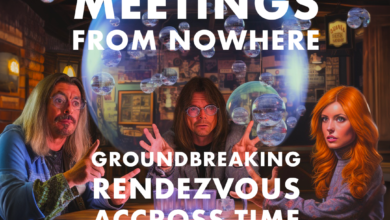
An impossible meeting, staged as radio.
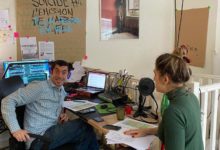
Hosted by Carmen. Extracted from ZUPER WOK (broadcast on cashmereradio.com, live from Berlin).
A HOUSE WITHOUT WALLS
Welcome into a strange and invisible house — a house full of voices.
Some are alive. Some are long gone. Some might be imagined.
They gather for one reason: to answer a single question that refuses easy definitions:
What does it mean to be an adult?
This is not a debate. Not a panel. Not self-help. Not “content.”
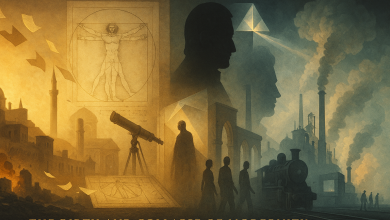
It’s a fictional–philosophical radio assembly built like an inner architecture: four rooms, four angles, four intensities.
And yes: the casting is impossible.
THE IMPOSSIBLE GUEST LIST
In one single audio space, you’ll hear echoes and collisions between:
Carl Rogers, Antonio Damasio, Virginie Despentes, Daniel J. Siegel, Judith Butler, Hartmut Rosa, Terrence Malick, Hayao Miyazaki, Bessel van der Kolk, Hannah Arendt, Michel Foucault, Simone Weil, Gilles Deleuze, Jean-François Lyotard, and Immanuel Kant.
They should never be in the same room.
So we built four.
THE FOUR ROOMS
ROOM 1 — THE SENSITIVE HUMAN
Guests: Carl Rogers · Antonio Damasio · Thomas Moore · Charlotte Wells
Rapporteur: Virginie Despentes
Where feeling rises before explanation. Where tears are data. Where silence has meaning.
This room reclaims sensitivity as power: real listening, embodied intelligence, vulnerability as truth.
Key line: To be an adult is to feel everything and still choose softness.
ROOM 2 — THE RELATIONAL HUMAN
Guests: Daniel J. Siegel · Judith Butler · Jean Liedloff · Richard Linklater
Rapporteur: Hartmut Rosa
A room about resonance: attachment, identity shaped through connection, relationships through time.
The myth of the fixed self collapses here — not into chaos, but into contact.
Key line: To be an adult is to let others shape us without losing ourselves.
ROOM 3 — THE PRESENT HUMAN
Guests: Terrence Malick · Hayao Miyazaki · Bessel van der Kolk · Judith Butler
Rapporteur: Hannah Arendt
A slower room. Breath. Light. Attention. Wonder as discipline.
The body not as a productivity tool, but as a site of healing and becoming.
Key line: To be an adult is to remain present even when the world wants you to vanish.
ROOM 4 — THE RESPONSIBLE HUMAN
Guests: Michel Foucault · Simone Weil · Gilles Deleuze · Jean-François Lyotard
Rapporteur: Immanuel Kant
Here the question turns sharp: not what we feel — what we owe.
Power, ethics, fragments, freedom with consequences. Responsibility begins where certainty ends.
Key line: To be an adult is to act with freedom and remain answerable for what your actions create.
WHY LISTEN?
Because the episode doesn’t “define” adulthood — it stages it.
As a practice. As a tension. As a courage. As care with spine.
MEETINGS FROM NOWHERE is extracted from ZUPER WOK, an experimental radio organism mixing spoken word, philosophical fiction, diary fragments, sound collage, and artificial voices. It treats radio as a place where complexity is not reduced — it’s held.
So press play if you want something rare:
an audio space where thinking becomes presence, and presence becomes care.
Transcription:
00:00:00:21 – 00:00:08:16
Intervenant 1
Super Bowl direct of kashmir.com. Babar.
00:00:08:18 – 00:00:35:12
Intervenant 2
Hi. I’m Carmen. Tonight I welcome you into a strange and invisible house. A house without walls but full of voices. This is meetings from nowhere. For rooms, for groups of minds. Some alive, some long gone. Some maybe just imagined. They gathered to answer one question. What does it mean to be an adult? Now, in the 21st century, full rapporteurs will speak.
00:00:35:14 – 00:01:04:04
Intervenant 2
One for each room. Let’s begin. Room one. Room one. The sensitive human. It’s. Begin where it all begins. Where feeling first rises. Where the body reacts before the mind explains. This is the room of sensitivity. The place where emotion is not a floor, but a force. Where tears are data. Where silence has meaning. Where the trembling voice is the truest one.
00:01:04:06 – 00:01:42:10
Intervenant 2
In this room we sit with those who never learned to disconnect, or who fought to reconnect. Carl Rogers, a pioneer of radical empathy. He taught us that real transformation only happens in the presence of deep, unconditional listening. Antonio Damasio, neuroscientist of the embodied mind. He reminds us that without feeling, there is no choice, no conscience, no life. Thomas Moore, philosopher of the soul who invites us to welcome sadness, longing depth as vital signs of being alive.
00:01:42:12 – 00:02:06:10
Intervenant 2
Charlotte Wells, filmmaker of stillness and memory, who gave form to grief in Aftersun with no need to explain it. And Virginie Despond, writer survivor Firestarter, who says things we’re not supposed to say and make space for what hurts. Virginie listened. Virginie took notes. Virginie speaks for the room.
00:02:06:12 – 00:02:26:13
Intervenant 3
In this room, we agreed on one thing. Forced sensitivity has been hijacked, shamed, suppressed. And we’re taking it back. Carl Rogers reminded us that most people don’t listen. They wait to reply. But being an adult today means listening for real. Starting with yourself. Antonio Damasio explained how emotions shaped decision making not by clouding reason, but by giving it context and meaning.
00:02:26:15 – 00:02:52:15
Intervenant 3
Thomas More offered a poetic turn. Adulthood without soul becomes a performance. Soul enters where we allow silence, longing, and contradiction. Charlotte Wells shared how film can hold grief when words can’t. She said our culture rewards composure, but art rewards vulnerability. And me. I said, you can’t heal what you won’t let surface. Together, we reached the sentence. To be an adult today is to feel everything and still choose softness.
00:02:52:17 – 00:03:25:17
Intervenant 2
Thank you. Virginie. From the raw truth of the inner world, let’s move toward the space in between. Where self meets other. Where resonance becomes identity. Enter the second room. Room two. The relational human. In this room, no one stands alone. This is where identity dissolves into dialog, where relation isn’t weakness, but the very ground of being. Daniel Siegel, psychiatrist, scientist, connector of hemispheres and hearts.
00:03:25:19 – 00:03:56:13
Intervenant 2
He teaches how love literally rewires the brain. Judith Butler, philosopher of gender fluidity of bodies and resistance, always reminding us that the self is made in relation. John Ridloff, who lived with the Aquinnah people and never forgot what she learned. That closeness from the start changes everything. Richard Linklater, chronicler of time. Slow time. The time it takes to become.
00:03:56:15 – 00:04:08:07
Intervenant 2
And Hartmut Rosa, our resonance theorist, the one who listens to the vibrations beneath the words. Hartmut will speak for the room.
00:04:08:09 – 00:04:31:23
Intervenant 4
In our room we began with one word resonance. Daniel Siegel showed us how human brains need safe connection. To regulate, to grow. He said isolation is not strength, it’s a stress response. Judith Butler challenged the myth of the fixed self we become through our encounters without relationship. Identity is just armor. John lead loft brought us to the jungle literally.
00:04:32:00 – 00:05:00:15
Intervenant 4
She described how babies in the aquatic community are never separated from the body of another human. Touch builds trust. Presence builds resilience. Richard Linklater simply observed, time doesn’t shape people. Relationships through time do. As for me, I reminded us. Resonance is not luxury. It’s how we stay human in a world of acceleration. Our collective response became this to be an adult today is to allow others to shape us without losing ourselves.
00:05:00:21 – 00:05:34:07
Intervenant 2
De la relacion vers la présence vivent. Thank you Hartmut. From resonance we move into rhythm, from interaction to attention. What happens when we stop trying to define ourselves and simply notice? In the next room, we leave language behind for a moment. We listen to breath, to light, to the subtle choreography of being alive. We now enter a slower room into the alive one that breathes, that listens without rushing.
00:05:34:09 – 00:06:03:13
Intervenant 2
This is the room of presence, the place where life is not measured but felt. Where existing isn’t about doing more, but about noticing the wind on your face, the ache in your chest. The child who still lives inside. In this room we don’t analyze. We observe. We soften. Here are the guests. Terrence Malick, director of Light and Silence, who films what escapes language.
00:06:03:15 – 00:06:40:23
Intervenant 2
Hayao Miyazaki, animator of Tenderness and all, who reminds us that wonder never disappears. We just forget how to look. Bessel van der Kolk, psychiatrist of the body who teaches that trauma can be healed through presence, not explanation. Judith Butler again, because some beings are not confined to one room, they move, they flow. And finally, Hannah Arendt, our voice tonight, a thinker of action and attention, a woman who knew that to be truly alive is already a political act.
00:06:41:00 – 00:06:45:01
Intervenant 2
Hannah listened. Hannah saw. Hannah speaks for the room.
00:06:45:03 – 00:07:09:10
Intervenant 5
In our room. Nothing was forced. We didn’t chase meaning? We watched it arrive. Terrence Malick shared a scene. A child walking through a field, sunlight breaking through leaves. He whispered, presence is what remains when ambition falls away. Hayao Miyazaki brought a sketch of Jiro holding the hand of a forgotten god. He told us adults lose wonder because they choose certainty.
00:07:09:12 – 00:07:34:11
Intervenant 5
But the world is still enchanted. Wonder is a discipline vessel. Van der Kolk grounded us. The body holds the story of what we’ve survived. To grow up is to return. Breath by breath. Into the place we once fled. Judith Butler moved like wind through the room. She didn’t declare. She revealed the body is not a tool of productivity.
00:07:34:17 – 00:07:55:13
Intervenant 5
It is a site of negotiation, of listening. Of becoming. And me. I listen to them all and then said, to be alive is not to function. It is to appear truly in the world, to make oneself visible, not as an object, but as a presence in a time that wants to blur us. Being present is an act of courage.
00:07:55:15 – 00:08:07:00
Intervenant 5
We spoke slowly. We paused, often, and in the end we agreed to be an adult. Today is to remain present even when the world wants you to vanish.
00:08:07:02 – 00:08:33:05
Intervenant 2
De la presence a language more responsable. Thank you. Hanna. We’ve slowed down. We’ve remembered how to be. Now we must ask. What do we do with that presence? What are we accountable for? Not just in ourselves, but in the world. The next room asks us to rise. To think. To choose to answer. This is not the room of certainty.
00:08:33:07 – 00:09:04:18
Intervenant 2
It’s the room of courage. Let us enter the responsible human room for the responsible human. We now step into the final room. It echoes differently. It carries weight. This is not a space of reaction, but of reflection. Not a place to escape, but a place to respond. This is the room of the responsible human, where words matter, where consequences are not denied, and where adulthood stops being a performance and becomes a choice.
00:09:04:20 – 00:09:39:14
Intervenant 2
In this room, the voices are precise. They know silence is political and thought is a form of action. Let me introduce them. Michel Foucault, who spent his life exposing the invisible mechanisms of control. Simone Vile, who believed that true justice begins with attention, not judgment. Shield dealers who undid all fixed forms to let freedom breathe. Jean-Francois leotard, who shattered the myth of a single truth by young children.
00:09:39:16 – 00:09:54:14
Intervenant 2
Who sees how too much light makes us blind and longs for shadow. And Immanuel Kant, philosopher of moral autonomy and inner law. Tonight, Kant is our voice.
00:09:54:16 – 00:10:23:05
Intervenant 1
In our room. The question was not what we feel, but what we owe, not what we can do, but what we must. Michel Foucault began with this. Most adults don’t act. They conform. True responsibility begins when you see the architecture of power and still choose to move against its grain. Simone Biles sat quietly, then said, justice is not born from will.
00:10:23:07 – 00:10:54:18
Intervenant 1
It is born from attention. Noticing is the first form of care. Gilles Deleuze challenged the entire premise. There is no stable adult. There is only movement. Mutation. Relation. Responsibility lies not in holding form, but in holding space for others. For becoming. Jean-Francois Lyotard offered a warning. The grand narratives are gone. What remains is the fragile ethics of fragments.
00:10:54:24 – 00:11:22:18
Intervenant 1
And the strength to live without a single script. Young children concluded with a whisper. The modern adult hides behind transparency, but ethics needs mystery. True responsibility begins where certainty ends. And I, Immanuel Kant. I reminded the room that freedom is not the absence of boundaries, but the ability to choose a law that binds you to the dignity of others.
00:11:22:20 – 00:11:36:19
Intervenant 1
We debated, we paused often, and in the end we stood on this shared ground. To be an adult today is to act with freedom and remain answerable to what your actions create.
00:11:36:21 – 00:12:04:09
Intervenant 6
Thank you. Emmanuel. We’ve gone as far as thought can take us. We’ve looked at the world not just as it is, but as it could be if we chose to act from care. This was not a debate, not a panel. It was a shared attention across emotions, relations, breadth and responsibility. We’ve walked a path together, and now we return to the stillness at the center of it all.
00:12:04:11 – 00:12:07:11
Intervenant 6
Back to you. Let’s close this gathering.
00:12:07:13 – 00:12:32:15
Intervenant 2
We’ve walked through four rooms. We’ve met voices that listened. Others that trembled and some that whispered truths too slow for the speed of now. They all came for the same reason. To answer a question that has no single shape. What does it mean to be an adult in the 21st century? And what did they tell us? That being an adult today isn’t about knowing.
00:12:32:17 – 00:13:08:20
Intervenant 2
It’s about feeling and staying open. It isn’t about independence, but about relating without vanishing. It isn’t about doing more, but about being here fully. And finally, it isn’t about control, but about acting with care when it matters most. The fluid grown up is in a finished version of yourself. They’re the you who stay soft while holding the world, who doesn’t close, who doesn’t collapse, who learns to breathe through the complexity.
00:13:08:22 – 00:13:34:24
Intervenant 2
So maybe it’s not about growing up. Maybe it’s about growing with. With your body, with your ghosts, with the child you were with, the others around you. With the time we’re in. And with this simple, quiet vow. I will stay human. I will stay open. I will stay here. You’ve been listening to meetings from nowhere. My name is Carmen.
00:13:35:01 – 00:14:20:07
Intervenant 2
I’ll see you wherever presence meets breath and thought becomes care. Until next time.
00:14:20:09 – 00:14:24:08
Intervenant 2
The super, super fresh radio saga.
00:14:24:10 – 00:14:28:19
Intervenant 1
Live from Berlin. Live and direct from Kashmir. Radio.com.
00:14:28:21 – 00:14:31:10
Inconnu
Super. Super eight will kick.