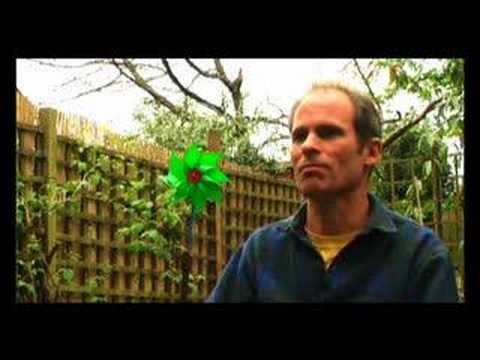
Another End of the World is Possible est une série de portraits vidéo tournée à Londres en 2007, à la rencontre de personnes qui agissent radicalement contre les causes profondes du changement climatique. Duncan Law nous explique son engagement et sa manière d’agir.
La série Another end of the world is possible → Tous les portraits dans Les Gens →
La transcription
Transcription relue et ponctuée à partir de l’enregistrement original en anglais, avec sa traduction en français.
[00:14] La fin du monde pourrait être… Quand nous partons en voyage, nous connaissons généralement notre destination. Nous devons imaginer la nôtre, parce que le voyage que nous faisons tous en ce moment se termine au bord de la falaise.
[00:35] Au début de l’année dernière, j’ai découvert le mouvement des villes en transition, les Transition Towns. Il part d’un constat : à cause du changement climatique et du pic pétrolier, ce moment où l’extraction de pétrole atteint son maximum avant de reculer d’environ deux à trois pour cent par an, les choses vont changer. Notre monde va changer, vite et bientôt. Alors autant prendre ce changement en main et le mener, au lieu d’attendre de le recevoir en pleine figure. C’est ce qui enflamme l’imagination des gens : une fois qu’ils comprennent que nous allons de toute façon vers un monde zéro carbone, autant s’y mettre tôt, prendre de l’avance, mener le changement. C’est vraiment mobilisateur.
[01:45] Si les gouvernements ont trop peur d’agir à l’échelle mondiale, nous devons leur montrer la voie. Nous devons atteindre un point de bascule des consciences : imaginer un futur sobre en énergie et heureux pour notre quartier. À quoi ressemblerait-il, quel goût aurait-il, quelle odeur, quel son ? Comment construire l’image de ce futur ? Une fois cette image dessinée dans le détail, santé, alimentation, transports, énergie, nous remontons jusqu’au présent pour tracer un chemin très concret, avec un calendrier, vers ce futur.
[02:45] Les solutions seront difficiles, en particulier à Brixton, où j’ai lancé Transition Town Brixton, parce que Brixton est loin d’être un bourg rural ou un modèle de durabilité : c’est un quartier d’une ville post-industrielle. Mais il y a tant à faire. Tant de gaspillage et de folie nous entourent. Débarrassons-nous de la folie et du gaspillage, renouons avec les personnes avec qui nous allons vivre et travailler, produisons localement tout ce que nous pouvons, et tissons des liens avec d’autres communautés pour combler les manques. Nous aurons des communautés satellites dans le Sussex, le Hampshire et le Kent pour aider à nourrir la ville, au lieu de rester enfermés dans cette économie mondialisée et absurde.
[03:40] En Occident, l’agriculture consomme dix calories d’énergie fossile pour produire une calorie de nourriture. C’est de toute évidence intenable. Quand les gens l’apprennent, ils sont stupéfaits. Et la question suivante vient : si ce système s’effondre, que mangerons-nous ? D’où viendra notre nourriture ? Comment alimenter notre quartier en énergie ? Comment nous déplacerons-nous, et voyagerons-nous autant ? Ce sera difficile, mais ce sera riche, et nous devons commencer à le concevoir dès maintenant.
[00:14] The end of the world could be… I think when you go on a journey, you normally know your destination. We have to envision our destination, because the end of the journey we’re all on at the moment is over the cliff.
[00:35] Early last year I came across a movement called the Transition Town movement. It’s based on the recognition that, because of climate change and peak oil, the point where we’ve reached maximum oil extraction and supply now starts falling by about two to three percent a year, things are going to change. Our world is going to change, fast and soon. So how much better to get hold of this change and make it, rather than sit around and wait to be hit over the head by it. That’s what captures people’s imagination: once they realise we’re heading for a zero-carbon world anyway, get in there early, beat the curve, make the change. It’s really engaging.
[01:45] If governments are too scared to do anything on a global scale, we have to show them the way. We have to reach a tipping point of consciousness: think forward to a good, low-energy future in our community. What would it look like, taste like, smell like, sound like? How can we build the picture of the future? Once we’ve done that in great detail, covering health, food, transport and energy, we work back to the present to create a really practical, timetabled pathway to the future.
[02:45] The solutions will be difficult, particularly in Brixton, where I’ve set up Transition Town Brixton, because Brixton isn’t a market town or a model of sustainability: it’s in a post-industrial city. But there’s so much we can do. There’s so much waste and madness all around us. Get rid of the madness, get rid of the waste, reconnect with the people we’re going to live and work with, supply as much as we can locally, and build connections with other communities to fill the gaps. We’ll have satellite communities out in Sussex, Hampshire and Kent helping to supply the city, rather than locking into this mad globalised economy.
[03:40] In the West, agriculture takes ten calories of fossil-fuel energy to produce one calorie of food. That’s patently unsustainable. When people hear that, they go: what? And then you ask: if that collapses, what do we eat? Where does our food come from? How will we power our community? How will we travel, and will we travel as much? It’s not going to be easy, but it is going to be rich, and we have to start designing it now.

Un e-mail de confirmation vous attend après l’inscription, et la désinscription se fait en un clic depuis chaque lettre.