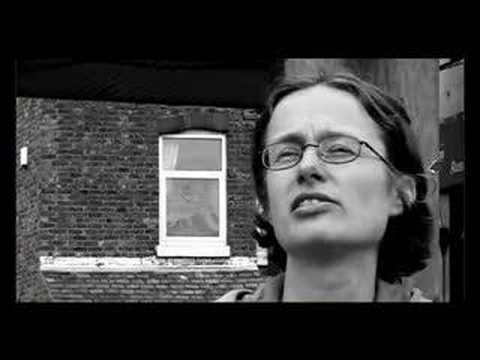
Another End of the World is Possible est une série de portraits vidéo tournée à Londres en 2007, à la rencontre de personnes qui agissent radicalement contre les causes profondes du changement climatique. Catherine nous explique son engagement et sa manière d’agir.
La série Another end of the world is possible → Tous les portraits dans Les Gens →
La transcription
Transcription relue et ponctuée à partir de l’enregistrement original en anglais, avec sa traduction en français.
[00:10] Waouh, la fin du monde. D’un côté, j’aimerais beaucoup être là pour la voir, mais je préfère qu’elle arrive après ma mort, donc je la manquerai sûrement. Mais je suis follement curieuse de voir ce qui va se passer.
[00:25] Je cherchais vraiment à agir, et c’était assez difficile de savoir ce que je pouvais faire contre le changement climatique, ou quelle place je pouvais trouver dans un combat militant. Puis j’ai vu l’annonce d’une réunion pour un projet appelé le Camp for Climate Action. C’était à Manchester, tout près de chez moi, et une amie y habitait, alors je me suis dit : ça a l’air intéressant, allons-y.
[00:50] Je suis entrée dans une salle remplie d’une centaine de personnes inconnues, et j’étais absolument terrifiée. Je me suis dit : je reste et je verrai bien. C’était passionnant, et ce qui m’a fait rejoindre le mouvement, c’est leur façon de travailler. J’ai été vraiment inspirée. Je suis restée assise toute la journée à observer ce processus de décision au consensus, des gens respectueux les uns des autres, capables de prendre des décisions dans un groupe aussi grand.
[01:30] Le Camp for Climate Action a eu lieu l’année dernière et il revient cette année. C’est un camp d’une semaine dans un champ, durable avec une empreinte carbone très faible : le site consomme peu d’énergie, et celle qui est utilisée vient de panneaux solaires ou d’une éolienne fabriquée sur place. Il y a aussi un grand nombre d’ateliers, où chacun se forme, discute et débat du changement climatique et de ce que nous pouvons faire : des solutions positives, des arguments politiques jusqu’à la façon de cultiver sa propre nourriture.
[02:25] Le troisième volet, c’est l’action directe contre les causes profondes du changement climatique. L’année dernière, la cible était la centrale de Drax, le plus gros émetteur de CO2 du pays à elle seule. Une belle cible, donc.
[02:45] Tout l’esprit du camp, c’est de participer. Ce qui m’a inspirée, c’est que chacun peut se lever et agir sans demander la permission, sans diplôme, sans appartenir à une classe ou à un milieu particulier. Réunir ces trois dimensions, la vie sobre, les ateliers et l’action directe, au même endroit, c’était un défi immense. Cela m’a donné l’énergie de rentrer chez moi et de lancer quelques petits projets qui n’auraient peut-être jamais vu le jour sans cette première grande inspiration.
[03:30] Ce que j’y ai surtout gagné, ce sont de très belles amitiés. Ma famille m’a dit : c’est génial, tu as rencontré plein de gens qui te ressemblent. En fait, ils me ressemblaient assez peu à bien des égards, et c’est tant mieux, mais j’ai rencontré des gens qui aimaient vraiment agir, plutôt que parler, avec beaucoup d’énergie et de temps à consacrer à une cause qui les passionnait.
[04:00] Je pense qu’une des causes du changement climatique, c’est notre mode de vie individualiste : chacun monte dans sa petite boîte de conserve à roues, part de son côté, sans contact avec les autres, et sans penser à l’impact de ce qu’il fait. Quand nous sommes amenés à penser à notre impact sur les autres, nous créons du lien avec eux. Et je crois que beaucoup de solutions vont rendre les gens plus heureux.
[00:10] Wow, the end of the world. In some ways I’d really like to be around to see it, but I don’t want it to happen in my lifetime, so I guess I won’t. But I’m dead curious to see what happens.
[00:25] I was looking to actually do something, and it was quite hard to figure out what I could do about climate change or where I could fit into any kind of campaigning. Then I saw an advert for a meeting for this thing called the Camp for Climate Action. It was in Manchester, close to where I live, and my friend lived there, so I thought: that looks interesting, I’ll go along.
[00:50] I walked into a room full of about a hundred people I’d never met before, and I was absolutely terrified. I thought: I’ll stay and see what happens. It was really interesting, and what got me involved was the way these people worked. I was really inspired. I sat there all day watching this consensus decision-making process, people being respectful of each other and coming to decisions in this huge group.
[01:30] The Camp for Climate Action happened last year and it’s happening again this year. It’s basically a week-long camp in a field, sustainable in terms of having a very low carbon footprint: there’s not much power used on site, and what there is comes from solar panels or a homemade wind turbine. Then there’s a huge number of workshops, where people educate themselves, discuss and debate climate change and what we can do about it: positive solutions, everything from political arguments down to growing your own food.
[02:25] The third element is taking direct action against the root causes of climate change, which last year meant Drax power station, the biggest single-point emitter of CO2 in the whole country. So quite a big one to go for.
[02:45] The whole point of the camp is that you participate. What has inspired me is that people can just get up and do something without asking permission, without qualifications, without being from a certain class or background. Having those three things, sustainable living, workshops and direct action, together in one place was a huge challenge. It gave me the energy to go back home and start a few little projects that might not have happened without that initial inspiration.
[03:30] The main thing I gained was some really great friends. My family said: it’s great you’ve met all these like-minded people. Actually they weren’t that like-minded in lots of ways, which is great, but I met people who were really into doing things, not talking but doing, with a lot of energy and time to commit to something they were passionate about.
[04:00] I think one of the causes of climate change is our individualistic lifestyles: we all get into our little tin box of a car, drive off, and have no contact with people, so we don’t think about the impact of what we’re doing. If we’re made to think about our impact on other people, then we connect with them. And I think loads of the solutions are going to make people actually happier.

Un e-mail de confirmation vous attend après l’inscription, et la désinscription se fait en un clic depuis chaque lettre.