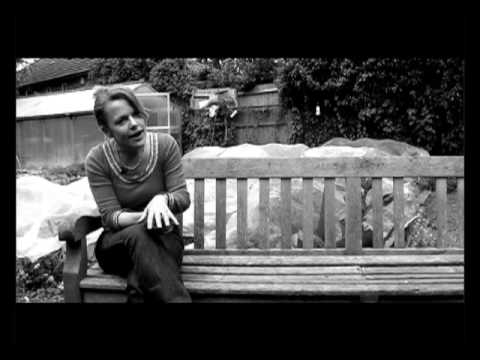
Another End of the World is Possible est une série de portraits vidéo tournée à Londres en 2007, à la rencontre de personnes qui agissent radicalement contre les causes profondes du changement climatique. Julie nous explique son engagement et sa manière d’agir.
La série Another end of the world is possible → Tous les portraits dans Les Gens →
La transcription
Transcription relue et ponctuée à partir de l’enregistrement original en anglais, avec sa traduction en français.
[00:12] La fin du monde ? J’ai bien des scénarios de cauchemar en tête, mais je pense aussi que nous avons les moyens de nous en sortir. C’est vraiment ce que je crois : nous pouvons régler ça, et en ressortir avec un monde infiniment meilleur. Ce qui m’inquiète, c’est le chemin entre ici et là-bas.
[00:40] Ce que Growing Communities cherche à faire, c’est réduire la quantité de carbone nécessaire pour nous nourrir. Pour y parvenir, nous mobilisons le pouvoir d’achat, l’énergie et les compétences de notre communauté, et nous les orientons vers les producteurs et les fermiers qui cultivent comme nous pensons qu’il faut cultiver : en bio, localement, durablement, avec un grand respect du bien-être animal.
[01:11] À mesure que le prix du pétrole augmente, toute l’économie de la nourriture produite localement face à la nourriture importée va changer, et nous voulons être là, prêts. Il est possible de cultiver ici, de façon économiquement viable, pour qu’à l’avenir des gens puissent en vivre. La nourriture cultivée ici, en ville, ne parcourt aucun kilomètre.
[01:50] Il nous faut un monde profondément relocalisé : l’alimentation, l’énergie, les transports doivent fonctionner à l’échelle locale, pour que ces systèmes cessent de dépendre des énergies fossiles. Et en relocalisant, les gens se rapprochent les uns des autres, et se rapprochent de l’origine des choses.
[02:20] L’organisation est très souple pour les personnes qui ont des enfants ou qui veulent travailler à temps partiel, en grande partie parce qu’elle a été pensée pour me permettre, ainsi qu’aux personnes venues la lancer avec moi, de travailler d’une façon qui nous convient. Nous vivons toutes et tous dans le quartier. Nous allons au travail à pied. C’est notre communauté, nous voyons directement les effets de ce que nous faisons, et en plus nous avons cette nourriture fantastique chaque semaine.
[02:53] Growing Communities réunit donc ces deux dimensions : son moteur est écologique, mais il s’agit aussi de construire une communauté. Je pense que nous avons un modèle reproductible. Si des gens viennent nous demander de leur montrer ce que nous faisons, nous avons là un modèle qui fonctionne. Et nous sommes désormais autonomes financièrement : nous avons reçu des subventions pendant dix ans, mais l’an dernier, tous nos revenus sont devenus autogénérés. Nous sommes complètement indépendants.
[03:39] J’ai toujours cherché à créer une image de ce que le monde pourrait, ou devrait, être. Retrouver d’où vient notre nourriture, connaître celles et ceux qui la cultivent, investir en elles et en eux, ce sera incroyablement positif. Il y a là de vrais bienfaits, un sens de la communauté, un lien avec les gens, la nourriture, la terre et les saisons. Nous avons tant perdu de tout cela, jusqu’à la capacité de nous nourrir nous-mêmes.
[04:30] Ça me rend un peu triste, en fait, parce que je pensais à la famine, en lien avec la fin du monde. Je crois que je vais m’arrêter là.
[00:12] The end of the world? I do have nightmare scenarios in my head, but I also think we have got the wherewithal to get out of this. That’s very much what I think: we can sort this out, and we can come out with something that’s hugely better than this. I do worry about what happens between here and there, though.
[00:40] What Growing Communities is trying to do is essentially reduce how much carbon it takes to feed us. The way we’re trying to do that is to harness the buying power, the energies and the skills of our community, and focus them towards the producers and farmers who are growing food the way we think it needs to be grown: organically, locally, sustainably, with very good animal welfare practices.
[01:11] As the price of oil continues to rise, the whole economics of food grown locally versus food shipped in from abroad is going to start changing, and we want to be there, ready. It is possible to grow food here, and to do it in a way that’s financially viable, so that in the future people can think about making a living from it. Food grown here in the city has zero food miles.
[01:50] What we need is a world that is hugely relocalised: food, energy, transport, all of these need to start working on a local level, so that we’re not relying on fossil fuels to drive those systems. And when you relocalise, people get closer together and closer to the source of things.
[02:20] The organisation is very flexible for people who have children or who want to work part-time, largely because it was set up to enable me, and the people who came in to help get it up and running, to work in a way that works for them. We’re all really locally based now. We walk to work. It’s our community, we can see the direct effects of what we’re doing, and we also have all this fantastic food every week.
[02:53] So Growing Communities brings those two things together: its driving force is environmental, but it’s also about building community. I actually think we’ve got a replicable model here. If people come to us and ask us to show them what we’re doing, we’ve got something that can work. And we’re financially self-sufficient now: we had grant funding over the last ten years, but last year all our income became self-generated. We’re completely independent.
[03:39] What I’ve always tried to do is create something that is how I think the world could be, or should be. It’s going to be incredibly positive to get back to knowing where our food comes from, knowing the people who grow it, actually investing in them. There are real benefits to that, in a sense of community, of being in touch with people, with the food, the soil and the seasons. We’ve lost so much of that, and we’ve lost the ability to feed and sustain ourselves.
[04:30] That’s made me feel quite sad, actually, because I was thinking about starving, linked in with the end of the world. I’m going to stop now, I think.

Un e-mail de confirmation vous attend après l’inscription, et la désinscription se fait en un clic depuis chaque lettre.